The energy investment landscape is in constant flux, demanding a nuanced perspective that balances immediate market dynamics with long-term strategic shifts. While traditional oil and gas continues to drive significant value, the accelerating pace of the electric vehicle (EV) transition, underpinned by advancements in battery technology, presents both challenges and opportunities for investors. Recent developments highlight this duality, with major automotive players making pivotal moves in battery innovation even as crude markets experience notable volatility.
Revolutionizing EV Power: Nissan and LiCAP’s Battery Breakthrough
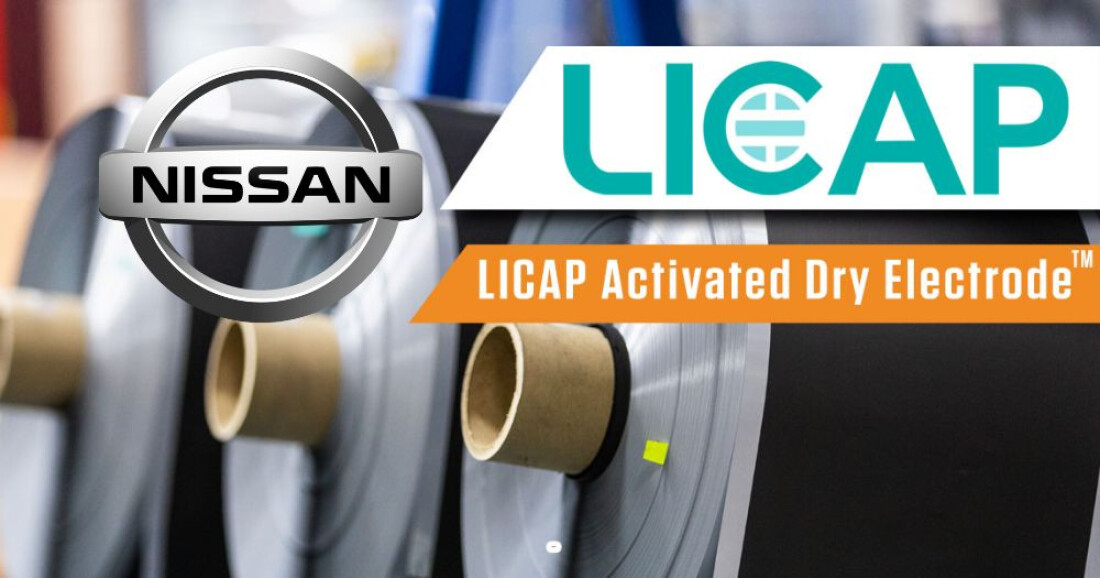
In a significant step towards the next generation of electric vehicles, Nissan Motor Co., Ltd. has deepened its strategic partnership with LiCAP Technologies, Inc., a U.S.-based innovator in sustainable dry electrode technology. This collaboration is set to accelerate the development and large-scale production of dry cathode electrode technology, a critical component for Nissan’s all-solid-state batteries (ASSBs). The move builds on a successful joint development program, leveraging LiCAP’s proprietary Activated Dry Electrode technology, which offers substantial advantages. This solvent-free process is not merely an incremental improvement; it promises significant reductions in cost, enhanced sustainability through minimized environmental impact, greater production efficiency, and superior battery performance. For investors tracking the EV sector, this signals a commitment from a major automaker to not just produce EVs, but to fundamentally transform the manufacturing process of their core power units, aligning with Nissan’s ambitious Ambition 2030 vision. The implications extend beyond just Nissan’s platform, potentially setting new industry benchmarks for battery production and reinforcing the long-term structural shift away from internal combustion engines.
Navigating Crude Volatility Amidst Energy Transition
While the long-term trajectory points towards electrification, the short-term reality for energy investors remains anchored in the traditional crude markets, which are currently experiencing significant turbulence. As of today, Brent crude trades at $90.38, marking a substantial 9.07% decline from its opening, with its daily range spanning $86.08 to $98.97. Similarly, WTI crude has seen a sharp drop to $82.59, down 9.41%, trading within a daily range of $78.97 to $90.34. This acute daily volatility follows a broader trend; Brent crude has depreciated by $20.91, or 18.5%, over the past 14 days, falling from $112.78 on March 30th to $91.87 yesterday. Concurrently, gasoline prices reflect this bearish sentiment, currently at $2.93, a 5.18% drop for the day. This immediate market snapshot underscores the unpredictable nature of global oil prices, driven by a complex interplay of supply concerns, demand outlooks, and geopolitical factors. For investors, this volatility presents both risks and opportunities, necessitating agile portfolio adjustments and a keen eye on upcoming market signals.
Investor Sentiment: Forecasting Oil Prices and OPEC+ Decisions
The prevailing market uncertainty is clearly reflected in the questions our readers are posing this week. A top concern, indicating widespread investor anxiety, is “what do you predict the price of oil per barrel will be by the end of 2026?” This forward-looking query highlights the critical need for clarity on future market direction. The upcoming OPEC+ meetings are pivotal in shaping these expectations. The Joint Ministerial Monitoring Committee (JMMC) convenes tomorrow, April 18th, followed by the Full Ministerial meeting on April 19th. These gatherings are crucial for determining future production quotas, a topic directly addressed by another common reader question: “What are OPEC+ current production quotas?” Any announcements regarding supply adjustments from these meetings will have an immediate and profound impact on crude prices, potentially alleviating or exacerbating the current downward pressure. Investors will be scrutinizing every statement for clues on whether the cartel plans to further tighten supply in response to recent price drops or maintain current levels, directly influencing their long-term price forecasts and investment strategies.
Key Indicators and the Road Ahead for Energy Markets
Beyond the immediate OPEC+ decisions, energy investors must also closely monitor a series of upcoming data releases that will provide further insight into market fundamentals. The API Weekly Crude Inventory report on April 21st, followed by the EIA Weekly Petroleum Status Report on April 22nd, will offer crucial data on U.S. crude stockpiles, refinery activity, and demand indicators. These reports are instrumental in gauging the supply-demand balance in the world’s largest oil consumer. Following these, the Baker Hughes Rig Count on April 24th will provide an updated view on drilling activity, signaling future production trends. Similar reports will recur on April 28th, April 29th, and May 1st, offering continuous updates. While the Nissan-LiCAP partnership underscores a long-term strategic pivot in the automotive sector, these weekly and bi-weekly data points remain essential for understanding the near-term health and direction of the traditional oil and gas market. Savvy investors will integrate insights from both the evolving EV landscape and these traditional market indicators to construct resilient and diversified energy portfolios.