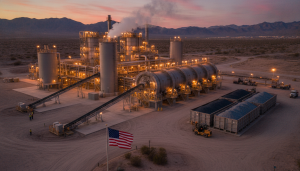
The energy investment landscape is undergoing a profound transformation, characterized by both immediate market volatility and long-term strategic shifts. Saudi Arabia, a cornerstone of global oil supply, is now making headlines not just for its crude production but for its ambitious strides in renewable energy and battery storage. The Kingdom’s stated aim to surpass China in lowering battery energy storage costs by 2025 signals a pivotal moment, challenging conventional wisdom and opening new avenues for investor consideration. This move is not merely a diversification play; it’s a strategic repositioning that will have ripple effects across the entire energy complex, compelling investors to broaden their analytical framework beyond traditional hydrocarbon metrics.
Saudi Arabia’s Aggressive Pivot to Battery Storage Leadership
Saudi Arabia’s commitment to becoming a leader in battery energy storage systems (BESS) is underscored by impressive figures. The Kingdom currently reports its four-hour storage capacity costs at approximately $409 per kilowatt, a remarkable 77 percent lower than costs observed in Germany and positioning it on the cusp of China’s current benchmark of $404 per kilowatt. This competitive pricing, coupled with substantial investment, highlights a rapid industrialization effort designed to secure a strategic advantage in the global energy transition.
The scale of this ambition is evident in the tangible projects underway. Riyadh has initiated BESS projects totaling 30 gigawatt-hours (GWh) of capacity, with 8 GWh already integrated into the grid and the remaining 22 GWh under active development. This push is critical to supporting the nation’s burgeoning renewable energy sector, which has seen its production capacity soar from a mere 3 gigawatts (GW) five years ago to 64 GW today. The ultimate target is an ambitious 48 GWh of BESS capacity by 2030, essential for maintaining grid stability as solar PV penetration dramatically increases. The market has responded with significant activity, evidenced by over 30 GWh in tender requests for quotations since the beginning of 2024, signaling robust demand and a clear trajectory for growth in this sector.
Navigating Crude Volatility Amidst Diversification Efforts
While Saudi Arabia aggressively pursues its renewable energy goals, the traditional oil market remains a critical, albeit volatile, component of the global energy mix. As of today, Brent crude trades at $90.38 per barrel, reflecting a significant daily decline of 9.07%, with its range fluctuating between $86.08 and $98.97. Similarly, WTI crude is priced at $82.59 per barrel, down 9.41%, having traded between $78.97 and $90.34. This sharp downturn comes after a period of sustained pressure, with Brent having fallen from $112.78 on March 30 to its current level, marking a nearly 20% depreciation in just over two weeks.
This market volatility presents a complex backdrop for Saudi Arabia’s energy transition. While lower oil prices might theoretically reduce the capital available for diversification, the Kingdom’s long-term strategy appears resilient, funded by decades of oil wealth. Investors must consider how this ongoing price instability impacts the pace and funding mechanisms for large-scale renewable projects. The dual narrative of a rapidly shifting energy portfolio within a major oil producer, set against a backdrop of fluctuating crude prices, underscores the intricate dynamics at play for energy investors.
Upcoming Events and Their Impact on the Energy Outlook
The immediate future holds several key events that could significantly influence the energy markets, demanding close attention from investors. The upcoming OPEC+ Joint Ministerial Monitoring Committee (JMMC) Meeting on April 19th, swiftly followed by the full OPEC+ Ministerial Meeting on April 20th, are particularly pivotal. With Brent crude experiencing a nearly 20% decline over the past two weeks, a critical question for investors is whether this price erosion will prompt OPEC+ to consider adjustments to current production quotas. Any unexpected shifts in supply policy could trigger further market volatility, impacting not only crude prices but also broader energy investment sentiment.
Beyond OPEC+, investors will be closely monitoring weekly data releases. The API Weekly Crude Inventory reports on April 21st and 28th, alongside the EIA Weekly Petroleum Status Reports on April 22nd and 29th, will provide crucial insights into U.S. supply and demand dynamics. Additionally, the Baker Hughes Rig Count on April 24th and May 1st will offer an indication of North American drilling activity. These near-term data points, while focused on hydrocarbons, are essential for understanding the underlying health of the traditional energy market, which continues to generate the capital funding the transition initiatives of major players like Saudi Arabia. The interplay between these short-term market catalysts and long-term strategic shifts defines the current investment environment.
Investor Sentiment: Expanding the Focus Beyond Crude
Our proprietary data indicates that investors are increasingly asking fundamental questions, such as “What do you predict the price of oil per barrel will be by end of 2026?” and “What are OPEC+ current production quotas?”. While these questions remain central to oil and gas investment, Saudi Arabia’s aggressive moves in battery storage compel a broader perspective. The Kingdom’s pursuit of cost leadership in energy storage signals a deepening commitment to a diversified energy future, influencing how investors should evaluate the long-term prospects of traditional oil and gas entities.
For companies like Repsol, which readers are asking about this week, or any integrated energy major, the Saudi strategy serves as both a blueprint and a warning. It highlights the imperative for diversification and investment in new energy technologies to remain competitive and relevant in an evolving landscape. Investors are no longer just analyzing upstream reserves and refinery margins; they must now weigh the strategic investments in renewables, grid stability, and energy storage that even the largest oil producers are undertaking. The Saudi Arabian example underscores that the future of energy investment is not just about the price of a barrel, but the cost and capacity of a kilowatt-hour, driving a shift towards comprehensive energy strategies that blend hydrocarbon expertise with renewable innovation for sustained shareholder value.