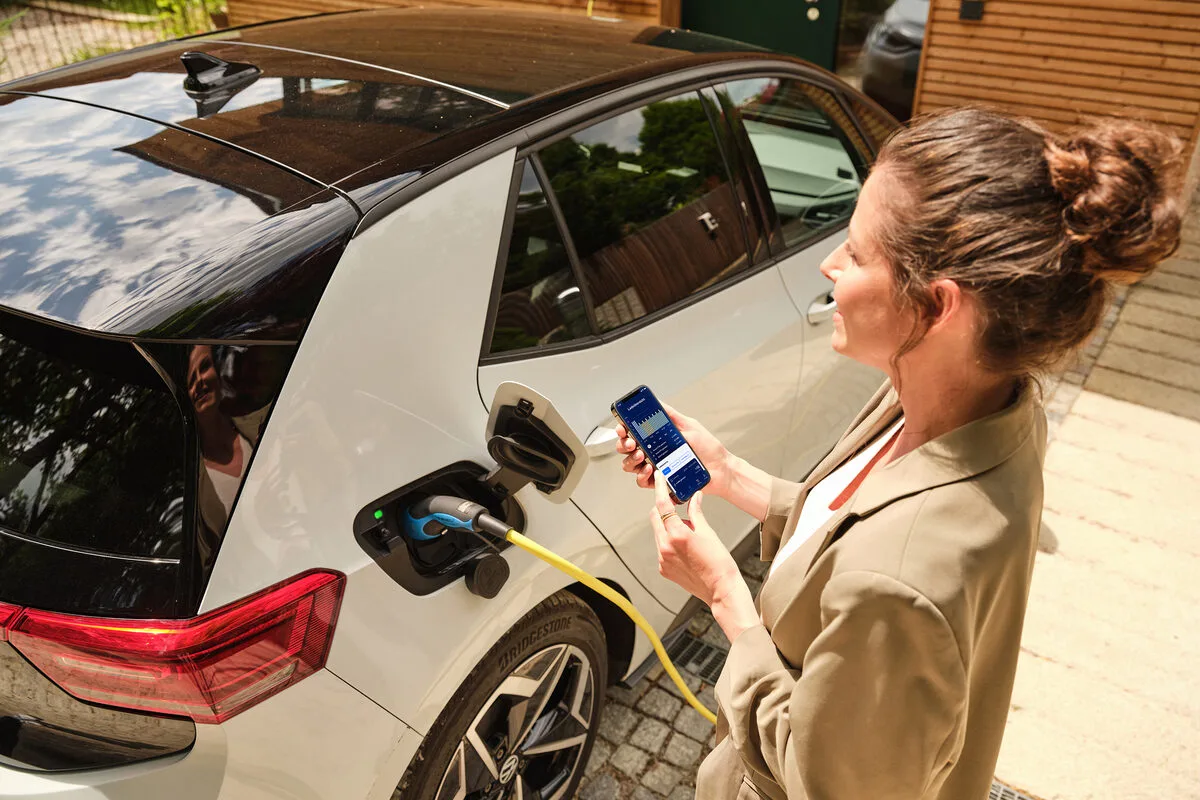
Amidst the daily volatility of crude markets, long-term energy transition narratives often simmer beneath the surface, shaping the future landscape for oil and gas investors. One such narrative, concerning the durability of electric vehicle (EV) batteries, has seen a significant de-risking this week. A recent joint study from The Mobility House Energy and RWTH Aachen University provides compelling evidence that Vehicle-to-Grid (V2G) applications, often viewed with skepticism due to potential battery degradation, have a surprisingly minor impact on battery life. This finding directly addresses a key concern for EV owners and, by extension, the pace of electrification that ultimately influences long-term oil demand. For investors tracking the broader energy ecosystem, understanding these technological advancements is crucial, even as immediate market drivers dominate headlines.
V2G Resilience: A Boost for EV Residual Values and Adoption
The longevity and health of an EV’s battery are paramount, not just for operational performance but critically for its residual value. Concerns about bidirectional charging (V2G) adding excessive cycles and accelerating degradation have been a theoretical hurdle. However, the comprehensive study, involving various cell types, offers a reassuring perspective. It found that intelligent charging (V1G), which optimizes charging based on grid signals, significantly improves battery aging compared to immediate charging. Over a ten-year period, intelligent charging is projected to result in 3.3 to 6.8 percentage points less aging. To put this into perspective, for a 50 kWh battery, this translates to an additional 1.8 to 3.6 kWh of usable energy after a decade, extending range and preserving asset value. Crucially, the study concluded that V2G, when implemented with intelligent charging strategies, does not negatively impact battery longevity. While V2G itself doesn’t offer a positive effect on aging, it also doesn’t accelerate degradation beyond normal use, especially when integrated smartly. This finding is a strong signal for the EV market, potentially accelerating V2G adoption by easing consumer and fleet operator fears about battery health and resale value. For oil and gas investors, this translates into a clearer, albeit still gradual, pathway for increased EV penetration and a corresponding, long-term shift in transportation fuel demand.
Crude Market’s Immediate Focus Amidst Long-Term Shifts
While the long-term implications of V2G technology unfold, the immediate attention of oil and gas investors remains firmly fixed on traditional supply and demand fundamentals. As of today, Brent Crude trades at $99.6 per barrel, marking a robust 4.92% increase, with a daily range between $94.42 and $99.73. Similarly, WTI Crude has seen a significant rise, currently at $91.52, up 3.85%. This sharp uptick comes after a period of downward pressure; Brent had declined by 12.4% over the preceding 14 days, from $108.01 to $94.58. These daily movements underscore the market’s sensitivity to geopolitical developments, inventory levels, and production outlooks, rather than long-term technological shifts. Our proprietary data indicates that investors are keenly focused on a base-case Brent price forecast for the next quarter, signaling a desire to understand the near-term trajectory amidst ongoing volatility. The current upward momentum suggests a re-evaluation of supply tightness or renewed demand expectations, illustrating the constant interplay between various market forces that dictate daily price action, often overshadowing longer-term energy transition themes.
Navigating Near-Term Volatility: Key Calendar Events Ahead
The coming weeks are packed with critical events that will undoubtedly shape the immediate crude market outlook, keeping investors on high alert. The OPEC+ Joint Ministerial Monitoring Committee (JMMC) meeting on April 18th, followed by the Full Ministerial Meeting on April 20th, stands out as a pivotal moment. Any signals regarding production policy adjustments, whether cuts or increases, will have a profound impact on global supply balances. Investors will be scrutinizing every statement for clues on future output levels. Beyond OPEC+, the weekly inventory reports from the American Petroleum Institute (API) on April 21st and 28th, and the official EIA Weekly Petroleum Status Reports on April 22nd and 29th, will provide crucial insights into U.S. crude, gasoline, and distillate stockpiles. Unexpected builds or draws can trigger significant price swings, reflecting the health of demand and the efficiency of the supply chain. Furthermore, the Baker Hughes Rig Count on April 17th and 24th will offer a snapshot of drilling activity, providing an indicator of future U.S. production trends. These recurring data points and strategic meetings are the bread and butter for oil and gas investors, offering tangible, near-term catalysts that drive trading strategies and price forecasts, irrespective of the ongoing, slower-burn energy transition.
The Interplay of Electrification and Grid Stability with Hydrocarbons
While the immediate concerns for oil and gas investors revolve around supply quotas and inventory levels, the long-term trajectory is increasingly influenced by advancements in electrification and grid technology. The positive findings on V2G battery durability, confirming that bidirectional charging does not significantly harm EV battery life when managed intelligently, serves as a subtle but important signal. A robust V2G ecosystem is not just about extending battery life; it’s about transforming EVs into mobile energy storage units, crucial for integrating intermittent renewable energy sources into the grid. This enhanced grid stability, enabled by V2G, can accelerate the broader energy transition, potentially reducing the need for natural gas-fired peaker plants and influencing long-term demand for certain hydrocarbons. While the impact on immediate oil demand is negligible, a more efficient and resilient electric grid, facilitated by technologies like V2G, lays the groundwork for faster EV adoption across various sectors, from personal vehicles to commercial fleets. Investors must therefore maintain a dual perspective: managing the immediate market dynamics driven by OPEC+ decisions and inventory data, while also keeping an eye on these foundational technological shifts that, over the coming decades, will redefine the energy landscape and the role of traditional hydrocarbons within it.