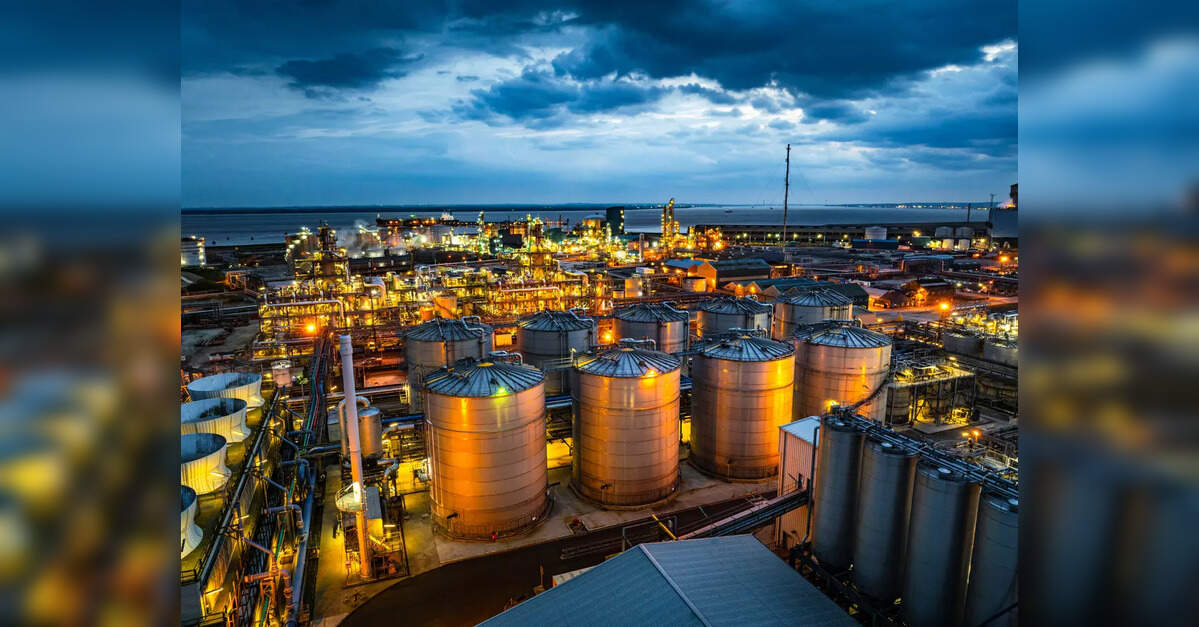
The global petrochemical sector is navigating an increasingly turbulent landscape, with protectionist trade policies now adding a formidable new layer of complexity to existing challenges. For investors, understanding these intertwined pressures is paramount to identifying resilient opportunities amidst widespread disruption. Recent insights from industry leaders underscored a stark reality: US tariffs are not merely a nuisance but a significant force poised to reshape global petrochemical trade flows and profitability for years to come.
Tariff Tides: An Unprecedented Squeeze on Global Petrochemical Trade
The petrochemical industry, a vital component of the broader energy complex, has grappled with persistent overcapacity for half a decade. This structural imbalance has already driven a substantial 34% decline in global petrochemical trading volumes over the past five years, eroding margins and pushing asset-light trading houses to the brink. Now, the imposition of tariffs, particularly those originating from the United States, threatens to exacerbate this precarious situation further. Industry executives warn that if these tariffs persist, the sector could face an additional 15% reduction in global trade, marking a total contraction of nearly 50% from prior levels within a decade.
This protectionist shift is not just about direct trade barriers; it’s fundamentally altering market dynamics. Countries are increasingly prioritizing domestic production and supply chain resilience, leading to a more fragmented global market. A notable consequence is the redirection of Chinese petrochemical products into what were traditionally considered “safe” or established markets for other producers, intensifying competition and squeezing margins further across various regions. For investors grappling with opaque market signals, questions surrounding the true impact of these cascading trade policies are at the forefront of their concerns, highlighting the acute need for precise, data-driven analysis to decode these complex shifts.
Feedstock Volatility and Downstream Margins: A Double-Edged Sword
The profitability of petrochemical operations is intrinsically linked to the cost of feedstock, primarily crude oil and natural gas. While a significant driver, even fluctuating crude prices offer little solace when demand is suppressed and trade is hindered by tariffs. As of today, Brent crude trades at $98.51 per barrel, reflecting a modest daily dip of 0.89% within a day range of $97.92 to $98.58. More broadly, the benchmark has seen a notable decline over the past 14 days, falling by over 12% from $112.57 to $98.57 per barrel. This recent softening in crude prices, while potentially offering some relief on the input cost side, must be viewed through the lens of heightened trade friction.
Such price volatility makes long-term investment planning exceptionally challenging. The industry requires consistent, predictable feedstock costs to justify the massive capital outlays for new plant construction or expansion. The current environment, characterized by both price swings in crude and the unpredictable nature of tariff regimes, creates a significant hurdle for short-term investment decisions. Investors are keen to understand not just the current price, but the underlying factors driving it and how sustained crude price trends might interact with the tariff landscape to impact refining and petrochemical margins.
Navigating Future Currents: Strategic Shifts and Emerging Opportunities
Amidst the global headwinds, certain regional bright spots and strategic adjustments are emerging. India, for instance, stands out with robust and stable petrochemical consumption growth, offering a compelling counter-narrative to the broader market slowdown. This sustained demand provides a vital outlet for producers and hints at the potential for localized growth strategies to mitigate global trade disruptions. For forward-looking investors, understanding these pockets of resilience is crucial.
Looking ahead, the energy market’s foundational elements will continue to evolve, directly impacting the downstream sector. Investors keenly await the outcomes of the OPEC+ Joint Ministerial Monitoring Committee (JMMC) on April 18th, followed by the Full Ministerial meeting on April 20th. These deliberations are crucial as they will shape global crude supply policies, directly influencing feedstock costs for the downstream sector and addressing key investor questions about current production quotas. Further insights into supply-demand balances will come from the API Weekly Crude Inventory reports on April 21st and 28th, and the EIA Weekly Petroleum Status Reports on April 22nd and 29th. These events collectively feed into the volatility that makes investment planning so complex, compelling petrochemical companies to re-evaluate their global footprints, potentially favoring regional self-sufficiency or closer integration with domestic consumption centers to insulate themselves from external trade shocks and unpredictable supply chains. The ongoing Baker Hughes Rig Count reports, scheduled for April 17th and 24th, will offer additional signals on future upstream activity, indirectly affecting long-term feedstock availability and pricing stability for petrochemical producers.
Investment Implications in a Fragmented Market
The confluence of sustained overcapacity, escalating protectionist tariffs, and volatile crude prices has created a challenging, yet not entirely devoid of opportunity, landscape for petrochemical investors. Companies with diversified asset bases, strong balance sheets, and strategic geographic positioning – particularly those with exposure to high-growth markets like India – are better positioned to weather the current storm. The shift towards regionalized supply chains and domestic market focus is likely to accelerate, favoring producers who can adapt quickly to evolving trade policies and secure stable feedstock supplies locally. Investors should scrutinize company strategies for resilience, including efforts to enhance operational efficiency, reduce reliance on international trade, and innovate product portfolios to meet localized demand. The era of seamless global petrochemical trade may be receding, ushering in a new paradigm where strategic regional presence and robust domestic market penetration dictate success.


