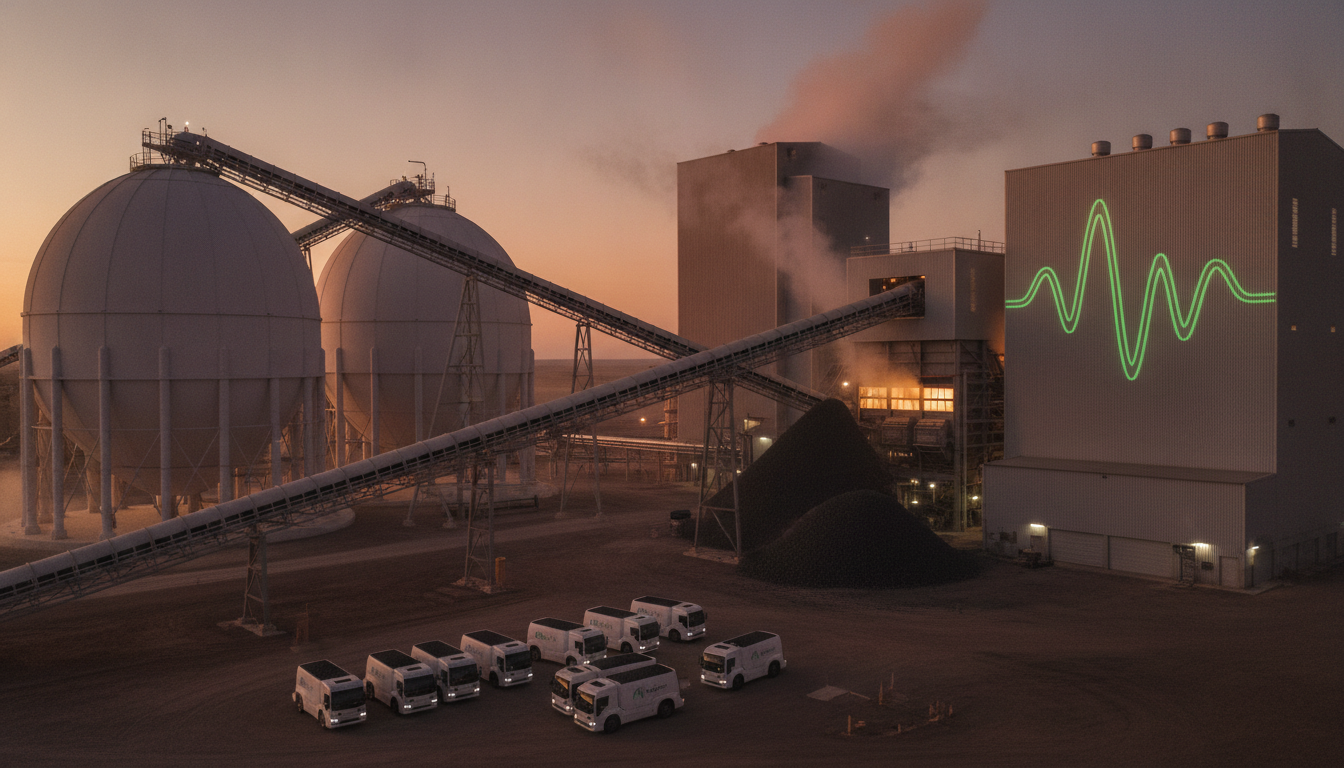
Global mining titan Rio Tinto has finalized a pivotal five-year agreement for bio pellet supply, marking a significant step in its decarbonization strategy for alumina production. This deal, inked with Australian bioenergy firm SuperChar Limited (SCL), targets the energy-intensive operations at Rio Tinto’s Gladstone alumina refineries, with deliveries slated to commence in 2028. For investors tracking the energy transition and sustainable resource extraction, this initiative underscores a tangible commitment from a major player to integrate renewable solutions into core industrial processes, signaling both environmental progress and potential operational efficiencies.
The strategic importance of this collaboration lies in its direct attack on one of the most carbon-intensive segments of the aluminum value chain. Alumina refining, the process of converting bauxite ore into alumina, demands substantial heat and steam, traditionally generated through fossil fuels, primarily coal, at Rio Tinto’s Gladstone facilities. This agreement comes after extensive operational trials and a comprehensive feasibility study conducted by Rio Tinto, which demonstrated the viability of bio pellets as a partial coal substitute. The forthcoming large-scale testing will rigorously assess the technical and commercial applicability of this alternative fuel, offering critical insights for future industrial decarbonization pathways.
Piloting a Greener Path for Industrial Heat
Recent trials showcased promising results, with bio pellets successfully replacing up to 30% of the coal typically used to generate steam within the refinery boilers. This outcome provides a strong foundation for Rio Tinto’s next phase: a series of operational demonstrations incorporating fuel blends ranging from 5% to 50% bio pellets. It is crucial to note that this initial contract period positions bio pellets as a supplement rather than a complete replacement for coal, reflecting a pragmatic, phased approach to heavy industrial decarbonization. Managing the complexities of maintaining stable heat, pressure, and steam output while integrating fuels with potentially different combustion characteristics represents a significant engineering challenge, yet one that Rio Tinto is actively addressing.
Armando Torres, Managing Director of Rio Tinto Aluminium Pacific Operations, emphasized the multifaceted approach required for this transition. “Decoupling our alumina production from fossil fuels demands a multi-faceted approach, integrating advanced technologies, innovative practices, and strategic collaborations, and bio pellets represent one of the actionable alternatives we are rigorously examining,” Torres stated. “The recent trials and our comprehensive feasibility assessment have yielded invaluable insights, and this agreement propels us to the next stage in understanding the practical implementation and scaling potential of bio pellets across our Gladstone operations. Furthermore, this initiative holds the promise of fostering nascent industries and bolstering regional supply chains within Central Queensland, forging novel connections between agriculture and industrial sectors.” This executive perspective highlights the dual benefit of environmental stewardship and regional economic development, a compelling narrative for ESG-conscious investors.
Local Sourcing, Global Impact: Economic and Environmental Returns
SCL’s commitment to establishing a dedicated bio pellet manufacturing plant in the Gladstone region further solidifies the localized impact of this partnership. This facility will rely on regionally cultivated bana grass as its foundational biomass feedstock. Bana grass, a high-yielding perennial energy crop, is well-suited to Central Queensland’s climate and can be cultivated and harvested using conventional sugar cane equipment, remaining productive for over 15 years once established. This sustainable agricultural model provides a secure and renewable source of biomass, mitigating concerns around feedstock integrity and supply chain vulnerabilities.
Initial projections indicate the proposed SCL facility will produce 35,000 tonnes of bio pellets annually. The timeline envisions a progressive rollout of bana grass planting commencing in late 2026, followed by pellet processing operations by 2028. Critically, upon reaching full contractual capacity, this endeavor projects a reduction in Rio Tinto’s direct Scope 1 emissions by up to 90,000 tonnes of carbon dioxide equivalent each year. This significant reduction is calculated based on Australia’s current National Greenhouse and Energy Reporting framework, offering a quantifiable measure of the environmental benefit that could resonate positively with investors focused on carbon footprint reduction and climate risk mitigation.
Michael Palmer, Executive Chairman of SCL, underscored the collaborative spirit and potential for regional empowerment. “This landmark agreement culminates years of collaborative development, vividly demonstrating the potential for locally grown, regeneratively sourced biomass as a viable industrial fuel alternative, concurrently creating substantial opportunities for regional communities,” Palmer commented. “We eagerly anticipate furthering our partnership with Rio Tinto and advancing this project in conjunction with local stakeholders.” This sentiment reinforces the community benefit aspect, often a key consideration for long-term sustainable investments.
Investment Outlook: Performance, Governance, and Growth
The initial five-year agreement provides Rio Tinto with a crucial window to thoroughly evaluate the fuel’s performance before committing to larger volumes. Should these demonstrations prove successful, the potential for increased supply over time presents an attractive growth trajectory for SCL and a deeper decarbonization pathway for Rio Tinto. For astute investors and corporate strategists, this project conspicuously underscores the increasing prominence of bridging technologies in the urgent quest to reduce industrial emissions. While electrification and green hydrogen present compelling long-range solutions for certain high-temperature processes, biomass offers a more immediate pathway where existing boiler infrastructure can accommodate blended fuels without extensive overhauls.
However, the true environmental merit of such projects hinges on robust feedstock governance protocols. Factors such as land utilization, agricultural methodologies, transportation carbon footprint, and precise carbon accounting will collectively determine the project’s net emissions profile. Investors will closely scrutinize these aspects to ensure the reported Scope 1 emission reductions are holistic and do not inadvertently shift environmental burdens elsewhere.
Furthermore, this agreement strategically intertwines industrial sustainability efforts with localized economic expansion. A successful implementation has the potential to cultivate a new agricultural market and foster local processing capabilities within Central Queensland. For Rio Tinto, the Gladstone trials are an integral component of a broader corporate imperative to diminish the carbon intensity inherent in aluminum production. The commercial outcomes of this pioneering effort could significantly influence how other alumina producers approach fossil fuel substitution, not only across Australia but also within international refining markets, thereby shaping future investment trends in the global energy and mining sectors.