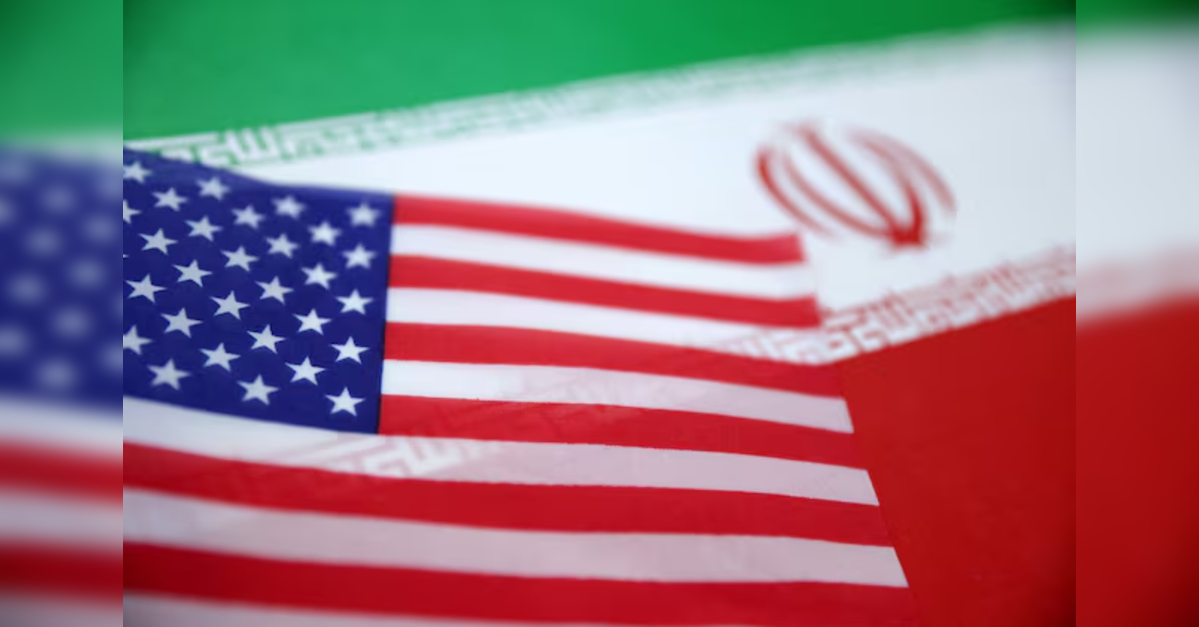
The global oil market is once again navigating a heightened risk premium following the latest round of US sanctions targeting Iran’s oil export network. These measures, announced recently, aim to tighten the noose around Tehran’s ability to move crude, sending ripples through supply expectations and immediate price action. As a senior investment analyst, our focus remains on dissecting the tangible implications for energy investors, moving beyond the headlines to understand the strategic impact on global supply and demand dynamics, and how these developments influence the investment landscape.
The Expanding Net: Targeting Iran’s Oil Export Infrastructure
The recent US Treasury Department action represents a significant escalation, targeting 13 entities and eight vessels involved in the transportation of Iranian oil. This comprehensive approach hits at the very mechanisms Iran has utilized to circumvent existing restrictions. Specifically, the sanctions designated companies based across Hong Kong, China, the United Arab Emirates, and the Marshall Islands, alongside individuals like Greek national Antonios Margaritis, who allegedly orchestrated a network for illicit oil shipments. Key entities such as Ares Shipping Limited in Hong Kong, Comford Management in the Marshall Islands, and Hong Kong Hangshun Shipping Limited were explicitly named. Furthermore, three Panama-flagged crude oil tankers—Adeline G, Kongm, and Lafit—were identified as participating in these illicit activities.
Adding another layer of enforcement, the State Department separately imposed sanctions on two China-based operators of oil-related terminals and storage: Qingdao Port Haiye Dongjiakou Oil Products Co in Shandong province and Yangshan Shengang International Petroleum Storage and Transportation Co in Zhejiang province. These firms were implicated in handling Iranian oil imports aboard tankers already subject to US sanctions. This dual-pronged attack, spanning shipping, financing, and storage infrastructure across multiple jurisdictions, underscores a determined effort to disrupt Iran’s oil trade. While Iran maintains that “effective” nuclear talks with the United States have not yet arrived, these sanctions reinforce a stance of continued pressure, creating a tangible supply-side risk for the market.
Immediate Market Reaction and Underlying Price Trends
The impact of these renewed supply concerns was swift and visible. As of today, Brent Crude trades at $98.21 per barrel, marking a robust 3.46% increase within the day, with a range between $94.42 and $99.84. Similarly, WTI Crude has seen a significant uptick, now at $90.05 per barrel, up 2.18% from its daily low of $87.32. Gasoline prices have also followed suit, rising to $3.08 per gallon. This immediate positive price momentum reflects the market’s perception of tightening supply, even if the actual reduction in Iranian exports takes time to materialize fully.
However, it’s crucial for investors to contextualize this recent surge. Our proprietary data reveals that this daily rally occurs against a backdrop of a notable bearish trend over the past two weeks. Brent crude had depreciated by a significant 12.4%, falling from $108.01 on March 26th to $94.58 on April 15th. This recent price increase therefore represents a sharp reversal, indicating that geopolitical risks, particularly those impacting supply, remain a potent catalyst capable of quickly overshadowing underlying demand concerns or broader economic headwinds. The sanctions introduce a fresh supply risk premium, recalibrating expectations for the short to medium term.
Geopolitical Dynamics and Investor Foresight
The timing of these sanctions, amidst stalled nuclear talks and prior reports of strikes on Iranian nuclear sites, clearly signals an elevated state of geopolitical tension. This environment naturally leads to increased uncertainty for oil and gas investors. Our first-party intent data shows that many of our readers are actively seeking clarity on the market’s future trajectory. A recurring question this week, for instance, has been: “Build a base-case Brent price forecast for next quarter.” Such forecasts become inherently more complex when geopolitical variables inject unforeseen supply shocks into the equation.
Moreover, investors are keenly asking, “What are OPEC+ current production quotas?” This highlights a critical intersection between geopolitical supply disruptions and the planned output strategies of major producers. The effectiveness of these sanctions in curbing Iranian oil exports will inevitably influence OPEC+’s calculus. If Iranian oil flows are significantly curtailed, it could create a gap that OPEC+ members might need to address, or alternatively, choose to exploit by maintaining current production levels to support higher prices. The ongoing geopolitical friction makes any base-case forecast highly sensitive to sudden policy shifts or escalation, demanding a more dynamic approach to risk assessment.
Navigating the Upcoming Calendar: Key Dates for Oil Investors
For investors positioning themselves in this volatile market, the upcoming calendar of energy events holds critical importance, especially in light of the renewed Iranian sanctions. The next two weeks are particularly dense with potential market-moving announcements. On April 18th, the OPEC+ Joint Ministerial Monitoring Committee (JMMC) will convene, followed by the full OPEC+ Ministerial Meeting on April 20th. These meetings are pivotal; members will assess global supply and demand fundamentals, and the impact of these new sanctions on Iranian exports will undoubtedly be a central topic of discussion. Any commentary or decision regarding production quotas could either amplify or mitigate the current supply concerns.
Beyond OPEC+, investors must closely monitor weekly inventory data. The API Weekly Crude Inventory report on April 21st and the EIA Weekly Petroleum Status Report on April 22nd will offer the first post-sanction glimpses into US crude and product balances. These reports, repeated the following week on April 28th and April 29th respectively, will provide crucial indicators of whether global supply is absorbing the geopolitical shocks or if inventories are beginning to tighten. Additionally, the Baker Hughes Rig Count on April 17th and April 24th will provide insights into future US shale production trends, offering a counterpoint to potential supply reductions from sanctioned nations. Active investors will be scrutinizing these dates for any signs of a shift in the supply/demand equilibrium.


