India’s Potential Pivot: A New Chapter for Global Oil Flows
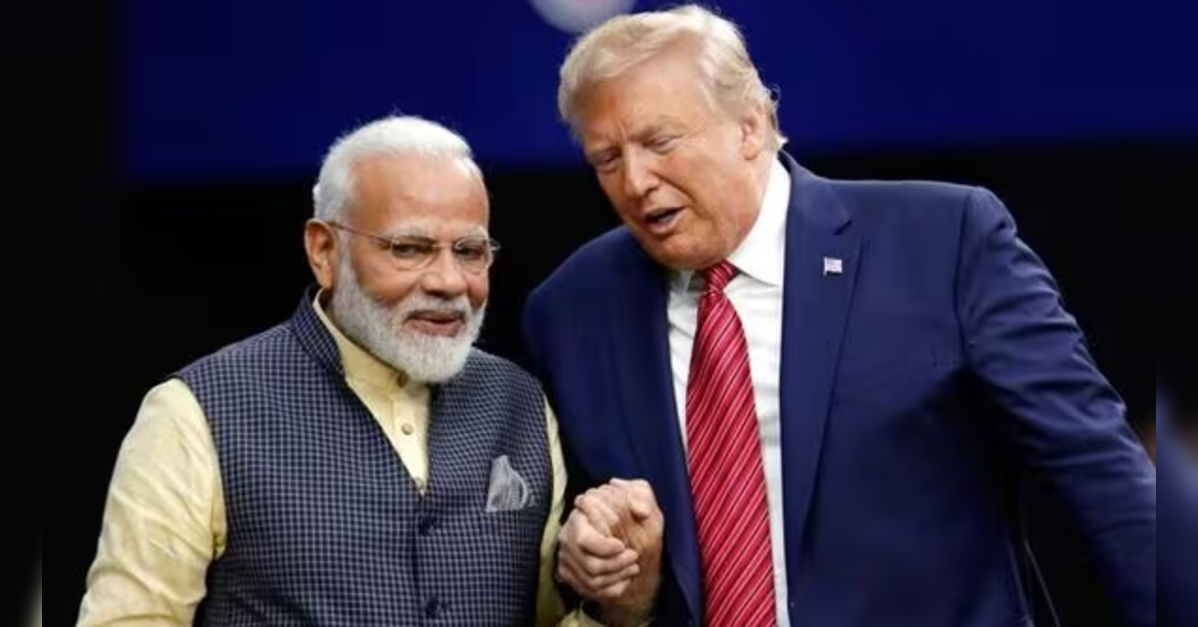
A potential seismic shift in global oil trade is brewing, with the United States intensifying efforts to decouple major consumers from Russian crude. The recent assertion by former US President Donald Trump, claiming Indian Prime Minister Narendra Modi has pledged to cease Russian oil purchases, marks a pivotal moment. If confirmed and implemented, this move by India, a nation that has become Moscow’s top energy customer since early 2022, could fundamentally reshape established trade routes, supply chain logistics, and the geopolitical calculus for energy security globally. While the immediate implications for India involve navigating potentially higher import costs, the broader market ramifications extend to Russia’s revenue streams and the delicate balance of international oil supply.
Geopolitical Pressure Meets India’s Energy Imperative
For months, India firmly resisted international pressure to curb its intake of discounted Russian crude, citing national energy security as paramount. This stance saw India ramp up its imports, reaching a substantial 1.62 million barrels per day in September, fulfilling a significant portion of its domestic demand. Russia, in turn, found a critical outlet for its seaborne crude, which European buyers largely shunned following the imposition of Western sanctions. Trump’s latest diplomatic push, reportedly involving discussions with Modi, suggests a renewed, bilateral approach to severing these energy ties. This strategy appears to leverage direct political influence rather than solely relying on multilateral sanctions. The appointment of a new US ambassador to India, a close confidant of Trump, further underscores the strategic importance placed on strengthening bilateral relations to achieve this objective. Investors should watch closely for official confirmations from India, as the White House has acknowledged that any such transition would be a “process” rather than an immediate halt, signaling complex logistical and contractual considerations.
Market Dynamics: Navigating Price Trends and Supply Readjustments
The timing of this geopolitical maneuver coincides with a notable softening in crude prices, a factor that could mitigate the financial burden on India should it seek alternative, potentially more expensive, suppliers. As of today, Brent crude trades at $96.3 per barrel, reflecting a 3.11% decline in today’s session alone, with WTI following suit at $87.83 per barrel, down 3.66%. This recent downturn is part of a broader trend; Brent has shed $14, or over 12%, in the last two weeks, moving from $112.57 on March 27th to yesterday’s $98.57, and further today. While still elevated from historical averages, these lower price levels would indeed temper the impact of India needing to procure crude from alternative sources like the Middle East, West Africa, or even the United States. However, shifting such vast volumes of crude from Russia would necessitate a major re-calibration of global tanker routes and refining logistics, potentially introducing new premiums for certain grades and regions. For Russia, losing its largest individual crude market would exert immense pressure on its export channels, likely forcing deeper discounts or further re-routing to other willing buyers, primarily China.
Investor Focus: Anticipating Signals from Upcoming Events
Our proprietary reader intent data reveals a keen investor focus on market fundamentals, with frequent inquiries about current Brent prices and, crucially, OPEC+ production quotas. This highlights the market’s sensitivity to supply-side developments, making the potential shift in Indian crude procurement a top-tier concern. Investors are rightly looking to upcoming events for clearer signals regarding global supply management. The OPEC+ Joint Ministerial Monitoring Committee (JMMC) meets tomorrow, April 17th, followed by the Full Ministerial meeting on April 18th. These meetings are critical. Should India’s pivot away from Russian oil materialize, OPEC+ will face a complex decision: maintain current output levels amid potentially reshaped demand patterns, or consider adjustments to stabilize a market potentially awash in re-routed crude or facing new supply bottlenecks elsewhere. Furthermore, weekly inventory reports from the API and EIA, due April 21st/22nd and April 28th/29th, will provide immediate granular data on US crude stockpiles, offering a localized pulse on global supply comfort. These data points, alongside the Baker Hughes Rig Count on April 24th and May 1st, will be vital for investors to gauge market health and potential future supply responses in the wake of such a significant geopolitical development.
Broader Implications: Reshaping Energy Alliances and China’s Role
Beyond the immediate market impact, India’s potential decision carries profound geopolitical weight. It signals a shift in the calculus for other nations still importing Russian crude, demonstrating the effectiveness of bilateral pressure in enforcing economic isolation. This could embolden the US to pursue similar strategies with other nations. While the spotlight is firmly on India, the relative silence on China’s continued robust imports of Russian crude, despite Beijing being Moscow’s other top buyer, adds another layer of complexity. Trump’s previous reluctance to pressure China on this front, likely due to existing trade tensions, suggests a nuanced and selective application of diplomatic leverage. The long-term consequences could see a further fracturing of global energy alliances, with nations increasingly choosing sides in a multipolar world. Investors should consider the evolving risk premiums associated with certain supply routes and the potential for increased volatility as geopolitical considerations continue to exert significant influence over commodity markets.


