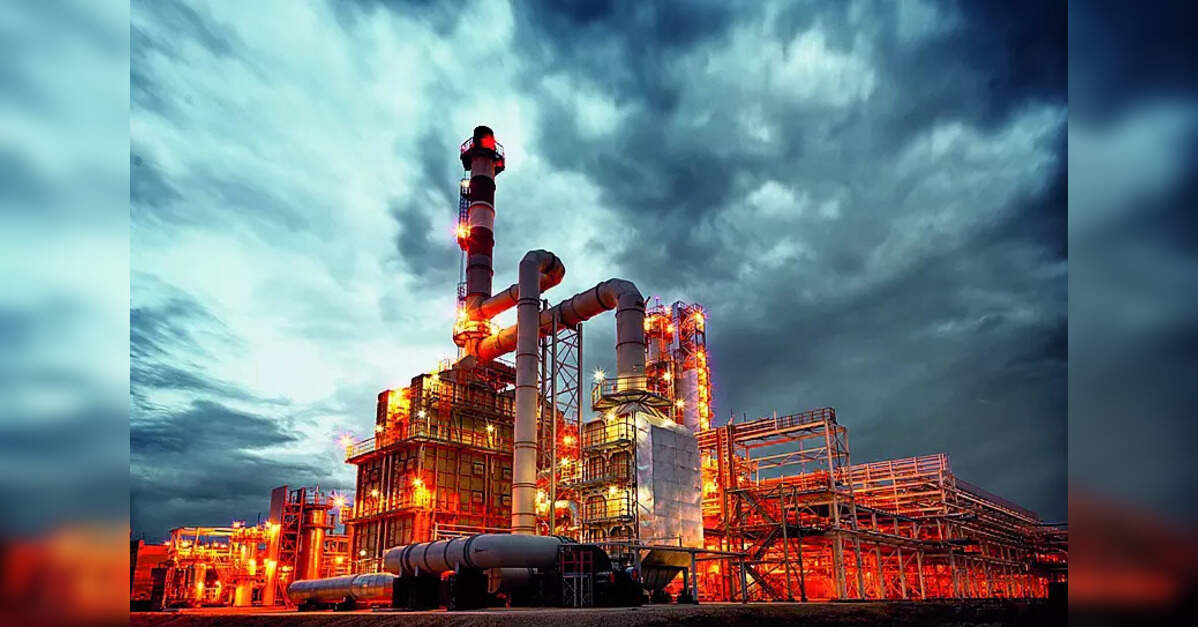
The global energy landscape continues to present a complex web of opportunities and risks for investors, with geopolitical tensions increasingly manifesting in tangible disruptions to critical infrastructure projects. A recent development involving Nayara Energy, a significant player in India’s refining sector, underscores this volatility. Reports indicate that US and EU sanctions, though not directly targeting Nayara, are now impeding its ambitious engineering, procurement, and construction (EPC) initiatives. This situation highlights the cascading effects of international policy on energy supply chains and capital expenditure, demanding close scrutiny from investors navigating the evolving dynamics of crude oil and refined product markets.
Sanctions Ripple Through Nayara’s Ambitious Expansion
Nayara Energy, a key refiner with a 20 million tonnes per annum (MTPA) complex in Vainer, Gujarat, is facing significant headwinds in its strategic expansion plans. The company had embarked on a substantial ₹70,000 crore (approximately $8 billion) investment, earmarking funds for petrochemicals, ethanol plants, and marketing infrastructure. Central to this strategy was the development of a 1.5 MTPA ethane cracker and a polypropylene segment, alongside critical infrastructure like a single point mooring system and associated pipelines.
However, the indirect fallout from US and EU sanctions, primarily due to Rosneft PJSC’s 49.13% stake in Nayara, has led to key international EPC contractors withdrawing from tenders. Notably, France’s Technip Energies has reportedly stepped back from front-end engineering design work for the polypropylene segment, while Indonesia’s PT Timas Suplindo is said to be avoiding the installation of the vital mooring system and pipelines. These withdrawals are not merely procedural delays; they represent a tangible challenge to Nayara’s timeline and budget, forcing the company to explore domestic or alternative regional EPC providers. This shift could introduce new complexities, potentially impacting project costs, execution efficiency, and the overall long-term profitability of these crucial expansion efforts. Investors must consider how such geopolitical entanglement adds a layer of risk to refinery and petrochemical projects, even in seemingly neutral territories.
Market Headwinds and Investor Outlook on Crude Prices
The challenges faced by Nayara Energy are unfolding against a backdrop of significant shifts in global energy markets. As of today, Brent Crude trades at $90.38 per barrel, marking a sharp 9.07% decline within the day, with its range fluctuating between $86.08 and $98.97. Similarly, WTI Crude has seen a precipitous drop of 9.41% to $82.59 per barrel. This recent downturn extends a broader trend, with Brent having fallen from $112.78 on March 30 to $91.87 just yesterday, representing a substantial $20.91 (18.5%) decrease over the past two weeks.
These pronounced price movements naturally lead investors to question the market’s trajectory. Many are asking about the predicted price of oil per barrel by the end of 2026. While the current retreat suggests some easing of immediate supply fears or a response to broader macroeconomic concerns, the Nayara situation underscores persistent supply-side vulnerabilities. The EU’s recent move, effective September 3, to slash the price cap on Russian oil to $47.6 per barrel, from $60, and target its shadow fleet, alongside US tariffs on Indian imports, are direct contributors to market uncertainty. These measures complicate crude flows and refining operations globally. For investors, the takeaway is clear: while demand-side factors and macroeconomic sentiment are pushing prices lower today, geopolitical disruptions to refining capacity and project development, as seen with Nayara, can tighten product markets, creating a floor for prices and potential for upward swings once demand strengthens or supply issues deepen. The current volatility demands a nuanced perspective, balancing immediate price action with underlying structural risks.
India’s Refining Hub: Navigating Geopolitical Crosscurrents
India has strategically positioned itself as a major refining hub, processing crude not only for domestic consumption but also for export, particularly to Europe. This role, however, is increasingly complicated by the intricate web of international sanctions and trade policies. While India’s oil purchases from Russia have been a point of contention with the US, the indirect impact on Indian entities like Nayara Energy highlights the broader challenge for nations seeking to maintain energy security amidst global geopolitical realignments.
Nayara Energy’s predicament serves as a potent case study. Despite not being directly sanctioned, its significant Russian ownership makes it a risk for Western companies. This forces Nayara to adapt its project execution strategy, potentially seeking EPC partners from non-aligned regions or intensifying reliance on domestic capabilities. Such shifts, while necessary, can introduce new challenges related to technology transfer, project financing, and adherence to international quality standards, potentially elongating project timelines and increasing overall costs for its substantial ₹70,000 crore expansion. The broader implication for India’s refining sector is the increased pressure to diversify not just crude sources, but also technology partners and financial backing, thereby enhancing resilience against future geopolitical shocks and securing its position as a reliable global supplier of refined products.
Forward Outlook: OPEC+ Decisions and Strategic Resilience
Looking ahead, the energy market’s immediate focus will shift to critical upcoming events that could significantly influence supply-demand dynamics and price stability. The OPEC+ Joint Ministerial Monitoring Committee (JMMC) meeting on April 18, followed by the Full Ministerial Meeting on April 19, are paramount. Investors are keenly watching to see if OPEC+ will respond to the recent sharp decline in crude prices. Many are asking about current OPEC+ production quotas and how these might be adjusted to stabilize the market. Any decision to cut production further could provide a floor for prices, while a maintenance of current quotas might signal confidence in underlying demand or an acknowledgement of recessionary pressures.
Beyond OPEC+, weekly data releases, such as the API and EIA crude inventory reports on April 21, 22, 28, and 29, along with the Baker Hughes Rig Count on April 24 and May 1, will offer crucial insights into US supply and demand trends. These metrics, combined with the unfolding situation at Nayara and similar indirect sanction-related challenges across the globe, paint a picture of an energy market grappling with both demand uncertainty and supply-side structural risks. For long-term investors, the Nayara case is a stark reminder of the increasing importance of strategic resilience – not just in terms of diversifying energy sources, but also in securing the partners and technologies vital for future growth. Companies that can effectively navigate these geopolitical minefields, find alternative supply chain solutions, and manage project execution despite external pressures will likely emerge stronger in this highly complex investment environment.


