The Calming Seas of Global Trade: A Nuanced Signal for Oil Markets
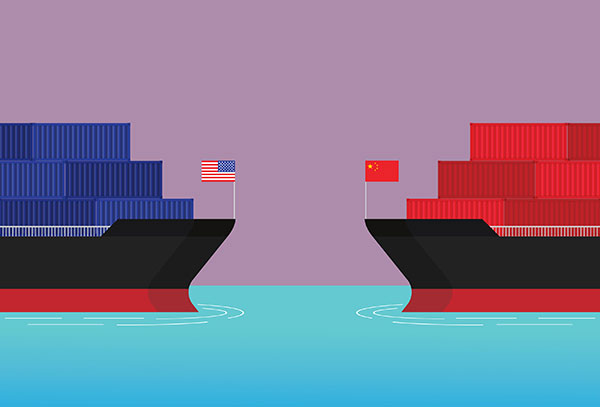
After a period of significant turbulence earlier in the year, major shipping routes between China and the United States are finally demonstrating a notable return to stability. Proprietary market data indicates a substantial reduction in “blank sailings” – instances where scheduled vessel departures are canceled – marking an 82% drop from April’s peak on China-to-U.S. routes and an 83% decline from May’s high on U.S.-to-China routes. This stabilization, particularly as we approach the end of 2025, is a critical development for oil and gas investors. Earlier volatility was driven by importers rushing to beat tariff deadlines and carriers struggling to match fluctuating demand. The current environment, characterized by consistently low planned blank sailings into November, suggests that trade patterns are settling into a more predictable rhythm, offering a clearer, albeit complex, demand signal for global crude flows.
Crude Prices in Flux: Decoding Investor Sentiment Amidst Shipping Stability
While the logistics of global trade show signs of calming, the crude oil market itself remains highly dynamic. As of today, Brent crude trades at $90.38, experiencing a significant single-day decline of 9.07%, with its price fluctuating within a range of $86.08 to $98.97. Similarly, WTI crude has seen a sharp dip, now at $82.59, marking a 9.41% drop for the day, having traded between $78.97 and $90.34. This recent daily volatility is part of a broader downward trend; Brent has fallen nearly 20% in just over two weeks, from $112.78 on March 30th to its current level on April 17th.
This stark contrast between shipping stability and crude price volatility naturally leads to intense investor scrutiny. Our first-party intent data reveals that investors are actively questioning the immediate direction of key benchmarks, with inquiries such as “is WTI going up or down” dominating discussions. Beyond the short-term, there’s also significant interest in long-range forecasts, exemplified by questions like “what do you predict the price of oil per barrel will be by end of 2026?” The stability in China-US shipping, a key conduit for global trade, theoretically underpins demand by reducing supply chain friction. However, current price action suggests that other macro factors, perhaps related to global economic growth concerns or shifts in supply expectations, are currently exerting a more powerful influence on investor sentiment. For the oil and gas sector, the challenge lies in discerning whether this shipping stability will eventually translate into more robust and sustained oil demand, offsetting current bearish pressures.
Geopolitical Resolve and Forward-Looking Demand Drivers
The observed stability in China-U.S. shipping routes is directly linked to a crucial geopolitical development: the agreement between the United States and China to halt a fresh round of tariff hikes. This de-escalation allowed carriers to dial back previously planned cancellations, demonstrating the immediate impact of policy decisions on logistics and, by extension, on the underlying demand for goods that require energy to transport. While the focus has been on the China-U.S. corridor, it is important to note that other trade routes have shown increased blank sailings, such as the US East Coast to South Asia (+186% year-over-year) and Asia-to-Canada (+80%), suggesting a heterogeneous global demand picture.
This complex backdrop of stabilizing, yet uneven, trade flows will undoubtedly inform upcoming critical energy events. Investors should closely monitor the OPEC+ Joint Ministerial Monitoring Committee (JMMC) Meeting on April 19th, followed immediately by the full OPEC+ Ministerial Meeting on April 20th. While these meetings primarily address supply-side management, the global demand outlook, significantly influenced by trade stability in major consuming nations like China, will be a key consideration in any production policy decisions. Further insights into demand will come from the API Weekly Crude Inventory report on April 21st and the EIA Weekly Petroleum Status Report on April 22nd, with subsequent reports on April 28th and 29th, respectively. Consistent inventory draws, even amidst current price weakness, could signal underlying demand resilience. Moreover, the Baker Hughes Rig Count on April 24th and May 1st will provide a read on North American supply response, which could be influenced by a more predictable global trade environment in the medium term. Sustained stability in key trade lanes could encourage long-term investment in oil production, anticipating more consistent demand.
Investment Implications: Spotting Opportunities in the Calm Amidst Volatility
For investors navigating the current oil and gas landscape, the stabilization of China-U.S. shipping offers a crucial, albeit subtle, signal. While crude prices are experiencing significant short-term volatility, the reduced uncertainty in a major global trade artery points to a more predictable operating environment for the downstream sector and integrated oil majors. Less volatile shipping reduces supply chain risks, potentially improving refinery utilization rates and the efficiency of global product distribution. This predictability can also lead to more reliable demand forecasting from China, the world’s largest oil importer, which is a net positive for market transparency.
However, investors must temper this optimism with the reality of current market conditions. The nearly 20% drop in Brent crude over two weeks indicates that macroeconomic headwinds, potential oversupply concerns, or other sentiment drivers are currently outweighing the positive implications of stable trade. For sophisticated investors, this dichotomy presents a potential opportunity. The current price dip, while sharp, might be seen as a buying opportunity for those with a longer investment horizon, especially if the underlying stability in trade translates into sustained, albeit not explosive, demand growth. Companies with robust logistics capabilities and exposure to resilient Asian markets may be better positioned to capitalize on this evolving trade environment. Monitoring the interplay between geopolitical stability, trade logistics, and the forthcoming supply-side decisions from OPEC+ will be paramount in identifying value and managing risk in the volatile oil and gas investing landscape.