The European Union is dramatically accelerating its pivot away from traditional fossil fuels, deploying substantial capital into decarbonization initiatives that signal a profound shift in the continent’s energy future. Recent approvals by the European Commission for state aid packages totaling €5 billion represent a tangible commitment to climate objectives, simultaneously creating new investment pathways and posing significant strategic challenges for investors deeply entrenched in the oil and gas sector. This isn’t merely a policy statement; it’s a multi-billion-euro allocation reshaping the long-term energy investment landscape, demanding a keen eye on evolving market dynamics and the strategic implications for conventional energy assets.
EU’s €5 Billion Climate Push Against a Volatile Crude Backdrop
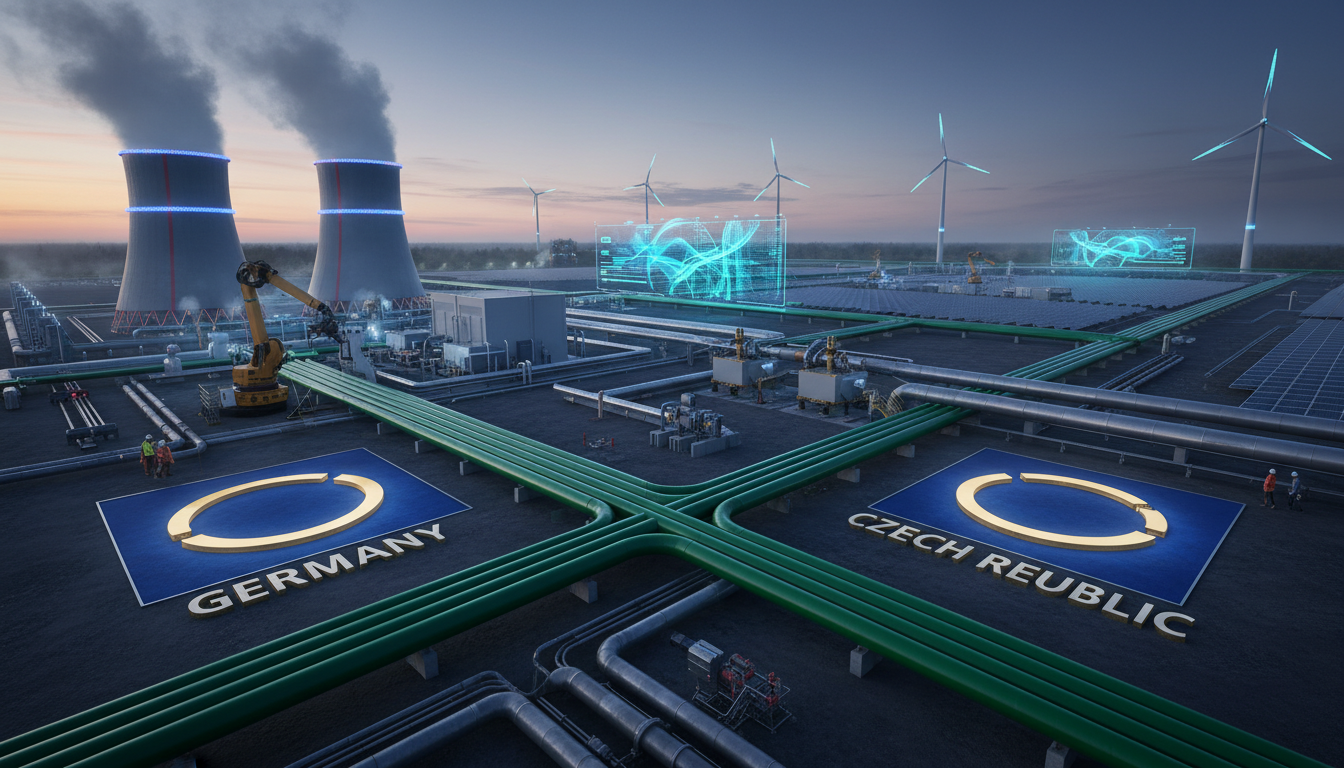
The EU’s latest financial commitments are a stark reminder of the bloc’s aggressive decarbonization agenda. Germany’s pioneering €1.3 billion program targets peatland carbon sequestration, while the Czech Republic is set to receive €3.7 billion to supercharge sustainable biomethane production. These initiatives, valued at a combined €5 billion, are not just about environmental stewardship; they are about fundamentally altering energy supply and demand within Europe, directly impacting the long-term outlook for oil and natural gas.
This strategic pivot unfolds against a backdrop of ongoing volatility in crude markets. As of today, Brent crude trades at $95.01 per barrel, reflecting a significant daily gain of over 5%. Similarly, WTI crude has pushed past the $86 mark, now at $86.92, up more than 5% on the day. However, this immediate uplift follows a notable downtrend, with Brent having shed nearly 20% from its March 30th peak of $112.78 to $90.38 just a few days ago on April 17th. This sharp swing underscores the inherent short-term unpredictability driven by geopolitical events and immediate supply-demand imbalances. Yet, even as traders navigate these daily fluctuations, the EU’s multi-billion-euro investments are laying the groundwork for a structural shift in energy consumption that investors cannot afford to overlook.
Germany’s Peatland Strategy: Unlocking Nature-Based Carbon Sinks
Germany’s €1.3 billion investment in peatland revitalization represents a crucial, yet often underestimated, front in the battle against climate change. Peatlands, when drained for agriculture and forestry, become significant emitters, contributing an estimated 7% of Europe’s annual greenhouse gas emissions. This program aims to reverse decades of degradation by supporting permanent rewetting efforts across vast areas, incentivizing new agricultural practices suitable for high water levels (known as ‘paludicultures’), and offering compensation for landowners’ economic losses during this transition.
For oil and gas investors, this initiative highlights the increasing competition for capital from nature-based solutions. While not directly replacing a barrel of oil, such programs reduce overall emissions, diminishing the perceived urgency for traditional fossil fuels in the long run. The aid package covers advisory services, implementation investments, and fosters innovative, carbon-negative farming systems. This creates a new, albeit niche, investment segment focused on ecological restoration and sustainable land use, diverting attention and potentially capital from conventional energy infrastructure projects that lack a strong ESG narrative.
Czech Republic’s Biomethane Push: A Direct Challenge to Natural Gas
The Czech Republic’s substantial €3.7 billion scheme, approved to support the production of sustainable biomethane, directly addresses the EU’s reliance on natural gas. Biomethane, produced from organic waste, serves as a renewable alternative to fossil natural gas, offering a pathway to decarbonize heating, transport, and industrial processes. The program aims to significantly scale up biomethane production, with ambitious targets for capacity expansion and consumption.
This move has clear implications for natural gas markets. As the EU actively promotes domestic biomethane production, the long-term demand for imported fossil gas is set to decline. Investors holding positions in natural gas extraction, infrastructure, or LNG terminals serving Europe must factor in this policy-driven demand erosion. The capital injection into biomethane infrastructure, processing facilities, and feedstock supply chains represents a direct challenge, signaling a strategic shift towards locally sourced, renewable gas alternatives that will increasingly displace conventional supplies.
Navigating the Evolving Energy Landscape: Investor Questions and Forward Outlook
Our proprietary reader intent data reveals a consistent theme among investors: a strong desire to understand future price direction. Questions like “is WTI going up or down?” and “what do you predict the price of oil per barrel will be by end of 2026?” underscore the pressing need for clarity in a complex market. While today’s impressive crude gains might suggest bullish momentum, the recent sharp decline of nearly 20% in Brent over the past 14 days serves as a potent reminder of market sensitivity to immediate news and sentiment.
Investors must differentiate between short-term price movements and fundamental, policy-driven shifts. While upcoming events like the OPEC+ JMMC Meeting on April 20th and the subsequent OPEC+ Ministerial Meeting on April 25th will undoubtedly influence near-term supply expectations and market sentiment, the EU’s multi-billion-euro investments represent a structural change in demand. These programs actively pull capital and policy support away from fossil fuels, building out alternative energy sources that will chip away at long-term oil and gas demand.
For the remainder of 2026 and beyond, this dual dynamic will define the investment landscape. Short-term supply responses from OPEC+ or inventory data from the API and EIA (weekly reports due April 21st/22nd and April 28th/29th) will continue to drive daily price action. However, the EU’s aggressive decarbonization initiatives, backed by significant financial commitments, are fundamentally altering the demand curve for fossil fuels. Investors must weigh the immediate impact of supply-side decisions against the accelerating, policy-driven erosion of demand for conventional energy sources, positioning portfolios for a future where energy transition policies play an increasingly dominant role in valuation and long-term performance.


