China’s Petrochemical Sector Navigates Geopolitical Headwinds and Soaring Feedstock Costs
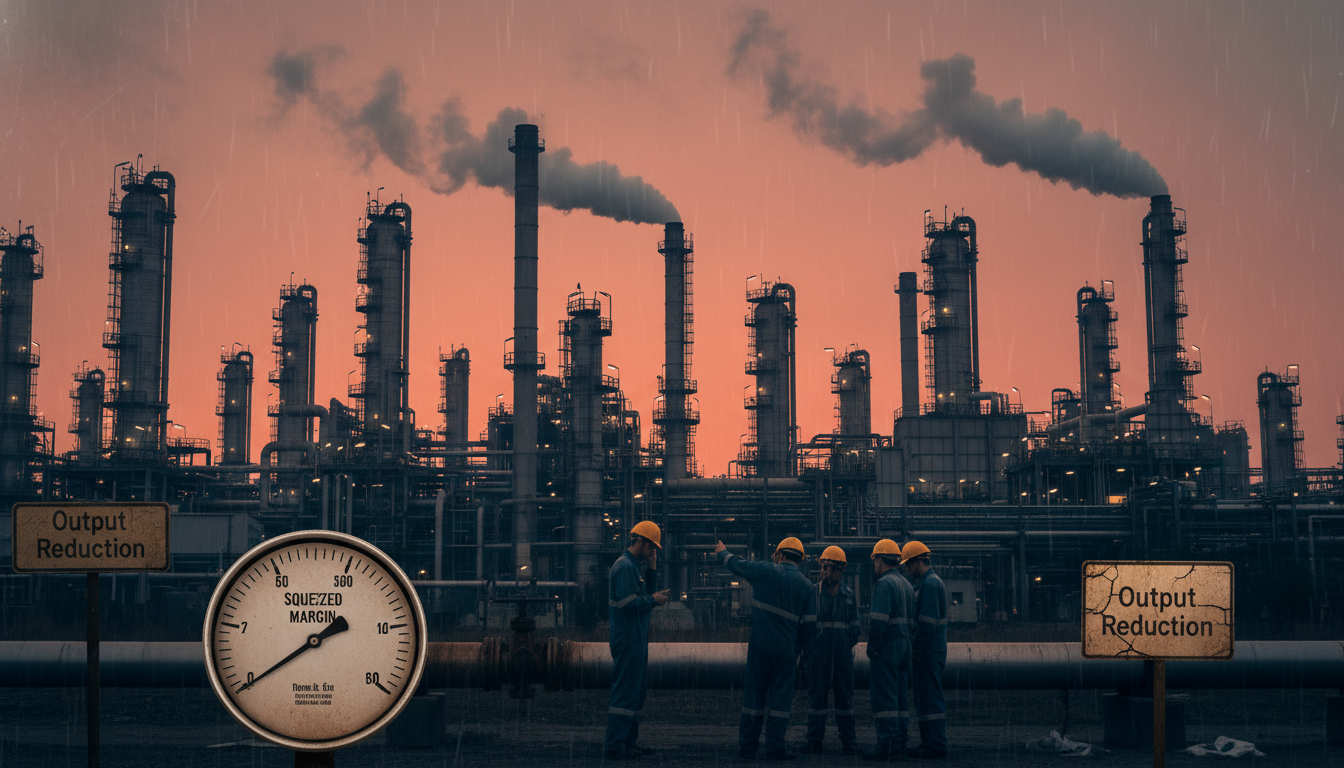
The vast Chinese petrochemical industry is currently experiencing significant operational headwinds, directly attributable to the escalating costs of crucial feedstocks amid heightened geopolitical tensions in the Middle East. Recent data indicates a marked contraction in output, with activity falling to its lowest point in three years. This downturn underscores the fragility of global supply chains and the immediate financial impact of international conflicts on industrial giants.
Approximately one-fifth of China’s total petrochemical manufacturing capacity has been taken offline as producers grapple with unsustainable input expenses. The industry is presently operating at a stark 68% of its potential, a clear signal of the economic pressures being exerted. This considerable reduction in operational throughput highlights a challenging environment for investors monitoring the Asian chemicals market, pointing to potential shifts in supply dynamics and profitability across the sector.
The Purified Terephthalic Acid (PTA) Index: A Bellwether for Margins
A prime example of the margin compression facing Chinese petrochemical firms can be observed in the futures market for purified terephthalic acid (PTA). This vital chemical, a fundamental building block in the production of polyester fibers and resins, has seen its futures prices surge by nearly 25% since the commencement of the Middle East conflict. Such a rapid escalation in raw material costs severely erodes profit margins for downstream manufacturers, forcing strategic adjustments like capacity curtailments.
At the start of the current year, PTA was trading below 5,000 yuan per ton, a relatively stable benchmark. However, the market witnessed a dramatic climb, with prices topping 7,000 yuan per ton in March, before settling slightly above 6,000 yuan per ton this month. These volatile price swings in a key commodity like PTA serve as a critical indicator for investors, signaling broader inflationary pressures within the petrochemical supply chain and challenging the financial performance of companies reliant on these inputs.
Crude Oil Markets: Divergent Signals from Futures and Physical Trades
While the petrochemical sector grapples with feedstock inflation, the broader crude oil market presents a nuanced picture. Oil prices have remained elevated, though they have recently retreated from triple-digit figures, dipping below $100 per barrel. This slight softening has been attributed to speculative hopes surrounding potential renewed ceasefire talks between the United States and Iran. Such diplomatic overtures often inject a degree of optimism into futures markets, leading to temporary price corrections.
However, the reality in the physical oil market diverges sharply from sentiment-driven futures. As one leading energy price forecaster aptly noted, “While diplomatic headlines suggest the possibility of renewed U.S.-Iran talks and even a temporary easing of transit restrictions, the physical reality remains fragmented.” The stark truth is that the ongoing U.S. blockade continues to prevent the outflow of Iranian crude, tightening physical supply regardless of political dialogue. This dichotomy between futures speculation and on-the-ground supply constraints is a crucial factor for energy investors to dissect, as physical market fundamentals ultimately dictate real-world pricing and availability.
The Scramble for Crude: Refiners Face Hefty Premiums and Supply Fragmentation
The physical market’s resilience to optimistic headlines underscores the severe challenges facing global refiners. With traditional Middle Eastern crude supplies disrupted, refiners are urgently seeking alternative barrels to maintain operations. This desperate search is translating into substantially higher costs, as buyers are willing to pay significant premiums to secure much-needed feedstocks. The scramble highlights the depth of the supply shock and the inelastic demand from an industry that cannot simply halt production.
A striking illustration of this market dynamic emerged yesterday, when West Texas Intermediate (WTI) crude destined for delivery in the Netherlands commanded an astonishing premium of $22.80 per barrel over Brent crude. Such a wide spread is highly unusual and indicative of an exceptionally tight physical market where localized supply shortages are driving up prices for specific grades and delivery points. For investors, this signals robust refining margins for those with secured supply, but also heightened cost pressures for those battling for spot cargoes.
China’s Relative Resilience and the Global Interconnectedness of Energy Markets
Although China has historically shown a degree of resilience, being relatively insulated from the most severe immediate impacts of global supply shocks, its vast industrial complex is not immune. The prevailing global crude oil prices and the overall availability of energy resources inevitably cascade down to affect its domestic industries. The petrochemical sector, in particular, feels this direct impact through the cost of its primary feedstocks.
Furthermore, these elevated input costs translate into higher prices for the myriad products churned out by these industries. This, in turn, can dampen demand, both domestically and internationally. For investors, understanding China’s intricate position—as a massive consumer and producer, yet still susceptible to global commodity fluctuations—is vital for assessing the overall health of the energy and chemicals value chain. The interconnectedness of global energy markets ensures that disruptions in one region reverberate worldwide, impacting trade flows, industrial output, and ultimately, corporate profitability.
Investor Outlook: Navigating Volatility in Petrochemicals and Crude
The current landscape presents a complex array of factors for investors in the oil and gas and petrochemical sectors. Geopolitical instability in the Middle East remains a primary driver of commodity price volatility, directly impacting feedstock costs and, consequently, the profitability of major industrial players like those in China’s petrochemical industry. The significant capacity reductions and squeezed margins in China offer a stark reminder of these vulnerabilities.
Investors should closely monitor key indicators such as PTA futures, crude oil differentials, and global refining margins. The divergence between speculative futures markets and the tight realities of physical crude supply demands a granular understanding of market dynamics. Companies with diversified supply chains, robust hedging strategies, or those vertically integrated to mitigate feedstock price shocks may prove more resilient. As global energy markets continue to navigate these turbulent waters, a proactive and informed investment strategy focused on these critical supply-demand imbalances will be paramount for capital preservation and growth.


