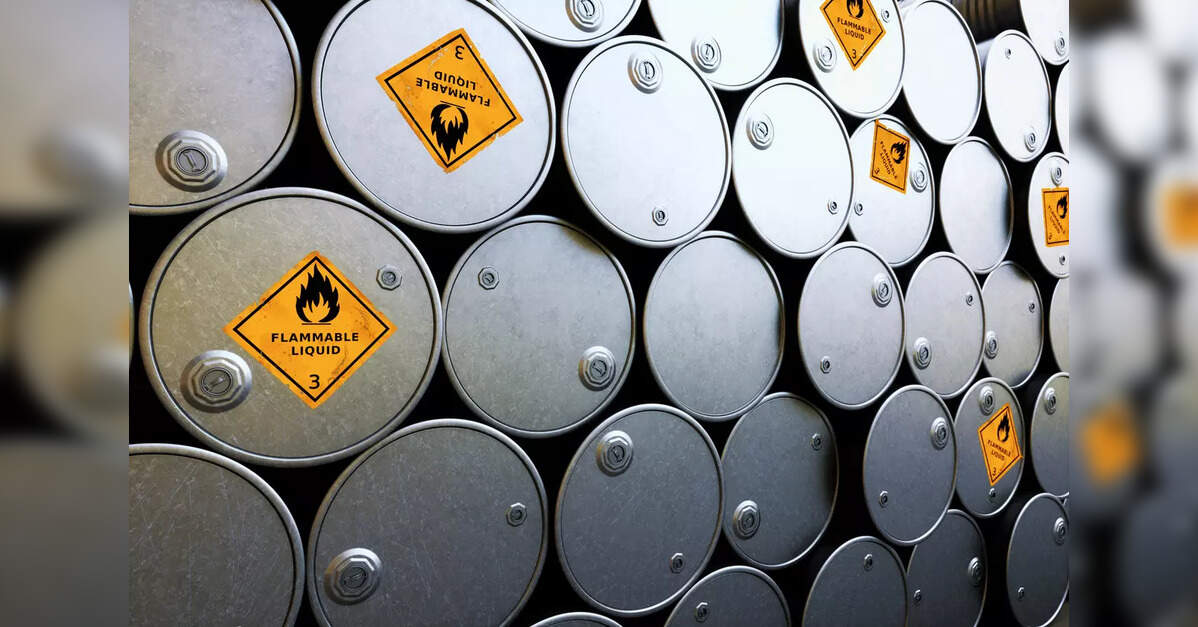
The United States Department of Energy’s recent announcement to acquire 1 million barrels of crude oil for the Strategic Petroleum Reserve (SPR) has captured the attention of energy markets and investors alike. This move, initiated with bids closing last October, signals a strategic intent to bolster national energy security by capitalizing on market conditions at the time. While a 1-million-barrel purchase represents a modest volume in the grand scheme of daily global consumption, its symbolic weight and long-term policy implications are significant for investors navigating the volatile landscape of oil and gas. For those monitoring crude oil investment opportunities, understanding the drivers behind such decisions, their immediate market impact, and the forward-looking indicators is paramount.
Strategic Replenishment: A Long-Term Vision for Energy Security
The decision to replenish the SPR stems from a clear mandate to restore the nation’s emergency crude oil stockpile, which saw substantial drawdowns in recent years. Specifically, the reserve’s capacity, designed for approximately 700 million barrels, currently holds around 409 million barrels. This figure stands notably lower following a historic 180-million-barrel sale in 2022, enacted to stabilize markets amidst geopolitical disruptions. The current administration has prioritized reversing this trend, allocating about $171 million towards oil purchases and critical infrastructure maintenance. However, this funding falls short of the initially proposed $1.3 billion, underscoring the political and financial hurdles in fully restoring the SPR. Energy Secretary Chris Wright emphasized that while this process will extend over time, these actions are crucial steps toward strengthening energy security. Investors should view these ongoing, incremental purchases not as immediate market movers, but as indicators of a sustained government commitment to energy resilience, influencing long-term supply sentiment and geopolitical risk assessments for major oil producers and refiners.
Current Market Dynamics: A Snapshot of Volatility
As of today, April 17, 2026, the global crude oil market presents a stark contrast to the conditions under which the SPR purchase was initially announced. Brent Crude currently trades at $96.08 per barrel, marking a 3.33% decline within the day, with a range between $95.59 and $98.97. Similarly, WTI Crude is priced at $87.62 per barrel, down 3.89% and fluctuating between $87.02 and $90.34. This recent dip follows a notable trend over the past two weeks, where Brent has shed a significant 12.4% of its value, falling from $112.57 on March 27 to $98.57 on April 16. This current market reality differs sharply from October 2025, when the SPR purchase was initiated and WTI futures closed at $57.82 a barrel, which was considered a “relatively low” price point at the time. The 1-million-barrel SPR acquisition, while strategically important, has minimal immediate impact on these daily price fluctuations given the scale of global supply and demand. However, the government’s declared intent to buy when prices are deemed opportune provides a subtle underlying support, preventing more extreme downside movements and signaling a floor for strategic acquisitions. For investors, this highlights the ongoing sensitivity of crude prices to broader macroeconomic factors, geopolitical tensions, and supply-demand imbalances, rather than singular reserve movements.
Navigating Future Volatility: Upcoming Events and Investor Insights
Looking ahead, the direction of oil prices will be heavily influenced by a series of critical upcoming events, which savvy investors are already scrutinizing. A key focus for many of our readers right now, evident from the questions posed to our AI assistant, revolves around “OPEC+ current production quotas” and what this means for “the price of oil per barrel by end of 2026.” The answers to these questions will begin to unfold with the highly anticipated OPEC+ Joint Ministerial Monitoring Committee (JMMC) meeting today, April 17th, followed by the full Ministerial Meeting tomorrow, April 18th. These gatherings are crucial for assessing the cartel’s production strategy and its commitment to current supply levels or potential adjustments. Any deviation from expectations could send significant ripples through the market. Beyond OPEC+, investors must monitor weekly data releases from the American Petroleum Institute (API) and the U.S. Energy Information Administration (EIA) for crude inventory levels, scheduled for April 21st, 22nd, 28th, and 29th. These reports offer vital insights into domestic supply and demand dynamics. Furthermore, the Baker Hughes Rig Count on April 24th and May 1st will provide a barometer for future US production capacity. The interplay of these events, coupled with ongoing geopolitical considerations, will largely determine whether the current price corrections are sustained or if a new upward trajectory is imminent, impacting investment theses for exploration & production companies and refiners.
Investor Sentiment and the Long-Term Outlook for Crude
The consistent questions from our readership, particularly regarding the year-end oil price outlook for 2026, underscore a pervasive uncertainty and a desire for clarity in a complex market. While specific price predictions are inherently challenging, the SPR replenishment initiative offers a valuable lens into official sentiment and long-term energy strategy. The government’s willingness to commit resources to buy crude, even if limited by funding, signals an underlying belief in the ongoing necessity of fossil fuels for energy security and economic stability. This contrasts with some narratives around peak oil demand and accelerated energy transition, suggesting a more nuanced and extended role for crude in the global energy mix. For investors, this implies that companies with robust balance sheets, efficient operations, and diversified asset portfolios in the oil and gas sector may continue to present compelling opportunities. The challenges in funding the SPR, with the $171 million approved against an original request of $1.3 billion, also highlight the political tightrope walked by policymakers regarding energy policy. Future legislation will likely be necessary for more substantial replenishment efforts, indicating that government policy and funding will remain a critical factor influencing the long-term supply-demand balance and investor confidence in the sector. Monitoring these legislative developments will be as crucial as tracking barrels and prices for a holistic investment strategy.


