While the investment community often keeps a close eye on the fluctuating dynamics of traditional hydrocarbon markets, a significant shift is underway in the broader energy landscape. The emergence of a robust domestic circular economy for battery materials in the United States is rapidly gaining traction, presenting compelling long-term investment opportunities. This pivot towards secure, sustainable critical mineral supply chains is not merely a hypothetical future; it is unfolding today, driven by innovative companies and supportive policy. For investors seeking to diversify their energy portfolios beyond conventional oil and gas, understanding the strategic importance and growth trajectory of battery recycling initiatives is paramount.
The Strategic Imperative of Domestic Battery Recycling
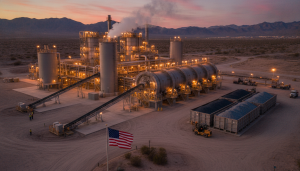
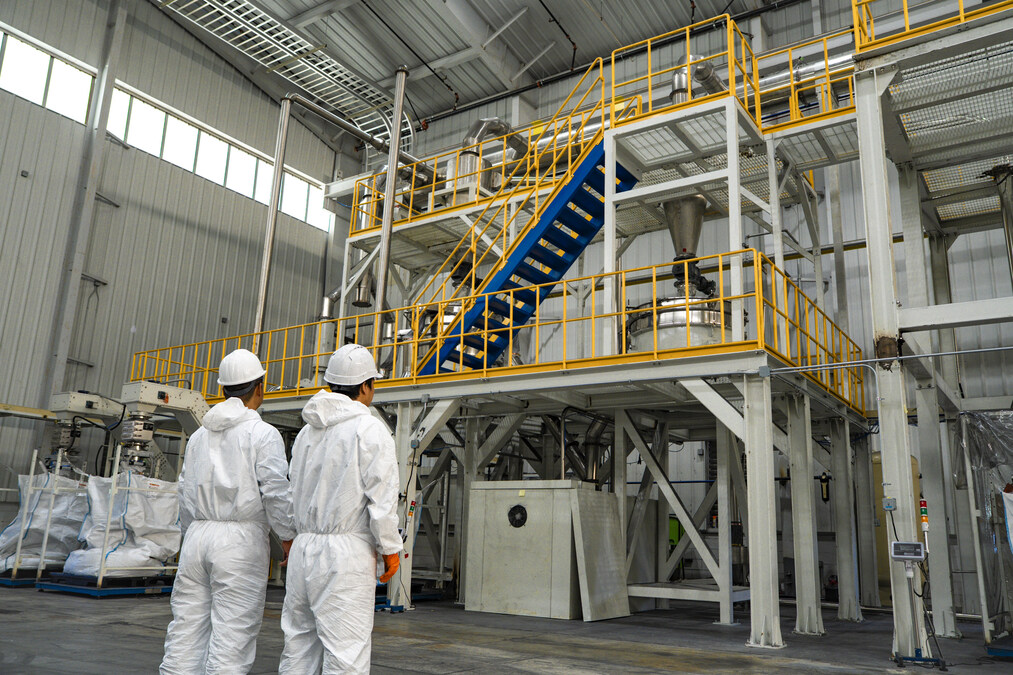
The recent commissioning of Princeton NuEnergy’s (PNE) flagship recycling facility in Chester, South Carolina, marks a pivotal moment for the US energy transition. This facility stands as the nation’s first commercial-scale operation capable of producing both Advanced Black Mass (ABM™) and battery-grade cathode active materials for NCM and LFP chemistries. This achievement is not just a technological milestone; it represents a tangible step towards regenerating critical battery minerals domestically, drastically reducing reliance on foreign supply chains. PNE’s proprietary advanced recycling process demonstrates an impressive recovery yield exceeding 97%, significantly surpassing industry norms. This efficiency translates directly into a more sustainable and economically viable pathway for battery material production, offering high-value downstream feedstock crucial for future battery manufacturing. While many investors are currently asking for a base-case Brent price forecast for next quarter and tracking daily crude movements, the long-term strategic play in securing critical mineral supply chains domestically offers a foundational stability and growth trajectory that deserves equal scrutiny.
Scaling Up for Future Demand and Investment Horizon
PNE’s operational blueprint extends beyond its initial 5,000 tonnes per annum (tpa) capacity in Chester. The company has articulated clear expansion plans, targeting 15,000 tpa by 2026, with the potential to scale up to 50,000 tpa as market demand intensifies. This aggressive growth strategy underscores the anticipated surge in demand for recycled battery materials, driven by the expanding electric vehicle market and grid-scale storage solutions. Beyond Chester, PNE is actively building a national network, including a joint pilot facility in McKinney, Texas, focused on advancing direct recycling technologies, and a Materials Testing Center in Princeton, New Jersey, designed for third-party validation and application testing. This integrated approach to research, development, and commercial-scale production creates a closed-loop system essential for US battery manufacturing independence. As investors prepare for key energy events like the OPEC+ JMMC meeting on April 18th and the full Ministerial meeting on April 20th, which often introduce short-term volatility in crude markets, the long-term, domestic stability offered by ventures like PNE’s becomes increasingly compelling, providing a hedge against geopolitical risks inherent in traditional energy commodities.
Navigating the Broader Energy Market Landscape
The broader energy market is a dynamic interplay of traditional fossil fuels and emerging renewable technologies. As of today, Brent crude trades at $99.62, marking a significant 4.94% increase within the day, while WTI crude sits at $91.18, up 3.46%. Gasoline prices have also seen an uptick, reaching $3.08, a 2.66% gain. This daily rally comes after Brent experienced a notable decline over the past 14 days, falling 12.4% from $108.01 on March 26th to $94.58 on April 15th. These fluctuations underscore the inherent volatility in global hydrocarbon markets, influenced by everything from geopolitical tensions to weekly inventory reports, like the upcoming API and EIA crude inventory releases on April 21st/22nd and April 28th/29th. Against this backdrop, the strategic shift towards securing critical minerals for the energy transition, exemplified by PNE’s operational facility, presents a compelling counter-cyclical or diversification play for investors. Investing in the domestic battery circular economy offers a pathway to participate in the energy transition with a focus on supply chain resilience, environmental compliance, and long-term industrial growth, distinct from the price swings of conventional crude. While many readers are focused on understanding what’s driving Asian LNG spot prices or seeking consensus 2026 Brent forecasts, the structural growth in battery materials represents a foundational shift in energy investment.
Investment Implications and Future Outlook
The operational success and planned expansion of PNE’s facilities signal a maturing landscape for the US battery circular economy. For astute oil and gas investors, this presents not a divergence, but an expansion of the investment thesis within the broader energy sector. The ability to regenerate high-purity battery materials domestically addresses critical concerns around supply chain vulnerabilities, environmental sustainability, and national security. The direct recycling technology employed by PNE, coupled with its proven high recovery yields, positions it as a key player in enabling the rapid scaling of EV production and renewable energy storage solutions in the US. Furthermore, the commitment to strict Standard Operating Procedures (SOPs) ensures safety, traceability, and material quality, mitigating operational risks. As the market for electric vehicles and renewable energy storage continues its exponential growth, investments in innovative, scalable battery recycling solutions like PNE’s offer exposure to a high-growth sector critical for the future of energy. This represents a strategic opportunity to capitalize on the structural demand for critical minerals, contributing to a more diversified and resilient energy investment portfolio.