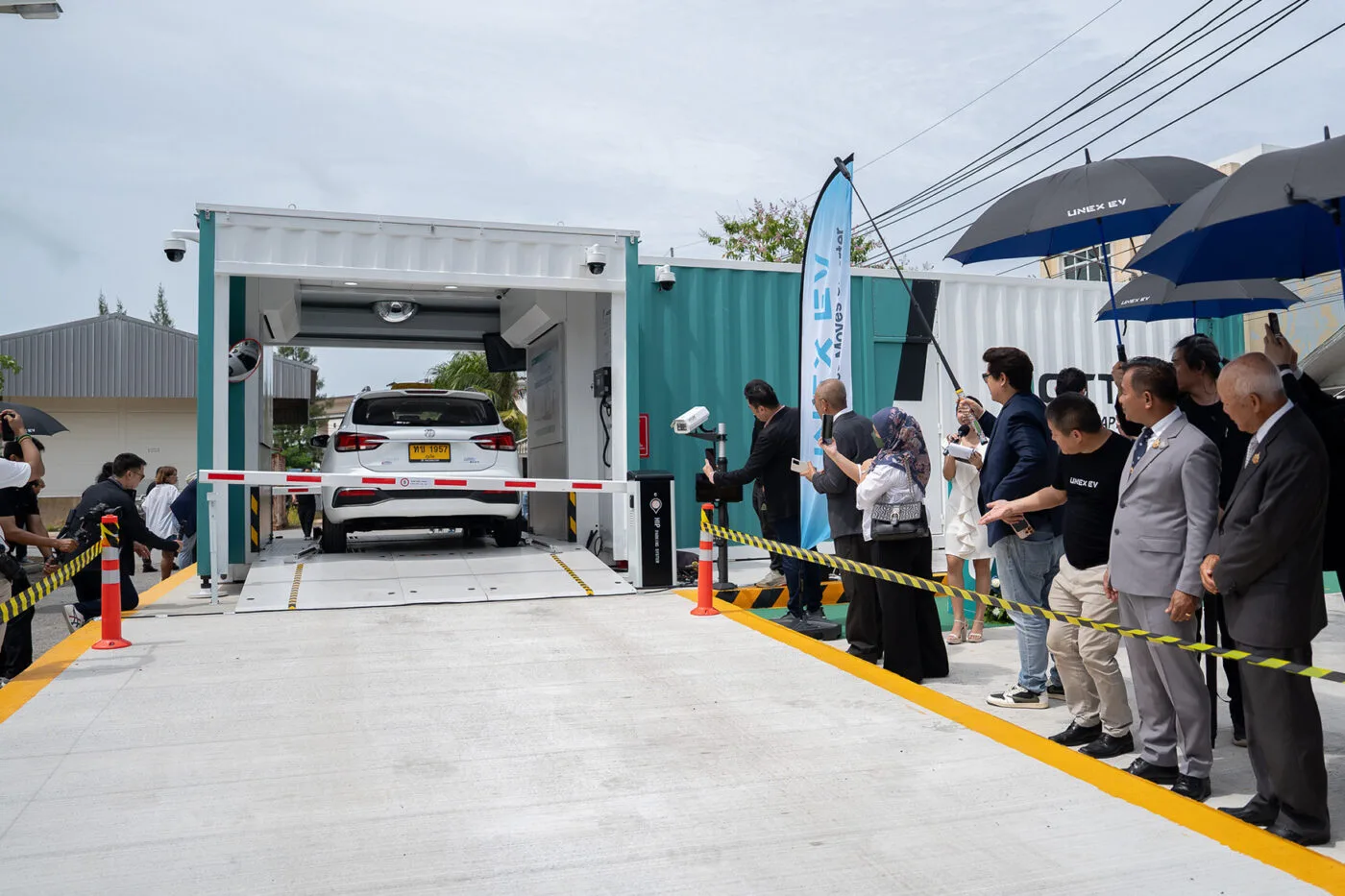
The energy landscape in Southeast Asia is undergoing a quiet yet profound transformation, with implications that oil and gas investors cannot afford to overlook. While much attention often focuses on geopolitical shifts or OPEC+ decisions, granular developments in infrastructure, particularly within the electric vehicle (EV) sector, are setting the stage for significant long-term demand reconfigurations. The recent launch of Southeast Asia’s first smart battery swapping station in Phuket, Thailand, by China’s U Power and Dutch firm UNEX EV, represents more than just an isolated event; it signals a strategic pivot in regional energy consumption that demands careful analysis.
EV Infrastructure Surge Targets Key Demand Segments
U Power’s initial Phuket facility, a joint venture with Thai energy conglomerate Susco, isn’t merely a small-scale pilot. This 15 million baht (approximately 400,000 euros) investment is configured to serve 100 cars daily, specifically targeting electric taxis and ride-hailing fleets. This focus is critical: these are high-utilization vehicles that traditionally consume substantial volumes of gasoline or diesel. The adoption of UOTTA’s fully automated, three-minute battery swapping technology addresses a key barrier to EV adoption in commercial fleets – charging downtime. The company’s immediate plans include eleven more outlets in Thailand, with a second in Phuket and ten in Bangkok, before expanding into Singapore and Malaysia. This rapid build-out, with some future commercial vehicle stations projected to require investments of at least 50 million baht (1.3 million euros), underscores a serious commitment to displacing fossil fuel demand in the region’s urban centers and logistics networks.
Market Dynamics and the Shifting Demand Horizon
While the long-term implications of such EV infrastructure are clear, current market conditions continue to reflect a complex interplay of immediate supply-demand factors. As of today, Brent crude trades around $94.88, marking a slight dip of 0.05% within a day range of $94.42 to $95.01. WTI crude, similarly, hovers at $91.31, up a marginal 0.02%. This relative stability follows a more significant trend over the past two weeks, where Brent has seen a notable decline of 12.4%, falling from $108.01 on March 26th to $94.58 on April 15th. Gasoline prices, currently at $2.99, show some resilience, but the targeted nature of U Power’s expansion directly challenges this segment. Investors asking for a base-case Brent price forecast for the next quarter or the consensus 2026 Brent forecast must increasingly factor in these persistent, structural shifts. While the immediate price action may be influenced by inventory reports or geopolitical headlines, the erosion of demand in key growth markets like Southeast Asia, even at a slower pace, puts a long-term ceiling on bullish outlooks for refined products.
Strategic Implications for Oil & Gas Portfolios
The aggressive deployment of battery swapping technology, particularly for commercial fleets, directly impacts the demand for refined products – gasoline and increasingly, diesel. Investors are keenly asking about the consensus 2026 Brent forecast, and developments like U Power’s expansion inject a new layer of uncertainty into traditional demand models. The focus on taxis and ride-hailing services, and the future expansion into commercial trucks, directly targets the highest-frequency fuel consumers. This trend implies a potential slowdown in demand growth for transportation fuels in Southeast Asia, a region historically viewed as a significant driver of global oil consumption. For upstream producers, this means re-evaluating long-term demand curves, while refiners, especially those with significant exposure to Southeast Asian markets, must consider the implications for their product slate and profitability. The question of how Chinese “tea-pot” refineries are running this quarter, for example, becomes more complex when considering potential future softening of regional demand that could impact their export markets or domestic utilization rates.
Navigating Upcoming Catalysts and Future Outlook
While the direct impact of U Power’s expansion won’t immediately register in next week’s API (April 21, April 28) or EIA (April 22, April 29) weekly crude inventory reports, these micro-level infrastructure developments are critical long-term signals for the broader energy market. Upcoming events like the OPEC+ Joint Ministerial Monitoring Committee (JMMC) meeting on April 18th, followed by the full Ministerial Meeting on April 20th, will undoubtedly involve discussions around global demand trajectories. While their immediate focus remains on market balancing for the coming months, persistent growth in EV infrastructure across emerging markets provides crucial context for their strategic decisions. Investors should also pay close attention to U Power’s expected announcement later this year regarding further clarity on its expansion plans for Singapore and Malaysia. These updates will provide concrete timelines and scale, offering a more precise indication of the pace at which conventional fuel demand could be eroded in these key economies. The success of U Power’s pilot model and its subsequent replication will serve as a bellwether for similar initiatives, accelerating the energy transition in a region historically reliant on fossil fuels for its rapid economic growth.
In conclusion, the strategic investment by U Power and its partners in Southeast Asia’s EV battery swapping infrastructure is a tangible sign of the accelerating energy transition. For oil and gas investors, this isn’t merely a headline; it’s a foundational shift in demand dynamics within a crucial growth market. While short-term market fluctuations will persist, the long-term imperative to adapt portfolios to a world of potentially decelerating oil demand growth, especially in refined products, becomes increasingly urgent. Monitoring these regional infrastructure build-outs and their cumulative effect on consumption patterns will be paramount for informed investment decisions in the years ahead.