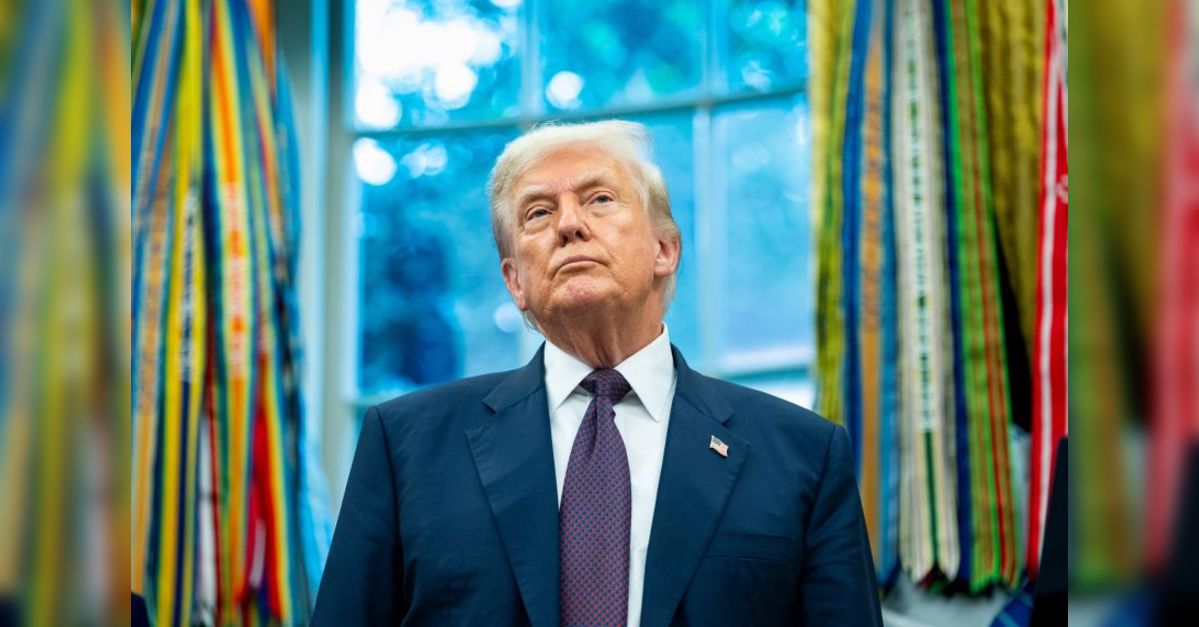
The global oil market is once again navigating a complex web of geopolitical rhetoric, shifting demand dynamics, and persistent supply uncertainties. Recent claims by former US President Donald Trump regarding major Asian economies reducing their Russian oil imports have injected a fresh wave of speculation, demanding keen attention from energy investors. Trump asserted that India is poised to cease Russian oil purchases “completely,” with China also making “very substantial” cuts. These statements, made ahead of a scheduled meeting with Chinese President Xi Jinping on the sidelines of the Asia-Pacific Economic Cooperation (APEC) summit in South Korea, underscore the ongoing political pressure on energy trade flows. However, India has consistently affirmed that its energy policy is dictated by its own national interests, particularly securing affordable and reliable supplies for its vast consumer base. This divergence between political claims and national policy intentions creates a volatile environment for crude oil prices and reframing the investment landscape for the remainder of the year.
Geopolitical Headwinds and Shifting Demand Alliances
The claims surrounding India’s and China’s stance on Russian oil imports are not new, but they gain renewed significance given the current geopolitical climate. The US administration has long expressed concerns that ongoing purchases from Moscow help finance the conflict in Ukraine. This friction has already manifested in economic measures, with the US doubling tariffs on Indian goods to a significant 50 percent, including an additional 25 percent duty specifically targeting India’s acquisition of Russian crude. This tariff pressure, which India has labeled “unfair, unjustified and unreasonable,” highlights the direct economic consequences of geopolitical energy strategies. Should India genuinely pivot away from Russian crude, the implications for global shipping routes, refinery economics, and the pricing of alternative crudes would be substantial. Similarly, any significant reduction by China, the world’s largest crude importer, would force a major re-evaluation of global supply-demand balances. While political rhetoric often precedes concrete action, investors must closely monitor official statements from New Delhi and Beijing, as well as actual trade data, to discern genuine shifts rather than mere diplomatic posturing. The APEC summit, where Trump indicated he might discuss Russian oil purchases with Xi, presents another potential inflection point for market sentiment.
Market Volatility Amid Geopolitical Uncertainty
The energy markets are already demonstrating acute sensitivity to these geopolitical tremors. As of today, Brent crude trades at $90.38 per barrel, reflecting a sharp 9.07% daily decline. This significant drop is mirrored in WTI crude, which sits at $82.59, down 9.41% within the day’s trading range. The broader trend has been even more dramatic, with Brent having fallen by $22.4, or nearly 20%, from $112.78 on March 30th to its current level on April 17th. This pronounced volatility, with Brent’s daily range spanning from $86.08 to $98.97 and WTI from $78.97 to $90.34, underscores the market’s nervousness. Gasoline prices are also feeling the pressure, trading at $2.93, a 5.18% decrease today. The uncertainty surrounding major demand centers like India and China, coupled with the potential for shifts in their sourcing strategies, undoubtedly contributes to this downward pressure. For investors, the current market snapshot is a stark reminder that geopolitical headlines can quickly translate into substantial price movements, making risk management and agile portfolio adjustments paramount.
Upcoming Events and OPEC+ Strategy under Scrutiny
Investors are keenly observing the supply side, particularly what OPEC+ intends to do to stabilize or rebalance the market amidst these demand-side uncertainties. Our internal data indicates that a key question among OilMarketCap readers this week revolves around “What are OPEC+ current production quotas?” This query highlights the market’s focus on producer actions. The upcoming OPEC+ Joint Ministerial Monitoring Committee (JMMC) Meeting on April 19th, followed by the full OPEC+ Ministerial Meeting on April 20th, will be critical. Any signals regarding production cuts, extensions of current agreements, or even an unexpected increase could dramatically influence price trajectories. Given the recent steep decline in crude prices, a strong signal of continued supply discipline is likely anticipated to prevent further downside. Beyond OPEC+, the weekly API Crude Inventory report on April 21st and the EIA Weekly Petroleum Status Report on April 22nd will offer crucial insights into US supply levels and demand indicators, providing an immediate reaction to market conditions. Further into the fortnight, the Baker Hughes Rig Count on April 24th and May 1st will shed light on North American production trends. These forward-looking events, combined with the geopolitical narrative, will heavily shape the market’s answer to another prevalent investor question: “What do you predict the price of oil per barrel will be by the end of 2026?” The cohesion and response of OPEC+ in the face of perceived demand shifts from Asia will be a defining factor in that outlook.
Navigating Investment Decisions in an Evolving Landscape
For discerning investors, the current environment demands a nuanced approach, separating political rhetoric from verifiable market shifts. While presidential claims about major economies exiting the Russian oil market capture headlines, the reality on the ground, particularly India’s consistent emphasis on national interest and affordable energy, suggests a more complex transition, if any. The immediate impact is amplified market volatility, as evidenced by the sharp declines in Brent and WTI crude prices. Looking ahead, the cohesion and strategic decisions of OPEC+ will be paramount in counteracting any perceived weakening in demand or oversupply concerns. Investors should prioritize monitoring official trade data from India and China, the outcomes of the upcoming OPEC+ meetings, and the weekly inventory reports for concrete indicators. Diversification across energy sectors, with a keen eye on companies with robust balance sheets and flexible sourcing capabilities, could prove advantageous. The interplay between geopolitical maneuvering, producer alliance strategies, and fundamental supply-demand dynamics will continue to define the investment landscape in the coming months, demanding vigilance and adaptability from all market participants.


