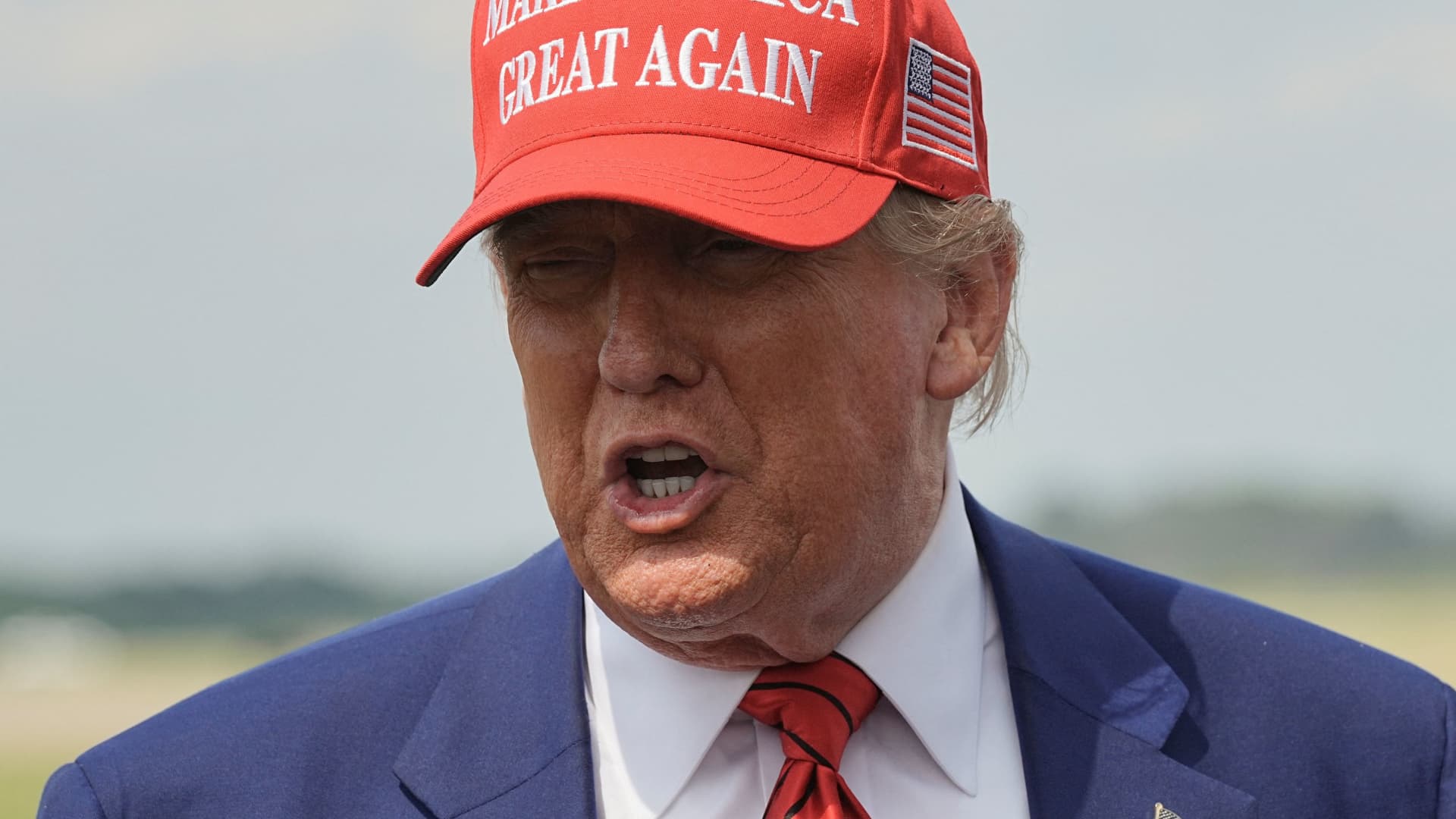
The global oil market remains a complex tapestry woven from geopolitical tensions, economic fundamentals, and the increasingly vocal demands of political leaders. Recently, the oil sector witnessed a stark example of this interplay when former President Trump publicly pressured the industry to keep crude prices suppressed following U.S. strikes on Iranian nuclear facilities. While such pronouncements grab headlines, savvy investors understand that market dynamics rarely bend to rhetoric alone. Our analysis delves into the implications of these political interventions, juxtaposing historical reactions with current market realities and leveraging OilMarketCap’s proprietary data to offer a forward-looking perspective on where energy investments are headed.
Geopolitics and the Price Floor: Beyond Political Rhetoric
The call from a former U.S. President for lower oil prices, framed as a strategic imperative to avoid “playing into the hands of the enemy” after U.S. military action in Iran, underscores the constant tension between political will and commodity market fundamentals. At the time of that particular event, U.S. crude (WTI) registered a decline of approximately 1%, settling around $73.09 per barrel, with global benchmark Brent also easing about 0.95% to $76.28. This initial market reaction, while seemingly aligned with the political demand, was more likely a short-term volatility adjustment rather than a fundamental shift driven by a social media post.
Fast forward to today, and the market picture is dramatically different. As of today, Brent crude trades at $95.01, a significant rebound from those earlier levels, reflecting persistent supply concerns and robust demand. WTI crude also stands strong at $91.56. This divergence highlights a crucial lesson for oil and gas investors: while political statements can induce fleeting price movements, the enduring drivers of the market – supply-demand balances, inventory levels, and genuine geopolitical risk premiums – ultimately dictate crude valuations. The market’s current elevated state, despite a recent 14-day dip where Brent moved from $102.22 to $93.22, indicates that underlying bullish pressures far outweigh political aspirations for lower prices.
U.S. Production and Investor Sentiment: The “Drill, Baby, Drill” Mandate
The explicit demand for the Department of Energy to “DRILL, BABY, DRILL!!!” echoed a long-standing political stance on U.S. energy independence. However, as investors well know, oil production decisions in the U.S. are predominantly made by private companies, responding to market signals, capital availability, and operational economics, not direct government mandate. This often creates a disconnect between political desires and the operational realities of the industry.
Our proprietary reader intent data reveals that investors are keenly focused on the supply side, with frequent inquiries about “consensus 2026 Brent forecast” and a deeper dive into global demand dynamics, such as “how are Chinese tea-pot refineries running this quarter?” These questions highlight that investors understand the global nature of supply and demand, where U.S. output, while significant, is one piece of a much larger puzzle. The willingness of U.S. producers to increase drilling is influenced by sustained price levels, regulatory environments, and investor returns, not just a call to action. While the source article noted some companies had warned of production cuts due to earlier low prices, the current higher price environment provides a stronger incentive for increased activity, albeit with a focus on capital discipline.
Navigating Volatility: Current Prices and Forward Outlook
The current market snapshot provides critical context for investment strategies. As of today, Brent Crude trades at $95.01, showing a modest daily increase of 0.23%, with WTI Crude at $91.56, up 0.31%. Despite these robust figures, a closer look at the 14-day trend for Brent, which saw a nearly 9% decline from $102.22 to $93.22 before its recent recovery, underscores the inherent volatility in the market. This recent pullback, even amidst geopolitical tensions, suggests profit-taking or a re-evaluation of demand strength.
Looking ahead, the calendar is packed with events poised to influence crude price action significantly. The upcoming OPEC+ Joint Ministerial Monitoring Committee (JMMC) meeting on April 18th, followed by the Full Ministerial meeting on April 20th, will be paramount. Investors will be scrutinizing these gatherings for any signals regarding production quotas. Any deviation from current supply discipline could trigger notable price movements. Furthermore, the regular cadence of the API Weekly Crude Inventory (April 21st, April 28th) and the EIA Weekly Petroleum Status Report (April 22nd, April 29th) will provide crucial insights into U.S. inventory levels, a key indicator of domestic supply-demand balance. The Baker Hughes Rig Count, scheduled for April 17th and April 24th, offers a real-time gauge of drilling activity, providing a forward signal for U.S. production growth. Investors asking for a “base-case Brent price forecast for next quarter” must integrate these upcoming data points and policy decisions into their models, recognizing that sustained geopolitical risk, coupled with OPEC+’s strategic decisions, will largely dictate the immediate trajectory.
Strategic Implications for Oil & Gas Investors
For investors navigating the oil and gas sector, the recent historical interplay of political demands, geopolitical events, and market responses offers several key takeaways. First, the market’s current resilience, with Brent comfortably above $95 despite a recent downward trend, suggests that fundamental supply constraints and robust global demand are the primary drivers, often overriding political sentiment. Second, the disconnect between political calls for increased production and the operational realities of private companies highlights the importance of understanding capital expenditure plans and return-driven decision-making within the industry. Companies will only “drill, baby, drill” if the economics justify it, not merely due to political pressure.
Looking forward, the influence of OPEC+ decisions and the pace of global economic recovery will be pivotal. Investors should closely monitor the upcoming OPEC+ meetings for any signals on supply policy, as cartel discipline remains a major determinant of the global supply picture. Furthermore, U.S. inventory data and rig counts will provide granular insights into the immediate supply outlook. Given the sustained high prices for both Brent and WTI, and the continued geopolitical backdrop, strategic allocation towards companies with strong balance sheets, efficient production capabilities, and diversified energy portfolios remains prudent. The volatility seen in the 14-day Brent trend serves as a reminder that while the macro picture looks strong, tactical adjustments based on real-time data and event-driven analysis are essential for maximizing returns in this dynamic market.