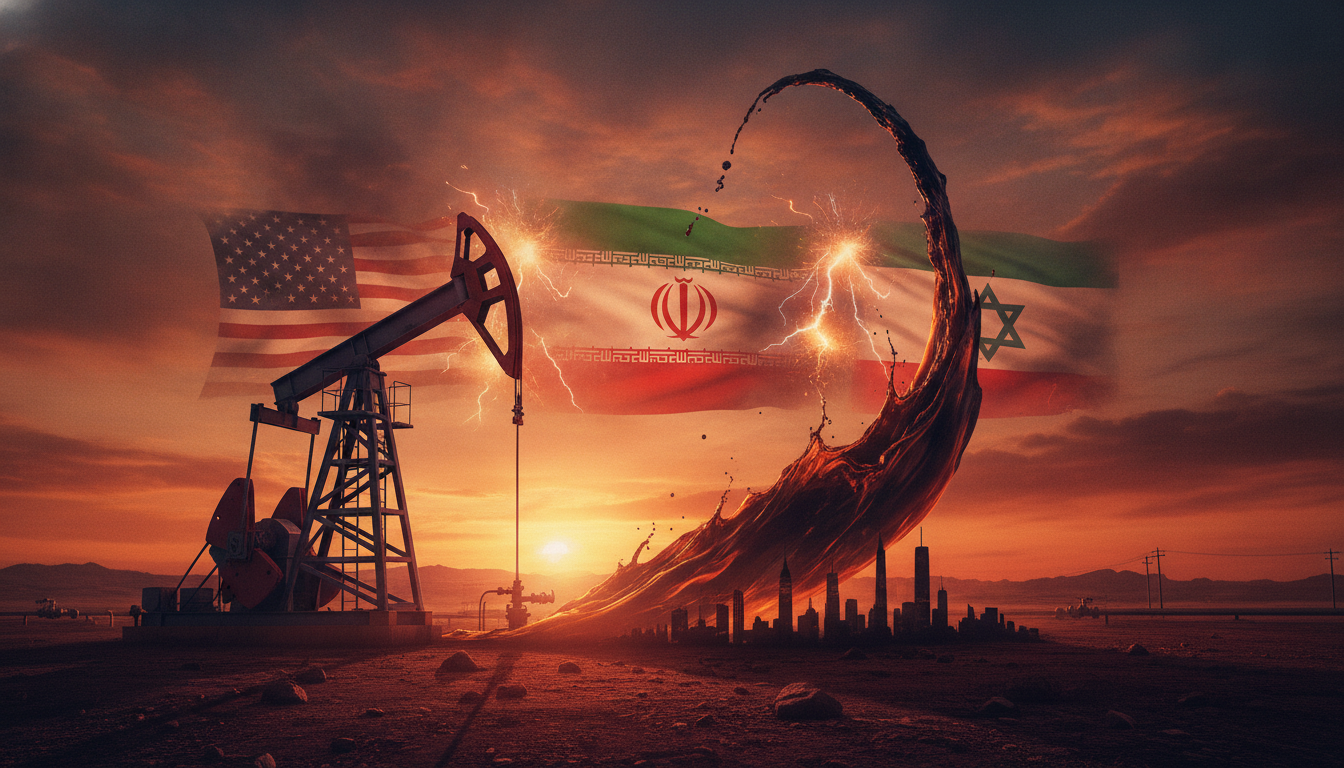
Geopolitical Tensions Ignite Oil Futures: Brent Surges Past $92 as Middle East Conflict Escalates
Investors in the global energy market opened the trading week to a significant uptick in crude oil benchmarks, as escalating geopolitical strife in the Middle East fueled risk premiums. The latest surge in oil prices on Monday directly reflects growing concerns over regional stability, following reports of Iranian missile strikes against Israel. This renewed hostility threatens to entrench an already volatile situation, prompting market participants to price in a higher probability of supply disruptions. For oil and gas investors, understanding these complex dynamics, from direct military actions to intricate diplomatic maneuvers and strategic production decisions, is paramount for navigating the commodity landscape. The immediate reaction saw both international and U.S. crude benchmarks making substantial gains, signaling a sharp recalibration of risk perception across the energy sector.
Market Performance Highlights Amidst Rising Uncertainty
The financial pulse of the oil market immediately reflected these heightened tensions. International benchmark Brent crude futures for July delivery advanced a robust 2.42%, settling at $92.73 per barrel. Simultaneously, the U.S. West Texas Intermediate (WTI) futures for August delivery witnessed a comparable rise, climbing 2.44% to reach $95.36 per barrel. This simultaneous upward movement across both major crude contracts underscores a broad-based market response to potential supply-side shocks. The swiftness of these gains highlights the market’s sensitivity to geopolitical flashpoints, particularly within the Middle East, a region critical to global oil flows. Energy investors are now closely monitoring these price levels, assessing whether this rally represents a short-term reaction or the beginning of a sustained upward trend driven by enduring instability in the global energy outlook.
Escalating Regional Conflict and Diplomatic Deadlock
The catalyst for Monday’s price surge was unmistakably the direct military confrontation. Reports confirmed that Iran launched missile strikes targeting Israel, marking a significant escalation in the ongoing regional conflict and, notably, the first such direct action since the declared ceasefire. White House officials verified that President Donald Trump was promptly briefed on these developments, expressing a clear view that such missile attacks would “certainly not help negotiations” aimed at de-escalation. This sentiment was echoed, and perhaps amplified, by an Iranian official involved in the Washington-Tehran dialogue, who stated that “a deal with President Trump is no longer feasible at this stage.” Further cementing the hardline stance, Iran’s Parliamentary Speaker, MB Ghalibaf, utilized social media to condemn what he described as a U.S. “naval blockade and violation of agreements regarding Lebanon.” Ghalibaf declared that U.S. bases and assets in the region, along with those of the “regime,” are now considered “legitimate targets” in response to the perceived U.S. blockade and military actions in Lebanon. These pronouncements collectively paint a grim picture for diplomatic resolutions, suggesting an entrenched adversarial posture that could prolong regional instability and keep energy markets on edge.
OPEC+ Strategy Amidst Geopolitical Turmoil
Compounding the complex interplay of supply and demand, the OPEC+ alliance has also weighed in on the global oil landscape. The cartel, consisting of major oil-producing nations, recently agreed to collectively boost their output targets by 188,000 barrels per day (bpd) starting in July. This decision marks the fourth consecutive oil output quota hike sanctioned by the group since the critical Strait of Hormuz was closed, a move historically tied to ensuring market stability and preventing extreme price spikes. This latest increment aligns precisely with the increase implemented in June. It’s important for investors to note the historical context of these adjustments: June’s increase itself represented a reduction from the higher monthly increments of 206,000 bpd seen in April and May. That particular curtailment was attributed to the departure of the United Arab Emirates from the organization, necessitating a recalculation of collective quotas. While the 188,000 bpd increase might appear modest against the backdrop of global demand, it signifies OPEC+’s ongoing efforts to balance market supply in a period defined by both geopolitical uncertainty and evolving internal dynamics among its members.
Investor Outlook and Risk Assessment in the Energy Sector
For oil and gas investors, the confluence of heightened Middle East tensions and strategic OPEC+ production adjustments presents a multifaceted risk-reward profile. The immediate surge in Brent and WTI futures underscores the enduring sensitivity of crude oil prices to geopolitical events, particularly those threatening major supply arteries. While OPEC+’s consistent, albeit modulated, output increases aim to inject more supply into the market, the specter of sustained regional conflict could easily overshadow these efforts, pushing risk premiums even higher. The declared “legitimate targets” by Iranian officials, coupled with the diplomatic stalemate, suggest that the geopolitical premium embedded in crude prices may persist. Savvy investors must remain acutely aware of potential supply disruptions, navigational challenges in critical waterways, and the ever-present threat of a wider conflict. Monitoring daily headlines from the Middle East, alongside OPEC+’s evolving strategies, will be critical for those looking to capitalize on, or mitigate risks within, the inherently volatile energy sector.