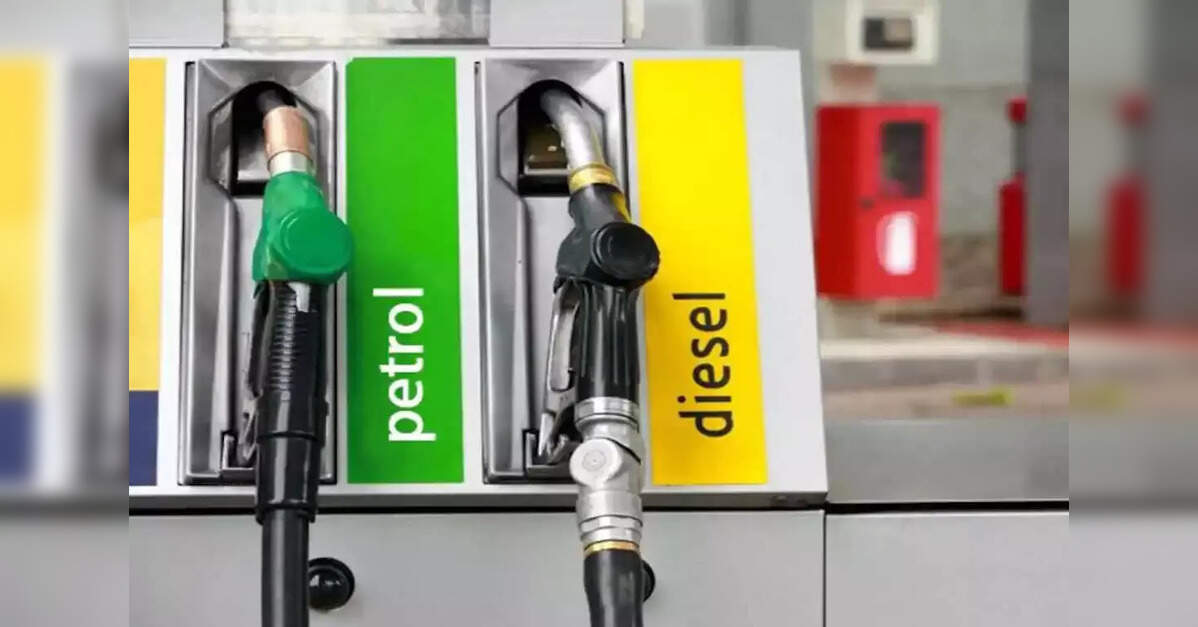
The landscape of energy investment in India is a complex tapestry woven from global crude oil dynamics and intricate local fiscal policies. While international benchmarks often dominate headlines, the recent surge in petrol prices in Telangana, climbing over 23% in the last five years and significantly outpacing major Indian metros, serves as a stark reminder that regional taxation can create profound divergences in the market. This localized phenomenon, where Hyderabad’s petrol rates soared from Rs 87.06 per litre in 2021 to Rs 107.46, placing it among the highest in the nation, underscores a critical facet for oil and gas investors: understanding the interplay between macro trends and micro-level regulatory environments is paramount for identifying both risk and opportunity.
The Telangana Anomaly: A Deep Dive into Localized Price Disparity
Telangana’s fuel price trajectory offers a compelling case study in the impact of state-level policy on consumer costs and regional economies. Despite central government initiatives to alleviate fuel price pressures through significant excise duty cuts – notably, Rs 13 per litre on petrol and Rs 16 on diesel in late 2021 and mid-2022 – Telangana consumers have seen minimal benefit. Union Petroleum and Natural Gas Minister Hardeep Singh Puri highlighted how these central measures led to tangible reductions in places like Delhi, where petrol prices decreased to Rs 94.77 from a peak of Rs 110.04. However, in Telangana, the state’s steadfast refusal to revise its value-added tax (VAT) has nullified much of this relief, pushing its prices to rank third nationally, behind only Pune at Rs 109.74 and Jalandhar at Rs 107.48.
This policy choice carries substantial economic implications. The Telangana Petroleum Dealers Association reports that the high VAT structure is causing an estimated annual loss of Rs 2,000 crore, as bulk buyers and even individual consumers cross state borders into neighboring regions like Karnataka’s Kalaburagi district, where fuel is considerably cheaper – at one point, by as much as Rs 12 per litre. This outflow of demand impacts local fuel retailers, transporters, and businesses, who face higher operational costs, highlighting a critical regional risk for investors with exposure to the state’s logistics or retail fuel sectors. Such localized market distortions necessitate granular analysis beyond national averages, evaluating companies based on their specific geographical footprint and sensitivity to regional tax regimes.
Global Volatility vs. Local Rigidity: Navigating Divergent Price Drivers
The situation in Telangana vividly illustrates how domestic market dynamics can diverge sharply from global crude oil trends. As of today, Brent crude trades at $90.38, reflecting a significant daily decline of 9.07%, while WTI crude stands at $82.59, down 9.41%. Our proprietary market data also shows a notable 14-day Brent trend, falling from $112.78 on March 30th to $91.87 on April 17th, an 18.5% drop. Similarly, gasoline prices are currently at $2.93, down 5.18% for the day. This recent volatility in global benchmarks underscores the inherent risks and opportunities within the international energy market.
Yet, for investors in regions like Telangana, the immediate impact of these global swings is buffered, or indeed exacerbated, by local policy. While global crude prices respond to geopolitical events and supply-demand shifts, the retail pump price in Hyderabad remains stubbornly high due to VAT. This creates a fascinating dual risk profile: investors must contend with the unpredictable nature of international crude markets, alongside the often-inflexible or politically motivated decisions of state governments. Companies with operations heavily concentrated in states like Telangana face a unique challenge, where their profitability is directly tied not just to the cost of crude, but also to the willingness of local authorities to align their tax policies with national economic objectives or consumer relief efforts.
Anticipating Future Moves: OPEC+ Decisions and Inventory Signals
Looking forward, the global energy market remains poised for significant developments that could influence crude prices, and by extension, the underlying cost of fuel for nations like India. Our upcoming energy events calendar highlights several key dates that investors should monitor closely. Investors are keenly watching the upcoming OPEC+ Joint Ministerial Monitoring Committee (JMMC) and full Ministerial meetings scheduled for April 18th and 19th. Decisions emerging from these sessions, particularly regarding production quotas, could significantly impact the already volatile crude market, directly addressing the common investor query regarding OPEC+’s current production strategy.
Following these crucial policy discussions, market participants will turn their attention to the weekly inventory data from the API and EIA, due on April 21st/22nd and again on April 28th/29th. These reports provide vital insights into crude and refined product stockpiles, offering a real-time pulse on supply-demand balances in major consuming nations. Furthermore, the Baker Hughes Rig Count on April 24th and May 1st will indicate future drilling activity and potential supply growth. While the immediate retail price in Telangana is insulated by VAT, a sustained shift in global crude prices, driven by these events, would eventually exert pressure on the state government to reconsider its fiscal stance. For oil and gas investors, these forward-looking indicators offer critical signals for hedging strategies, supply chain adjustments, and overall portfolio positioning within an interconnected global energy system.
Investor Sentiment and Strategic Outlook
Our proprietary reader intent data reveals a keen investor focus on long-term price trajectories, with many asking “what do you predict the price of oil per barrel will be by end of 2026?” This reflects the broader challenge of forecasting in a market influenced by both geopolitical instability and evolving demand patterns. The varied performance of regional markets, as exemplified by Telangana, also prompts more specific questions, such as “How well do you think Repsol will end in April 2026?” These queries underscore the necessity for investors to analyze individual company exposures not just to global commodity prices, but also to diverse national and sub-national regulatory frameworks.
For investors navigating the Indian energy sector, the Telangana case highlights the imperative of a multi-layered analytical approach. Beyond tracking Brent and WTI, understanding the nuances of state-level taxation, the potential for policy shifts, and the competitive landscape for fuel distribution within specific regions is crucial. Companies with diversified operations across states, or those with significant refining capacity that can absorb some of the retail price volatility, may present more resilient investment opportunities. Conversely, businesses heavily reliant on a single, high-tax state face magnified regulatory risk. As global crude markets continue their dynamic dance, the local regulatory waltz in places like Telangana will increasingly dictate the rhythm for domestic energy investments, demanding a sophisticated and regionally informed strategy from discerning investors.


