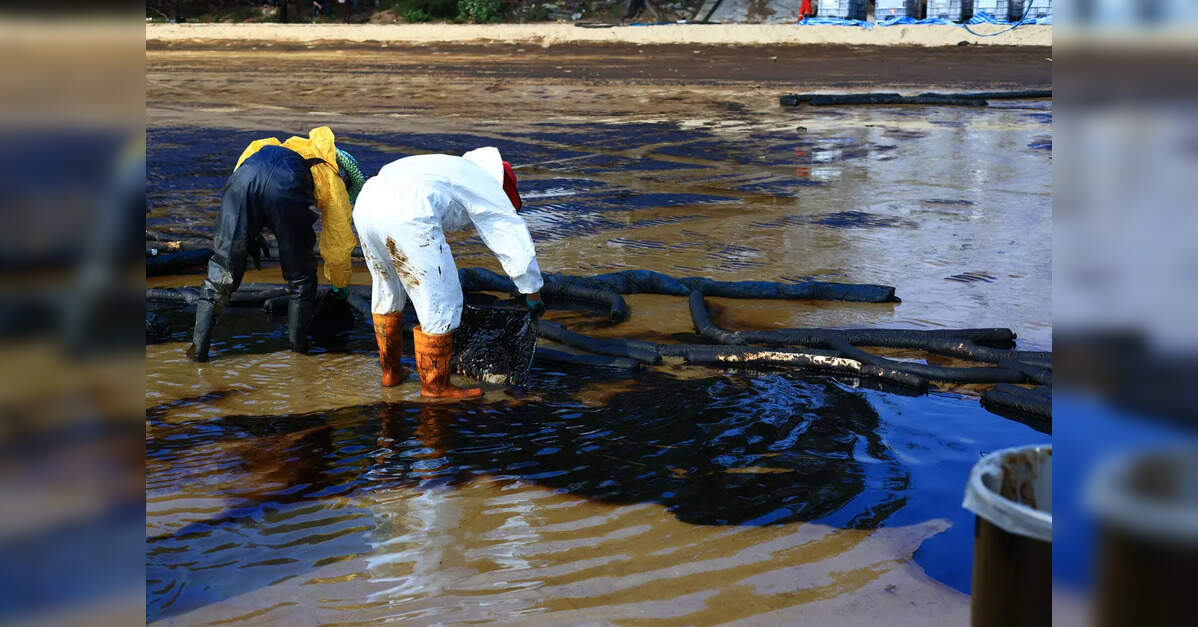
The global oil and gas sector continues to grapple with a complex interplay of market volatility and increasing regulatory pressures. While headlines often focus on supply-demand dynamics and geopolitical tensions, a less visible but equally potent force is reshaping operational costs and investor risk profiles: the escalating specter of environmental liability. A recent biennial national oil spill disaster contingency plan meeting and subsequent exercise held last October in India served as a stark reminder of this intensifying scrutiny. This event, involving numerous national and international stakeholders, underscores a global trend towards heightened environmental stewardship, demanding advanced operational readiness and technological integration. For investors, this translates directly into rising compliance costs, increased insurance premiums, and a greater emphasis on robust environmental, social, and governance (ESG) frameworks, fundamentally altering the risk-reward calculus across the industry.
The Expanding Scope of Environmental Accountability
The comprehensive nature of the oil spill preparedness exercise conducted by the Indian Coast Guard last October highlights a critical shift in how nations approach maritime environmental protection. The gathering of over 100 national delegates from various ministries, central and state agencies, ports, and oil handling organizations, alongside 40 foreign observers, signals a collective commitment to setting new benchmarks in environmental response. The stated objectives—strengthening inter-agency cooperation, enhancing operational readiness, and integrating cutting-edge technology—are not isolated to one region. Instead, they reflect a universal imperative being adopted by coastal states worldwide, particularly those with significant offshore exploration, production, or transit routes. For oil and gas companies, this means that the cost of doing business is set to climb. Investments in advanced spill prevention technologies, robust emergency response infrastructure, and comprehensive training programs are no longer optional but mandated requirements. Companies operating in sensitive ecological zones or major shipping lanes will face the most immediate impact, seeing their operational expenditures increase as they adapt to these elevated standards and prove their preparedness. The financial burden of potential spills, previously immense, is now further exacerbated by the expectation of swift, technologically advanced, and multi-agency coordinated clean-up efforts, pushing up insurance premiums and demanding larger contingency reserves.
Market Realities: Price Volatility Meets Rising Costs
Against this backdrop of rising environmental liabilities, the current market for crude oil presents a challenging environment for investors. As of today, Brent Crude trades at $91.65, reflecting a -2.05% drop within the day’s range of $91.58-$93.04. Similarly, WTI Crude stands at $88.9, down -2.49% from its daily range of $88.76-$90.34. This intraday dip extends a broader trend observed over the past two weeks, where Brent has seen a significant decline from $112.57 on March 27th to $98.57 on April 16th, representing a substantial $14 or 12.4% reduction. Gasoline prices are also feeling the pressure, currently at $3.06, down -0.97% today. This softening in crude and refined product prices means that companies are facing tighter margins. When coupled with the increasing operational costs associated with enhanced environmental compliance and spill preparedness, the profitability landscape becomes considerably more constrained. Investors must now weigh the impact of these higher fixed and variable costs against a potentially less robust revenue stream. The ability of companies to absorb these rising liabilities without significantly impacting shareholder returns will be a key differentiator, demanding greater efficiency and strategic capital allocation in an already volatile market.
Investor Focus: Navigating Supply, Demand, and ESG Demands
Our proprietary reader intent data reveals a clear focus among investors on critical market drivers, directly impacting their valuation models in this evolving landscape. Questions like “What are OPEC+ current production quotas?” and “What is the current Brent crude price and what model powers this response?” consistently rank high. This strong emphasis on supply-side decisions and real-time pricing underscores the fundamental importance of crude market stability for investment decisions. However, what our analysis indicates is that investors are not merely tracking prices in isolation; they are increasingly integrating these environmental risk factors into their assessments of a company’s long-term sustainability and financial health. The push for greater environmental accountability, as exemplified by the robust oil spill exercises, adds a material layer of risk and cost that directly influences the capital expenditure budgets and operational strategies of oil and gas firms. A company’s ability to demonstrate superior environmental risk management can enhance its investment appeal, potentially offsetting some of the downside from price volatility or higher compliance costs. Conversely, a poor track record or insufficient investment in prevention and response mechanisms could lead to significant financial penalties, reputational damage, and a higher cost of capital. This dynamic transforms environmental vigilance from a mere regulatory burden into a crucial component of competitive advantage and investor confidence.
Forward Outlook: Key Events Shaping the Next Fortnight
The immediate future holds several pivotal events that will shape the investment climate for oil and gas, further influencing how companies manage their operational risks, including environmental liabilities. The upcoming OPEC+ Joint Ministerial Monitoring Committee (JMMC) meeting on Friday, April 17th, followed by the Full Ministerial meeting on Saturday, April 18th, are critical. Investors will be scrutinizing any signals regarding production quotas, which directly impact global supply and, consequently, crude prices. Any decision to adjust output, whether an increase or a cut, will reverberate through the market, affecting the revenue potential against which rising environmental costs must be balanced. In the following week, the API Weekly Crude Inventory report on Tuesday, April 21st, and the EIA Weekly Petroleum Status Report on Wednesday, April 22nd, will provide crucial insights into demand trends and inventory levels in the United States, a key consumption market. These reports offer granular data on market tightness or surplus, influencing short-term price movements. Finally, the Baker Hughes Rig Count on Friday, April 24th, will offer a barometer of drilling activity and future supply expectations. As these market-moving events unfold, investors will be evaluating not just the immediate price implications, but also how well oil and gas companies are positioned to navigate both market volatility and the increasingly stringent demands for environmental performance and spill preparedness. The confluence of these factors demands a sophisticated, multi-faceted investment strategy that accounts for both traditional market forces and the growing significance of operational and environmental stewardship.


