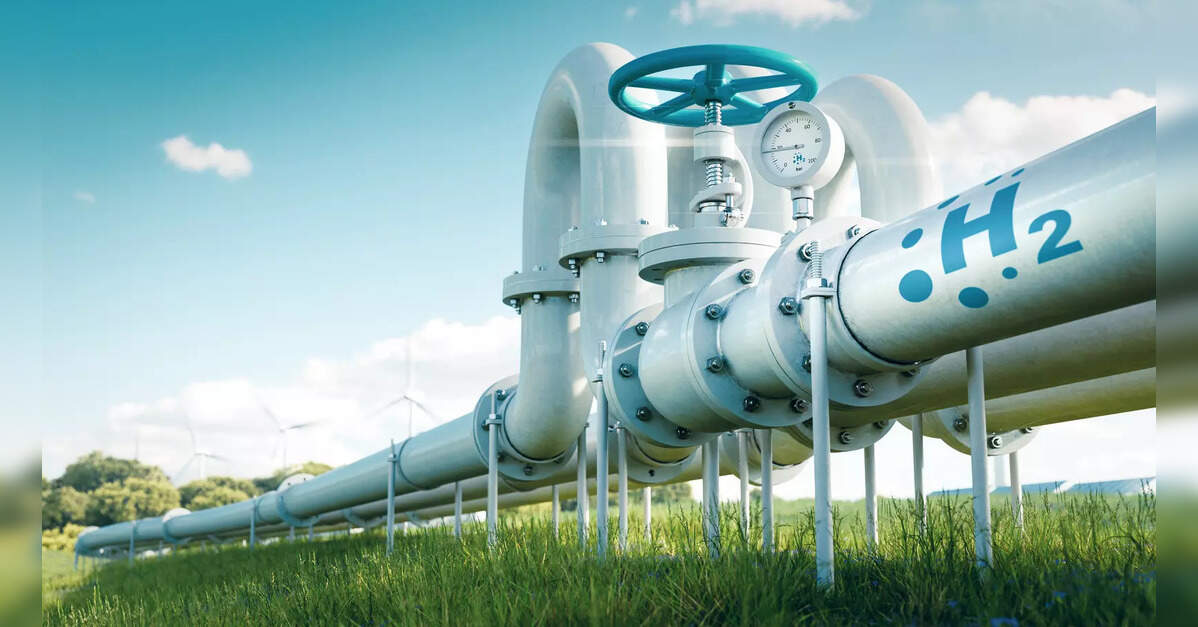
India’s Green Hydrogen Ambition: A Strategic Counterpoint to Volatile Oil Markets
India is rapidly positioning itself as a pivotal force in the global energy transition, with a particular emphasis on green hydrogen. This strategic focus, underscored by significant national initiatives and investment, comes at a critical juncture for the broader energy sector, which is currently grappling with pronounced volatility in traditional fossil fuel markets. For discerning investors, understanding India’s ambitious green hydrogen trajectory alongside the dynamic shifts in crude prices and upcoming market catalysts is essential for navigating the evolving landscape. Our analysis, drawing upon proprietary market insights and direct investor queries, explores how India’s commitment to green hydrogen is not just a domestic policy, but a transformative factor shaping global energy investment strategies.
India’s Strategic Ascent in Green Hydrogen Dominance
India’s journey towards establishing a leadership role in the global green hydrogen industry is both impressive and strategically sound. At the heart of this drive is the National Green Hydrogen Mission, approved by the Union Cabinet on January 4, 2023, with a substantial outlay of ₹19,744 crore. This mission is designed to transform India into a global hub for the production, utilization, and export of green hydrogen and its derivatives, setting an ambitious target of 5 million metric tonnes per annum (MMTPA) by 2030. Industry experts, including Dave Ernsberger from S&P Global Commodity Insights, acknowledge India’s strong asset base – abundant renewable energy resources and robust industrial infrastructure – as key enablers for developing these capabilities.
The commitment extends beyond production targets; it encompasses a robust innovation ecosystem. As demonstrated by the first Annual Green Hydrogen R&D Conference held on September 11, 2025, the government has launched a ₹100 crore call for proposals to support startups in hydrogen innovation. This initiative provides up to ₹5 crore per project for pilot ventures across hydrogen production, storage, transport, and utilization technologies. Such investment in research and development is crucial for fostering the necessary technological advancements and supply chain efficiencies required to scale green hydrogen economically, cementing India’s long-term competitive advantage in this nascent but rapidly expanding sector.
Macro Energy Volatility and the Drive for Diversification
The burgeoning green hydrogen sector in India provides a compelling counter-narrative to the persistent volatility observed in traditional energy markets. As of today, Brent crude trades at $90.38 per barrel, registering a significant 9.07% single-day decline, with its daily range spanning $86.08 to $98.97. Similarly, WTI crude stands at $82.59, down 9.41% within a range of $78.97 to $90.34. This sharp downturn is indicative of broader market uncertainty; our proprietary data reveals Brent has plummeted by $20.91, or 18.5%, from $112.78 on March 30, 2026, to $91.87 just yesterday, and even lower today. Gasoline prices have also dipped to $2.93, down 5.18%.
Such dramatic price swings inevitably fuel investor anxiety, a sentiment reflected in our reader intent data, where a prominent question this week is: “What do you predict the price of oil per barrel will be by end of 2026?” While making precise long-term predictions in such a fluid environment remains challenging, this acute volatility reinforces the strategic imperative for nations like India to accelerate their energy independence through diversified, cleaner sources. The consistent instability in conventional energy markets inherently elevates the attractiveness and investment case for stable, domestically produced alternatives such as green hydrogen, mitigating geopolitical risks and ensuring greater energy security.
Navigating Upcoming Market Catalysts and Geopolitical Influence
The coming days present critical junctures for the global energy markets, particularly for traditional oil and gas. Investors are closely monitoring the upcoming OPEC+ Joint Ministerial Monitoring Committee (JMMC) meeting on April 18th, followed by the full OPEC+ Ministerial Meeting on April 19th. These gatherings are highly anticipated, especially given the recent steep decline in crude prices. A key question our readers are asking is, “What are OPEC+ current production quotas?” The outcomes of these meetings, specifically any decisions regarding production levels, will significantly influence near-term supply dynamics and price stability.
Beyond OPEC+, recurring data releases such as the API Weekly Crude Inventory on April 21st and 28th, the EIA Weekly Petroleum Status Report on April 22nd and 29th, and the Baker Hughes Rig Count on April 24th and May 1st, will continue to provide vital insights into market health and sentiment. These traditional energy market indicators, while distinct from the green hydrogen narrative, indirectly impact the pace and urgency of the energy transition. Sustained high oil prices might bolster fossil fuel investments, whereas a volatile or declining market can accelerate the shift towards renewables. Therefore, understanding these catalysts is crucial for investors assessing the broader landscape for both traditional energy and emerging green technologies.
Investment Horizons in India’s Green Hydrogen Ecosystem
India’s determined push into green hydrogen opens up substantial investment opportunities across a diverse ecosystem. The vision for India to meet its domestic demand and emerge as a key exporter by 2030 necessitates vast capital deployment in renewable energy generation, advanced electrolyzer manufacturing, and sophisticated infrastructure for hydrogen storage, transport, and utilization. This creates fertile ground for both domestic and international investors looking for long-term growth in the clean energy sector. The emphasis on collaboration among the private sector, public sector, government, traders, and supply chains highlights the integrated approach required to realize these ambitions.
Integrated energy companies, such as Repsol – a company our readers are keenly tracking for its April 2026 performance – exemplify how established players are adapting to this transition. Companies with diversified portfolios, encompassing both traditional oil and gas operations and a growing footprint in renewables and clean fuels like hydrogen, are strategically positioned to navigate the evolving energy matrix. The challenges remain significant, including cost reduction, technological scaling, and infrastructure build-out, but India’s robust policy framework and financial commitments signal a clear trajectory for growth. For forward-thinking investors, India’s green hydrogen mission represents not just an environmental imperative, but a compelling economic opportunity reshaping the future of global energy investments.


