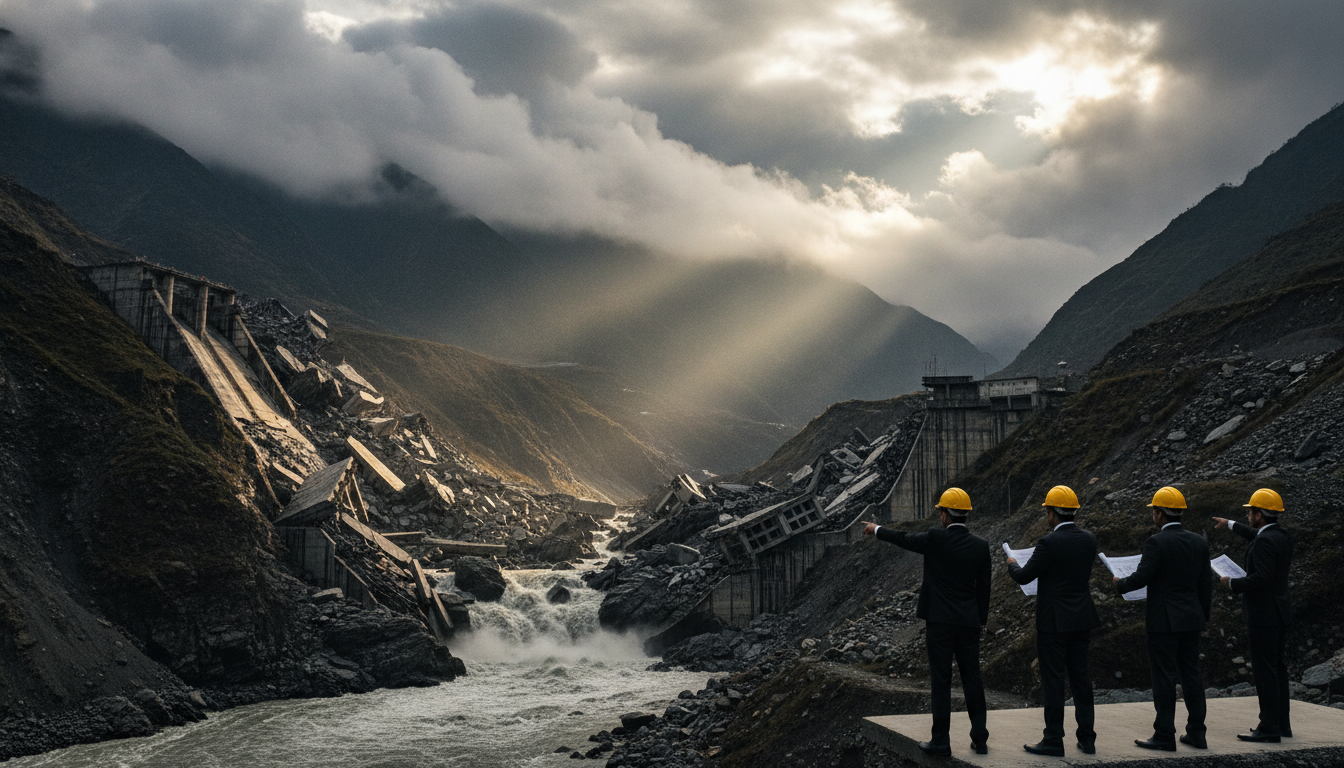
The energy sector is once again confronted with the profound and sobering realities of large-scale infrastructure development following a tragic incident at the NHPC Teesta Stage VI Hydropower Project. In a somber update from Sikkim’s Namchi district, authorities confirmed the full recovery of all 25 workers’ bodies, three days after the tunnel they were constructing collapsed. This devastating event, suspected to have been triggered by a methane gas explosion on Monday, casts a long shadow over the inherent risks and critical safety considerations that define capital-intensive energy ventures, irrespective of their specific generation method.
Catastrophe at Teesta Stage VI: Immediate Human Cost and Broader Implications
The swift action to recover the deceased, with all 25 bodies retrieved by Thursday, concludes the immediate search and rescue phase but opens a much larger chapter on accountability and prevention. The bodies have been transported to various medical facilities, including Singtam District Hospital, STNM Hospital Sochakgang in Gangtok, Namchi District Hospital, and the Central Referral Hospital (CRH), Manipal, for necessary medico-legal procedures. While the human toll is immeasurable, investors in the energy space must quickly pivot to understanding the financial and operational ramifications of such catastrophes. For a project like Teesta Stage VI, a cornerstone of India’s hydropower ambitions, this incident will undoubtedly lead to significant delays, substantial cost overruns, and intense scrutiny.
The state government has proactively established a high-level committee, tasked not only with meticulously investigating the root causes and specific circumstances surrounding this tragic collapse but also with formulating concrete recommendations to avert similar future occurrences. For any investor, this governmental response signals an inevitable tightening of safety regulations and oversight across large-scale infrastructure projects. These heightened standards, while crucial for worker safety, can translate into increased compliance costs, longer project timelines, and potentially impact the economic viability and return profiles of ongoing and future energy developments, including those in the oil and gas sector.
Unpacking the Financial Aftershocks for Energy Infrastructure
Major incidents like the Teesta tunnel collapse send immediate ripples through financial markets and project valuations. Beyond the direct costs of rescue and recovery, an extensive investigation process means work stoppage, equipment immobilization, and potential redesigns, all contributing to substantial financial drag. For a public sector entity like NHPC, its balance sheet and future project financing capabilities could face headwinds. Investors holding positions in companies involved in large energy infrastructure, from dam construction to pipeline laying or refinery expansion, must factor in the potential for such catastrophic events. These aren’t just one-off incidents; they are critical data points that inform risk assessment models, insurance premiums, and ultimately, investment decisions.
The long-term financial consequences extend to reputational damage, which can impair a company’s ability to secure new contracts, attract skilled labor, and maintain public trust. In today’s market, where ESG (Environmental, Social, and Governance) factors increasingly dictate capital allocation, a severe safety lapse can trigger divestments or significantly depress share prices. This incident serves as a stark reminder for investors to scrutinize the safety records and operational risk management strategies of all energy companies in their portfolios, regardless of the energy source.
Methane: A Cross-Sectoral Hazard and Investment Risk
The suspicion of a methane gas explosion is a critical detail, directly linking this hydropower incident to a pervasive hazard in the broader energy industry, particularly oil and gas. Methane, a potent greenhouse gas and highly combustible hydrocarbon, is a constant concern in upstream drilling, midstream pipeline operations, and even in certain geological formations encountered during tunneling for various infrastructure projects. Its presence demands rigorous monitoring, ventilation protocols, and explosion prevention measures.
For oil and gas investors, this event underscores the financial imperative of robust methane detection and mitigation technologies. Failures in this area, whether leading to explosions, fugitive emissions, or regulatory non-compliance, can result in massive financial penalties, significant operational downtime, and severe reputational hits. Companies with superior safety cultures and advanced methane management systems are increasingly viewed as more resilient and attractive investments. This tragedy in Sikkim highlights that methane-related risks are not confined to the traditional oil and gas landscape but are a shared concern across the energy sector’s diverse construction and operational environments.
Navigating ESG and Reputational Risk in Large-Scale Energy Projects
The Teesta Stage VI catastrophe will undoubtedly intensify focus on the ‘S’ in ESG – the social aspect encompassing worker safety and community impact. Investors are no longer content with just financial returns; they demand evidence of responsible corporate citizenship. An incident resulting in 25 fatalities sends a clear signal that safety protocols, even for established players, require continuous vigilance and improvement. Companies perceived as having lax safety standards or poor environmental stewardship face increasing pressure from institutional investors, proxy advisors, and socially conscious funds.
The long-term valuation of energy companies, including those in the oil and gas domain, is intrinsically tied to their ability to manage and mitigate operational risks effectively. A strong safety track record enhances a company’s social license to operate, potentially speeding up project approvals and reducing community opposition. Conversely, events like the Teesta tunnel collapse can erode public trust, complicate future project financing, and lead to more onerous regulatory hurdles – all factors that weigh heavily on investor sentiment and corporate valuations.
The Broader Landscape: Investor Due Diligence in a Risk-Prone Sector
Ultimately, this tragic event serves as a critical case study for investors evaluating any large-scale energy project. Whether it’s an offshore drilling platform, a remote pipeline, a new refinery, or a hydropower tunnel, the underlying principles of risk management remain consistent. Thorough due diligence must extend beyond financial projections to encompass comprehensive assessments of geological risks, contractor safety records, regulatory compliance frameworks, and the organizational safety culture.
The high-level committee’s findings and subsequent recommendations will not only impact NHPC’s future operations but could also establish new benchmarks for safety and risk management across India’s entire energy infrastructure development landscape. This could mean increased capital expenditures for enhanced safety equipment, more extensive training programs, and longer lead times for project implementation. For oil and gas investors, understanding these evolving regulatory and operational realities is paramount. The lessons learned from Sikkim’s Namchi district underscore that investing in the energy sector demands a rigorous, holistic approach to risk assessment, where human safety is inextricably linked to sustainable financial performance.


