Geopolitical Tensions Mount as Russia Backs India in US Tariff Spat Over Oil
A new flashpoint in global energy geopolitics has emerged, directly impacting the intricate dance of international crude flows. The Kremlin has weighed in on a simmering dispute between Washington and New Delhi, publicly affirming India’s sovereign right to determine its own trading partners. This diplomatic intervention comes as the United States, under President Donald Trump, escalates threats of substantial tariffs against India if it continues its robust purchases of discounted Russian oil. For investors in the oil and gas sector, these developments signal increased volatility and a need to closely monitor the geopolitical risk premium embedded in crude prices.
Washington’s Tariff Hammer Targets Indian Oil Imports
President Trump’s administration has intensified its pressure on India, warning of significantly higher duties should New Delhi persist in importing Russian crude. Last week, the White House indicated a potential 25% tariff on Indian exports, alongside an unspecified “penalty.” These threats sharpened on Monday, with President Trump stating that tariffs would be “substantially raising,” though he refrained from specifying the exact increment. A key accusation leveled by the U.S. is that India is acquiring heavily discounted Russian oil and subsequently “selling it on the Open Market for big profits,” a claim that adds another layer of complexity to the trade friction.
The U.S. posture is part of a broader Western strategy aimed at curbing Moscow’s oil export revenues, which are perceived as funding its ongoing military operations in Ukraine. However, this policy has inadvertently created significant arbitrage opportunities and supply chain shifts, particularly benefiting major energy consumers like India and China, who have become crucial lifelines for Russian crude.
Kremlin Defends India’s Sovereignty Amidst Pressure
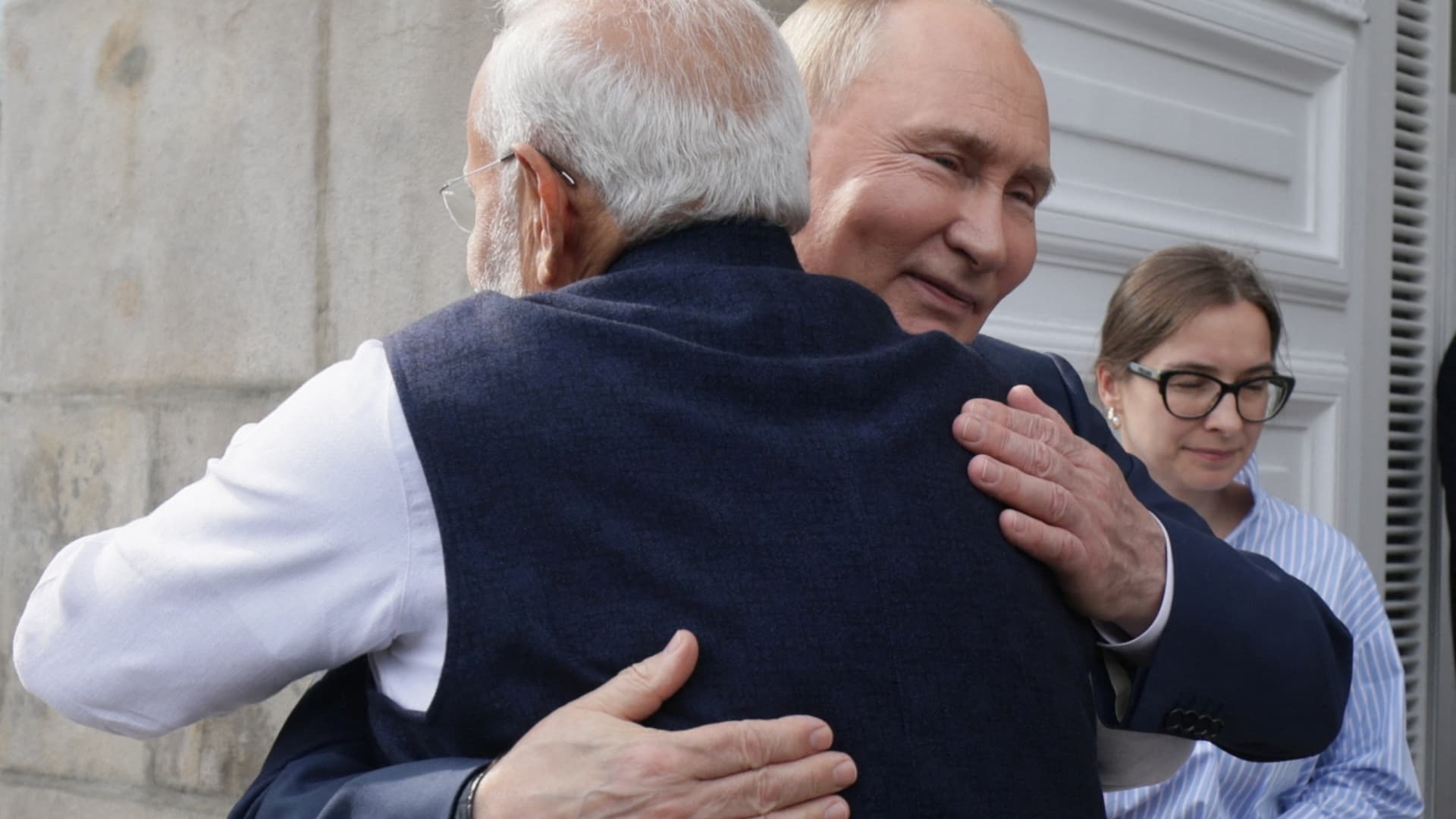
Russia, a vital and increasingly strategic energy partner for India, broke its silence on the escalating dispute, firmly rejecting Washington’s coercive tactics. Kremlin Press Secretary Dmitry Peskov characterized Trump’s tariff threats as “attempts to force countries to stop trade relations with Russia,” unequivocally labeling such statements as “not legitimate.” Peskov underscored the fundamental principle that “sovereign countries should have, and have the right to choose their own trade partners, partners in trade and economic cooperation,” emphasizing that these choices should align with the “interests of a particular country.” This firm backing from Moscow highlights the deepening economic and geopolitical ties between Russia and India, particularly in the energy sphere, and signals a potential hardening of positions against Western pressure.
India’s Defiant Stance and Economic Imperative
New Delhi swiftly retorted to the U.S. accusations, leveling charges of hypocrisy against both the United States and the European Union. In a statement released Monday, India’s foreign ministry pointedly remarked, “It is revealing that the very nations criticizing India are themselves indulging in trade with Russia. Unlike our case, such trade is not even a vital national compulsion [for them].” This robust defense articulates India’s position that its reliance on Russian oil is not merely opportunistic but stems from a critical national energy security imperative, especially given the attractive discounts offered on Russian crude. The statement also effectively turns the tables, questioning the moral high ground of Western nations that continue to engage in various forms of trade with Russia while pressuring others.
The Dramatic Reshaping of Global Oil Flows
The geopolitical rift underscores a dramatic transformation in global oil trade patterns since the 2022 invasion of Ukraine. Prior to the conflict, India’s imports of Russian crude were negligible, accounting for just under 100,000 barrels per day (bpd), or approximately 2.5% of its total oil imports. However, in the post-invasion landscape, Russia has rapidly ascended to become India’s preeminent oil supplier. By 2023, Russian crude imports surged to more than 1.8 million bpd, representing a staggering 39% of India’s overall oil intake, according to data from the U.S. Energy Information Administration. This monumental shift not only highlights India’s critical dependence on discounted Russian oil but also demonstrates Russia’s successful pivot away from traditional European markets. Any disruption to this established supply chain, whether through tariffs or other punitive measures, would send significant ripples through the global energy market, affecting shipping, refining margins, and overall crude pricing.
Investment Implications for the Energy Sector
For oil and gas investors, the escalating tension between the U.S., India, and Russia introduces several key considerations. Firstly, the threat of increased tariffs on India could lead to a repricing of crude. If India is forced to seek alternative, potentially more expensive, suppliers, it could put upward pressure on global benchmark prices. Conversely, if India maintains its stance and faces tariffs, it could disrupt supply chains, impacting refining operations and product markets. The geopolitical risk premium in crude oil, already elevated by conflicts and sanctions, stands to increase further.
Secondly, the situation highlights the resilience and adaptability of new trade routes. The established “shadow fleet” and alternative payment mechanisms that facilitate Russian oil exports demonstrate the market’s capacity to circumvent traditional constraints. Investors should closely monitor shipping costs, insurance premiums, and the availability of tankers, as these factors directly influence the delivered price of crude and the profitability of energy trading firms. Furthermore, the long-term implications for India’s refining sector, a major global player, are significant. Access to competitively priced feedstock is crucial for maintaining margins and competitiveness in export markets.
Finally, the dispute underscores the complex interplay between energy security, national sovereignty, and international sanctions regimes. As nations prioritize their economic interests, the fragmentation of global energy markets could intensify. Investors should anticipate continued volatility and be prepared for rapid shifts in supply and demand dynamics, influenced not just by fundamentals but increasingly by geopolitical decrees and retaliatory measures. The ability to navigate these complex geopolitical fault lines will be paramount for successful investment in the energy sector.

