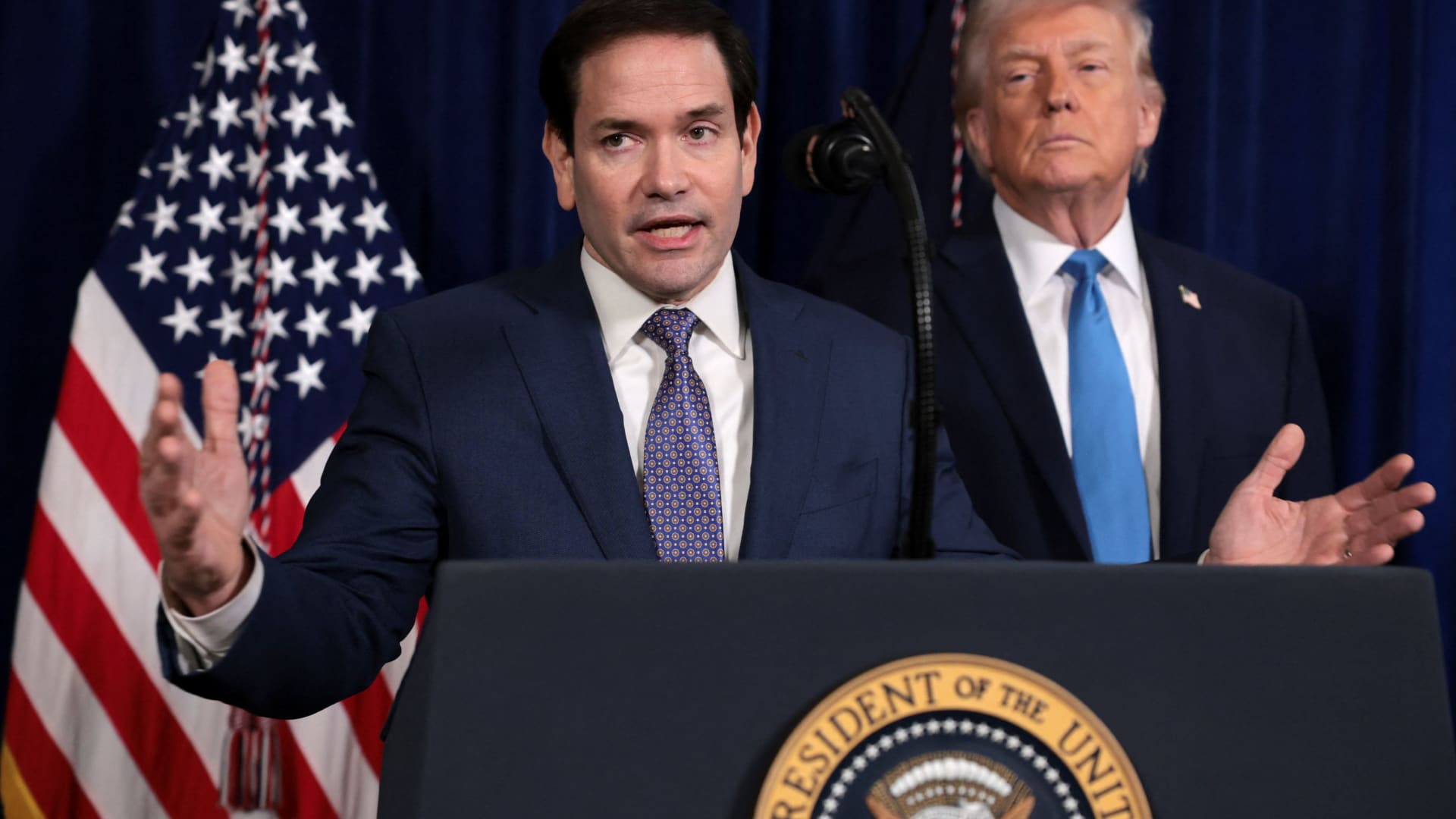
The geopolitical landscape of global oil supply has seen persistent tremors, and the situation surrounding Venezuela’s vast crude reserves remains a focal point for energy investors. Following the dramatic events of early January, which saw the capture of President Nicolas Maduro and the subsequent swearing-in of Vice President Delcy Rodríguez, the United States outlined its strategic approach to the nation’s future. While initial comments from President Trump suggested a direct US role in governing Venezuela, Secretary of State Marco Rubio quickly clarified the strategy: a sustained “quarantine” on Venezuelan oil exports, leveraging economic pressure and regional military presence rather than direct nation-building. This nuanced stance has significant implications for the potential return of Venezuelan crude to global markets and, by extension, for the delicate balance of supply and demand that dictates oil prices. For astute investors, understanding this evolving strategy and its interplay with broader market dynamics is paramount.
Rubio’s Refined Strategy: Leverage, Not Direct Control
Following the significant developments in Venezuela this past January, the US administration, through Secretary of State Marco Rubio, clarified its long-term strategy for influencing the nation’s future. Rather than a direct assumption of governance, which President Trump initially suggested, the US aims to use its existing oil blockade and heightened military presence in the Caribbean as potent leverage. Rubio’s statements emphasize a “quarantine” on Venezuelan oil, effectively preventing its economy from moving forward until conditions aligned with US national interests and the welfare of the Venezuelan people are met. This approach signals a more protracted, economically driven strategy rather than a swift regime change followed by direct administration. For oil and gas investors, this means the potential for a significant, immediate influx of Venezuelan crude into the market remains highly constrained. The existing seizures of tankers and the deployment of military assets underscore the seriousness of this blockade. While the capture of Maduro removed a key figure, the US’s continued insistence on specific conditions before lifting sanctions suggests that Venezuela’s approximately 300 billion barrels of proven oil reserves will not easily or quickly return to full global circulation, maintaining a long-term bullish undercurrent for crude prices, even as other factors influence daily trading.
Market Dynamics Amidst Geopolitical Shifts: A Look at Current Prices
Despite the ongoing geopolitical complexities in Venezuela, current market data reveals a landscape grappling with a multitude of factors beyond this specific supply-side risk. As of today, Brent Crude trades at $90.01 per barrel, reflecting a daily decline of 0.46%, with intraday prices ranging from $93.87 to $95.69. Similarly, WTI Crude stands at $86.38, down 1.19% for the day, having traded between $85.5 and $87.49. Gasoline prices remain stable at $3.03. This downward pressure on crude prices is notable, especially considering the potential for supply disruption in an oil-rich nation. Our proprietary data shows that the past two weeks have seen Brent crude shed a substantial $23.49, or 19.8%, falling from $118.35 on March 31st to $94.86 on April 20th, and even lower today. This significant decline suggests that while Venezuelan oil remains off-limits, broader market concerns about demand, global economic health, or potentially ample supply from other sources are currently dominating investor sentiment. The market appears to be pricing in a prolonged stalemate in Venezuela rather than an imminent resolution that would either flood the market with crude or create an immediate supply shock. This implies that the ‘Venezuelan premium,’ if any, is currently overshadowed by macroeconomic headwinds or inventory builds.
Navigating Investor Uncertainty and Future Outlook
Our proprietary reader intent data offers a valuable glimpse into the immediate concerns of oil and gas investors. Questions like “is WTI going up or down” and inquiries about the “price of oil per barrel by end of 2026” highlight a pervasive uncertainty regarding price trajectory and future market direction. This reflects the complex interplay of geopolitical events like the Venezuelan situation with fundamental supply and demand drivers. Investors are clearly looking for clarity amidst volatility. The US strategy of a prolonged oil quarantine for Venezuela, rather than a rapid intervention, means that the market won’t suddenly be inundated with Venezuelan crude, nor will it face an immediate, sharp supply deficit from the region. Instead, the situation adds a layer of persistent, background supply-side tension that could resurface if other major producers falter or global demand strengthens unexpectedly. Predicting oil prices for the end of 2026 requires a holistic view, integrating not just geopolitical risks but also the trajectory of global economic growth, the pace of the energy transition, and the discipline of OPEC+ nations. The ongoing uncertainty regarding Venezuelan supply, while not immediately disruptive, serves as a latent bullish factor that could be activated by future shifts in the global energy landscape.
Upcoming Events to Watch: Shaping the Near-Term Energy Narrative
For investors monitoring the oil markets, the coming days and weeks are packed with crucial data releases and meetings that will further shape price action, potentially overshadowing or amplifying the ongoing Venezuelan narrative. Critically, the OPEC+ Joint Ministerial Monitoring Committee (JMMC) is scheduled to meet today, April 21st. While formal policy changes are often reserved for full ministerial meetings, the JMMC’s assessment of market conditions and compliance with current production quotas will be closely watched. Any signals regarding future supply adjustments could significantly impact prices, especially given the recent downward trend in crude. Following this, the EIA Weekly Petroleum Status Report on April 22nd and April 29th will provide vital insights into US crude inventories, refinery activity, and demand indicators. Large builds or draws in US stockpiles often trigger immediate market reactions. The Baker Hughes Rig Count on April 24th and May 1st will offer a snapshot of drilling activity, indicating future supply potential from North American producers. Finally, the EIA’s Short-Term Energy Outlook, due on May 2nd, will provide updated forecasts for global supply, demand, and prices, offering a critical benchmark for investors looking to refine their strategies for the coming months. These events, combined with the lingering uncertainty over the future of Venezuelan oil, will dictate the near-term volatility and direction of the energy markets.