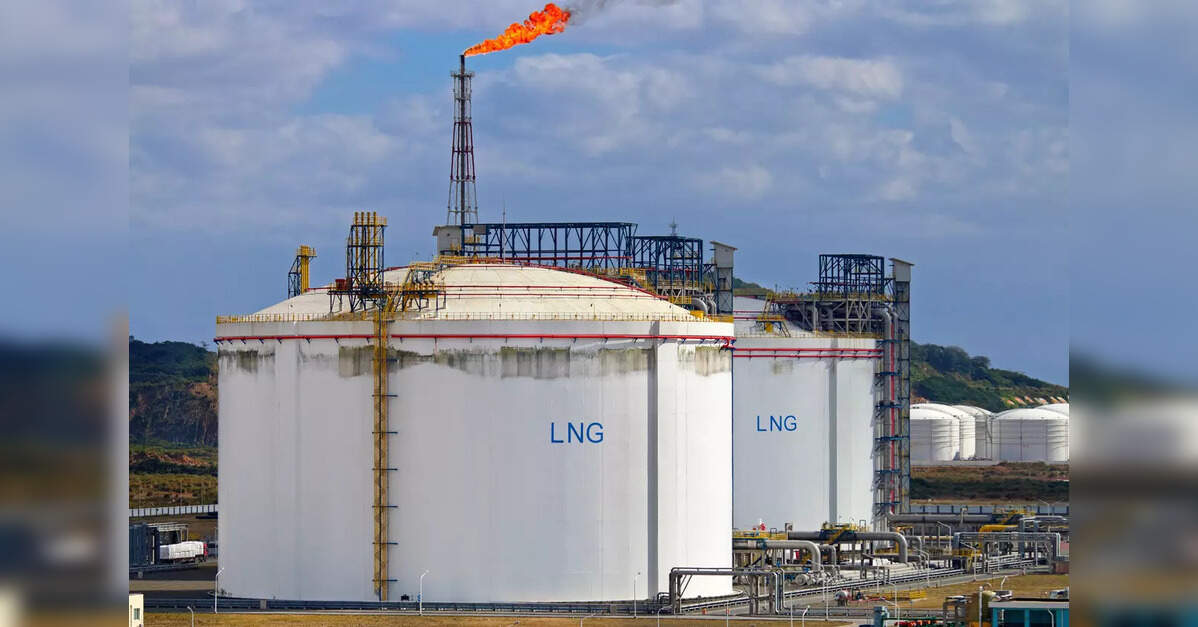
The European energy landscape is undergoing a profound transformation, driven by an urgent push for energy security and a decisive pivot away from Russian gas. At the forefront of this shift is liquefied natural gas (LNG), with the United States emerging as the dominant supplier. Recent negotiations spearheaded by Poland to import US LNG for Ukraine and Slovakia underscore a critical new phase in this realignment, promising to forge tighter transatlantic energy bonds and create significant opportunities for investors in the US LNG export sector. This strategic pivot is not merely a short-term response but a structural change with lasting implications for global energy markets and the companies positioned to meet this demand.
Poland’s Strategic Pivot and the Rise of US LNG Dominance
Poland’s active role in facilitating US LNG imports for its neighbors, Ukraine and Slovakia, signifies a crucial step in bolstering regional energy independence. While the exact terms are still under discussion, officials anticipate a joint declaration following a transatlantic energy conference this week, paving the way for further negotiations on supply terms. The potential volumes, estimated at 4 to 5 billion cubic meters of gas per year, are substantial – roughly equivalent to Slovakia’s entire annual gas consumption. This move is a direct response to Europe’s broader strategy to diversify its energy sources, solidified by the EU’s recent package of sanctions, which includes a ban on Russian LNG imports by 2027. The shift is already evident in market data: the EU’s reliance on US LNG has surged to supply approximately 55 percent of its needs this year, a dramatic increase from just 27 percent in 2021. For investors, this trend highlights the sustained and growing demand for US LNG, making export facilities, shipping infrastructure, and upstream gas production key areas for long-term capital allocation.
Navigating Market Volatility Amidst Geopolitical Shifts
While the long-term outlook for US LNG appears robust, investors must remain cognizant of the broader energy market’s inherent volatility. As of today, Brent crude trades at $90.38 per barrel, marking a significant daily decline of 9.07%, with prices ranging from $86.08 to $98.97. Similarly, WTI crude is priced at $82.59, down 9.41% within a range of $78.97 to $90.34. This downturn is part of a steeper trend; Brent has fallen nearly 20% over the past two weeks, dropping from $112.78 on March 30th. This sharp correction in crude prices, alongside gasoline trading at $2.93 per gallon (-5.18%), indicates a potential softening in overall energy demand or an oversupply narrative taking hold. Many investors are currently asking about the trajectory of crude prices, with a common query being: “what do you predict the price of oil per barrel will be by end of 2026?” While precise predictions are challenging, the interplay of geopolitical stability, global economic growth, and supply-side responses from major producers will dictate the path. For LNG investors, sustained lower crude prices could, in some scenarios, make alternative fuels more competitive, though Europe’s immediate energy security imperative often trumps short-term price fluctuations for gas.
Strategic Partnerships and Infrastructure Investment Opportunities
The push to secure European energy independence extends beyond just sourcing LNG; it encompasses a broader strategic engagement led by the US government. High-level diplomatic efforts, such as US Energy Secretary Chris Wright’s “strong message about America’s reliability” to European ministers, have directly translated into tangible deals. For instance, following meetings in September, Italian utility Edison inked a 15-year supply deal for US LNG. Furthermore, Slovakia’s agreement with the US for a new nuclear power plant in October illustrates a comprehensive approach to energy diversification. These long-term commitments and infrastructure projects are crucial for de-risking investments in the LNG value chain. Companies involved in developing new liquefaction capacity, expanding pipeline networks within Europe to distribute imported gas, and even those in the nuclear energy sector, stand to benefit. Investors should scrutinize firms with established export terminals, strong balance sheets, and proven track records in project execution, as these strategic shifts demand reliable partners for multi-decade commitments.
Upcoming Events to Shape the Energy Outlook
Looking ahead, the energy market will be closely watching several key events that could impact both crude oil and natural gas prices, thereby influencing the investment climate for LNG. Of particular importance are the upcoming OPEC+ Joint Ministerial Monitoring Committee (JMMC) meeting on April 19th, followed by the full OPEC+ Ministerial Meeting on April 20th. Investors are keenly interested in “What are OPEC+ current production quotas?” as any decisions on output levels will directly affect global crude supply and pricing, which in turn can influence the relative attractiveness and pricing of natural gas. Subsequent to these critical meetings, the API Weekly Crude Inventory reports (April 21st, April 28th) and the EIA Weekly Petroleum Status Reports (April 22nd, April 29th) will provide crucial insights into US inventory levels and demand trends, offering a pulse check on the world’s largest energy consumer. The Baker Hughes Rig Count on April 24th and May 1st will also indicate drilling activity and future supply potential. These events, particularly those concerning OPEC+, could either exacerbate the recent crude price declines or provide a floor, creating ripple effects across the entire energy complex, including the burgeoning LNG market.


