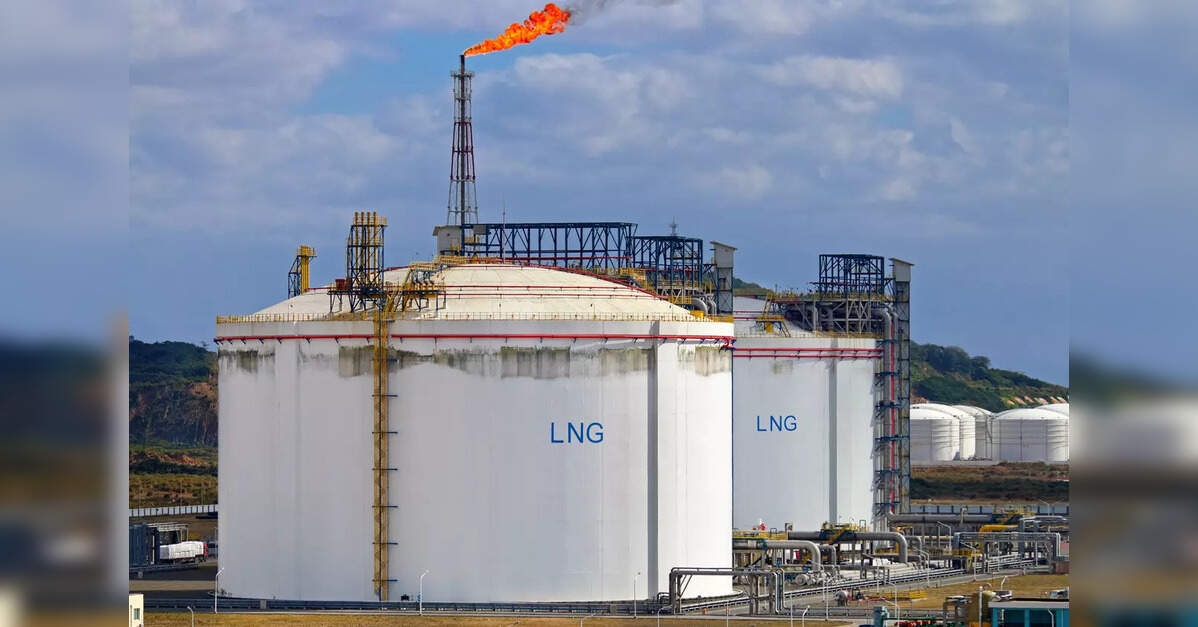
India’s largest liquefied natural gas importer recently reported a 5% decline in its second-quarter net profit, reaching ₹805.75 crore for the July-September period of fiscal year 2025-26, down from ₹847.62 crore in the prior year. This dip in profitability directly correlates with a reduction in processed LNG volumes, with the flagship Dahej terminal handling 211 trillion British thermal units (TBTU) compared to 225 TBTU a year earlier, and overall company volumes also falling from 239 TBTU to 228 TBTU. While the company’s board approved a ₹7 per share interim dividend, signaling confidence in its long-term outlook, investors must look beyond these headline figures to understand the broader implications for the LNG market and the energy sector at large, especially given the current volatile crude environment.
Decoding Petronet’s Volume Contraction in a Dynamic LNG Market
The reported decline in Petronet’s LNG processing volumes, both for the second quarter and the first half of the fiscal year, warrants a deeper analysis. For the half-year ending September 30, 2025, net profit stood at ₹1,656 crore, a notable decrease from ₹1,989 crore in the corresponding period last year, with overall LNG volumes processed dropping from 501 TBTU to 449 TBTU. This contraction signals potential shifts in India’s gas demand or the competitive landscape for LNG imports. Factors such as domestic gas production, industrial demand fluctuations, or even the global spot LNG price environment could contribute to such volume dynamics. While India’s long-term energy strategy heavily favors natural gas as a transition fuel, short-term economic headwinds or the availability of alternative energy sources can influence immediate import decisions. Investors should scrutinize whether this volume dip represents a temporary blip or a more systemic challenge for LNG importers in a market increasingly sensitive to price and supply chain reliability.
Crude’s Steep Correction and LNG Market Repercussions
The broader energy market is currently navigating a significant correction in crude prices, a development that cannot be ignored when evaluating gas sector players. As of today, Brent Crude trades at $90.38 per barrel, marking a sharp 9.07% decline within a single day, with its day range stretching from $86.08 to $98.97. Similarly, WTI Crude has fallen to $82.59, down 9.41% within the same period. This recent volatility follows a dramatic 14-day trend where Brent plummeted by nearly 20%, from $112.78 on March 30, 2026, to its current level. This precipitous drop in crude prices introduces a complex dynamic for the LNG market. While long-term LNG contracts often have clauses linked to crude prices, the immediate impact on spot gas prices and the competitive advantage of gas versus other fuels (like fuel oil in power generation) can shift rapidly. For an importer like Petronet, sustained lower crude prices could eventually lead to downward pressure on renegotiated LNG supply agreements, potentially impacting future revenue streams, or conversely, making LNG more attractive and stimulating demand if gas prices follow suit.
Anticipating Supply-Side Decisions: OPEC+ and Future Price Trajectories
The immediate future holds critical events that could shape the trajectory of crude prices and, by extension, influence the broader energy complex including LNG. Investors are keenly watching the upcoming OPEC+ Joint Ministerial Monitoring Committee (JMMC) Meeting on April 19, followed swiftly by the OPEC+ Ministerial Meeting on April 20. These gatherings are pivotal, as decisions regarding production quotas directly impact global crude supply. Many of our readers are asking about the outlook for oil prices by the end of 2026 and the current OPEC+ production quotas, highlighting the market’s focus on supply stability. Any move by OPEC+ to further cut production could provide a floor to the current crude price decline, potentially leading to a rebound. Conversely, a decision to maintain or increase output could prolong the downward pressure. For LNG players, these crude movements are significant. While gas markets operate with their own supply-demand fundamentals, sustained high or low crude prices can indirectly influence the relative competitiveness of LNG and affect investment decisions in both upstream gas production and downstream import infrastructure.
Investor Focus: Balancing Dividends with Long-Term Growth
Amidst a backdrop of declining profits and volatile commodity prices, the announcement of an interim dividend of ₹7 per share by Petronet LNG offers a tangible return to shareholders. This move is often interpreted as a sign of management’s confidence in the company’s underlying strength and future cash flow generation, even during periods of operational headwinds. However, for a forward-looking investor, the focus extends beyond immediate payouts to the strategic positioning of the company within India’s burgeoning energy demand. India remains a high-growth market for energy, and natural gas is slated to play an increasingly important role in its energy mix. Investors must weigh the short-term volume contractions against the long-term growth potential driven by urbanization, industrialization, and the nation’s commitment to reducing carbon emissions. Analyzing Petronet’s capital expenditure plans, its ability to secure advantageous long-term LNG supply contracts, and its operational efficiency will be crucial in determining its sustained profitability and shareholder value creation in the years to come.


