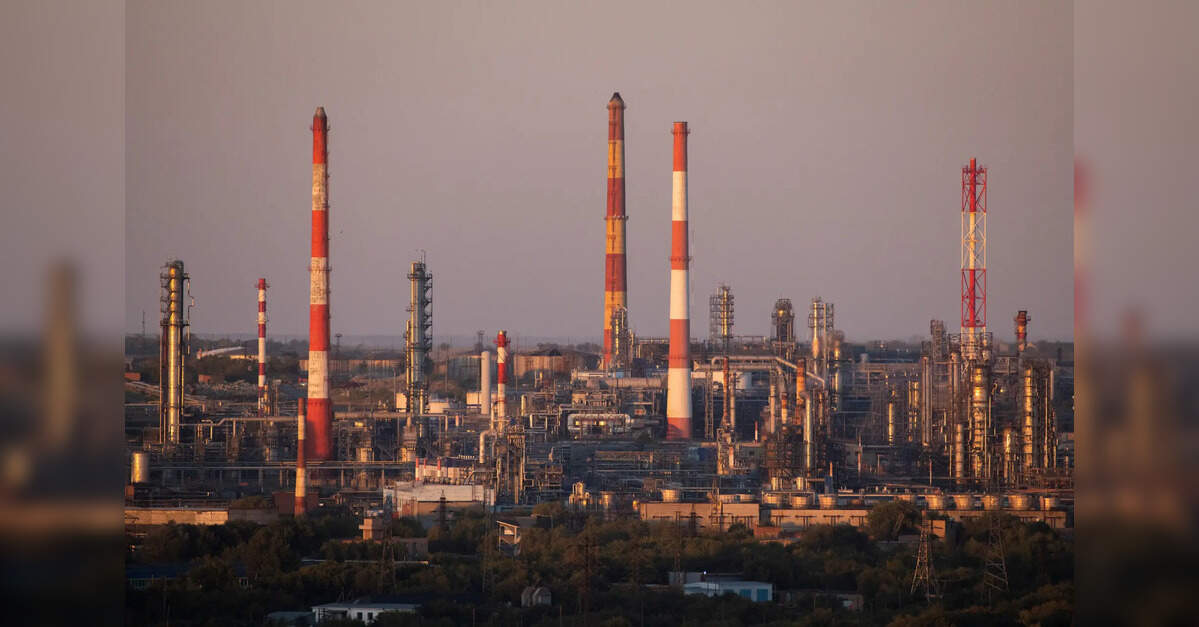
The global refining landscape is a complex interplay of supply, demand, and operational efficiency, with scheduled maintenance playing a pivotal role in market dynamics. A prime example of this critical operational rhythm was the significant multi-unit overhaul at Pemex’s 312,500-barrel-per-day (bpd) Deer Park, Texas, refinery, a massive undertaking that concluded in late 2025. This “Big Block Turnaround” exemplified the strategic necessity of extensive maintenance to ensure long-term asset integrity and performance. For oil and gas investors, understanding the implications of such large-scale events, even in retrospect, is crucial for assessing refining sector resilience, product market stability, and the broader crude oil demand outlook. While the Deer Park overhaul is now complete, its scale and impact offer valuable lessons for navigating today’s volatile energy market, where similar scheduled disruptions continue to shape investment opportunities.
Deer Park’s “Big Block Turnaround”: A Blueprint for Refining Resilience
The Deer Park overhaul, dubbed “the Big Block Turnaround,” was a testament to the intricate and capital-intensive nature of modern refining. It involved the strategic shutdown of multiple critical units, most notably the larger of the refinery’s two Crude Distillation Units (CDUs), the 270,000 bpd DU-2. For approximately 60 days, this primary unit, responsible for breaking down crude oil into feedstocks, was offline. Its disruption had a cascading effect, as it directly supplied the 70,000 bpd Fluid Catalytic Cracking Unit (FCCU), the 70,000 bpd diesel-producing Hydrocracking Unit (HCU), and the 92,000 bpd coker, along with other essential processing units. These units are vital for converting intermediate products into high-value motor fuels like gasoline, diesel, and jet fuel feedstocks, as well as petroleum coke. While the smaller 70,000 bpd DU-1 remained operational, the sheer scale of the DU-2 shutdown, representing over 85% of the refinery’s primary distillation capacity, significantly constrained refined product output during the maintenance period. Such extensive overhauls, though temporarily reducing supply, are indispensable for maintaining operational safety, enhancing energy efficiency, and ensuring the long-term reliability and profitability of these massive industrial assets.
Navigating Volatility: Refining Capacity Amidst Today’s Shifting Crude Market
The completion of major maintenance cycles like Deer Park’s helps stabilize product markets, yet the broader crude oil landscape remains highly dynamic. As of today, Brent Crude trades at $90.38, down a notable 9.07% from yesterday’s close, while WTI Crude stands at $82.59, experiencing a similar 9.41% decline. This recent dip follows a significant 19.9% drop in Brent over the past 14 days, from $112.78 to its current level, highlighting persistent market volatility. Gasoline prices are also feeling the pressure, currently at $2.93 per gallon, down 5.18%. For investors, these fluctuating crude and product prices are critical. While a major refinery outage like Deer Park’s would typically tighten product markets and boost crack spreads, the impact of such an event today would be nuanced, given the current softness in crude. A large turnaround now could potentially offer some support to product prices by reducing supply, but the overall bearish sentiment in crude might dampen the extent of that uplift. Conversely, a fully operational refining sector, post-turnaround, could contribute to greater product supply, potentially exerting further downward pressure on product prices if demand remains subdued. This intricate dance between refining capacity, crude supply, and consumer demand dictates profitability for downstream operators.
Investor Outlook: Deciphering Market Signals and OPEC+ Agendas
Investors are keenly focused on the future trajectory of oil prices, with many asking, “What do you predict the price of oil per barrel will be by end of 2026?” and “What are OPEC+ current production quotas?” The operational status of major refining assets, like the recently overhauled Deer Park facility, directly influences these predictions. While Deer Park is back online, the constant cycle of global refinery maintenance, turnarounds, and unplanned outages significantly impacts crude oil demand from refiners. Reduced refining throughput translates directly to lower crude intake, affecting global supply-demand balances. This dynamic is particularly relevant as the upcoming OPEC+ Joint Ministerial Monitoring Committee (JMMC) and full Ministerial Meeting on April 19th and 20th will determine future production quotas. OPEC+ decisions on supply levels will be made against a backdrop of global refining capacity utilization. If a wave of maintenance projects were underway, potentially dampening crude demand, OPEC+ might be inclined to maintain or even deepen cuts to stabilize prices. Conversely, robust refining activity indicates strong demand, which could support higher quotas. Monitoring these interactions is paramount for investors evaluating the long-term outlook for crude prices and the profitability of integrated oil companies.
Monitoring the Pulse: Inventories and Production Post-Turnaround
For investors seeking to understand the immediate impact of refining operations and broader market trends, monitoring key data releases is paramount. The API Weekly Crude Inventory report on April 21st, followed by the EIA Weekly Petroleum Status Reports on April 22nd and April 29th, will provide crucial insights into the health of product markets. These reports will indicate if current refining throughput, now that major facilities like Deer Park are back online, is effectively meeting demand, or if other ongoing maintenance activities are creating new pockets of tightness in gasoline, diesel, and jet fuel inventories, particularly in the critical U.S. Gulf Coast region. These inventory figures are direct barometers of refining efficiency and market balance. Additionally, the Baker Hughes Rig Count reports on April 24th and May 1st will offer vital insights into domestic crude production trends. Investors must carefully watch how domestic crude supply aligns with refining demand. Strong crude output combined with robust refining throughput typically signals a healthy market, while an imbalance, such as high crude production amidst reduced refining activity due to maintenance, could lead to crude inventory builds but refined product draws. Successfully navigating the oil and gas sector requires a continuous, analytical eye on these intertwined factors: refining operational status, global crude supply decisions, and regional inventory levels.


