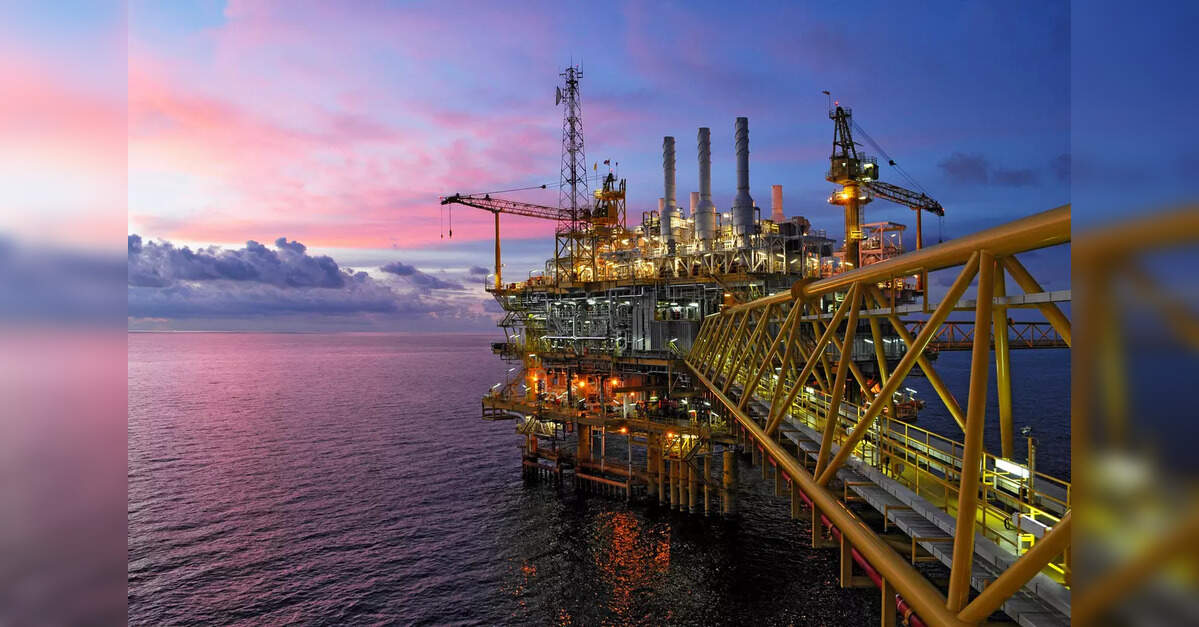
India’s energy landscape is poised for a significant transformation as state-run explorers Oil and Natural Gas Corporation (ONGC) and Oil India Ltd (OIL), in collaboration with global energy major BP, embark on an ambitious ₹3,200 crore stratigraphic drilling campaign. This strategic initiative, targeting untapped offshore areas in the deep seas of Andaman, Mahanadi, Saurashtra, and Bengal sedimentary basins, represents a crucial step in India’s relentless pursuit of energy independence. For investors, this campaign is more than just a drilling project; it’s a high-stakes play in one of the world’s fastest-growing energy markets, underpinned by substantial government backing and a long-term vision to mitigate import reliance.
India’s Energy Security Imperative Amidst Market Volatility
India’s decision to launch a major offshore exploration push is driven by an undeniable strategic imperative: to drastically reduce its substantial energy import bill. The nation currently imports nearly 88% of its crude oil and approximately half of its natural gas requirements, translating to an annual outflow of around $150 billion. This vulnerability to global price fluctuations and geopolitical events underscores the urgency behind boosting domestic hydrocarbon production. While the upfront investment of ₹3,200 crore for this initial phase is significant, it pales in comparison to the potential long-term savings and enhanced energy security that successful discoveries could deliver.
As of today, Brent crude trades at $98.1 per barrel, reflecting a 1.3% dip from its daily open, with a range between $97.92 and $98.67. WTI crude also saw a decline, trading at $89.58, down 1.74%. While these prices remain robust, it’s crucial for investors to acknowledge the inherent volatility of the global oil market. Our proprietary data shows a notable shift in sentiment, with Brent having fallen by over 12% in just the past 14 days, from $112.57 on March 27th to $98.57 on April 16th. This significant downward adjustment highlights the dynamic interplay of supply, demand, and macro-economic factors. For India, reducing exposure to such price swings through increased domestic output is a key driver for initiatives like the ONGC-OIL-BP campaign, making long-term resource development a strategic hedge against market unpredictability.
The Strategic Value of Stratigraphic Drilling and Global Partnerships
The campaign’s focus on “stratigraphic drilling” is particularly insightful for investors. Unlike conventional exploratory drilling aimed at immediate production, stratigraphic test wells are designed to gather comprehensive geological data. Through continuous coring, petrophysical logging, and seismic data integration, these wells build a detailed subsurface profile, informing future hydrocarbon exploration decisions without immediate extraction intent. This methodical approach, while delaying potential returns, significantly de-risks subsequent, more expensive development drilling by providing a clearer understanding of the geological formations and hydrocarbon potential. BP’s involvement is pivotal here; their technical expertise in identifying drilling locations and executing these complex operations is invaluable, bringing a global standard of efficiency and knowledge to India’s deepwater frontiers.
A crucial aspect for investors is the government’s commitment to compensate ONGC and OIL for the full cost of this campaign. This arrangement insulates the state-run entities from the direct financial risks associated with exploratory drilling, allowing them to focus on the technical execution. Furthermore, the government’s retention of ownership over any discovered blocks and its prerogative to decide on monetization—whether through auction or nomination—introduces an interesting dynamic. While BP’s role in monetisation remains unclear, the possibility of a “first right of refusal” (ROFR) for the global major in any future development could offer them a significant strategic advantage, aligning their technical contribution with potential equity participation.
Unlocking Potential: Policy Reforms and Investor Focus
The Indian government has demonstrated a strong commitment to facilitating domestic exploration. A major policy reform saw the reduction of ‘no-go’ zones—areas previously restricted for strategic interests—by an astonishing 99%. This unprecedented move has unlocked over 1 million square kilometers of India’s Exclusive Economic Zone (EEZ) for oil and gas exploration, vastly expanding the playing field for companies like ONGC, OIL, and their partners. Coupled with refined gas pricing policies designed to make deepsea exploration commercially viable, these reforms create a more attractive environment for capital deployment in high-risk, high-reward ventures.
Our proprietary reader intent data reveals a consistent and intense investor focus on the fundamentals of the energy market. Questions such as “What is the current Brent crude price and what model powers this response?” and “What are OPEC+ current production quotas?” frequently top investor queries. This underscores that while long-term strategic investments like India’s offshore push are critical, investors remain highly sensitive to immediate market dynamics and the mechanisms that drive price discovery. The policy clarity and financial backing provided by the Indian government for this campaign directly address some of the underlying risks that often make frontier exploration less appealing, thereby potentially enhancing investor confidence in India’s long-term energy growth story.
Forward Outlook: Navigating Upcoming Market Catalysts
The drilling campaign is slated to commence in early 2026, marking a significant milestone for India’s energy future. While the immediate impact on global supply will be negligible, the success of these stratigraphic wells will lay the groundwork for future development and potentially re-rate India’s deepwater exploration prospects. For investors tracking the broader energy market, the next 14 days present several critical catalysts that could influence the backdrop against which these long-term projects are evaluated.
Tomorrow, April 17th, the OPEC+ Joint Ministerial Monitoring Committee (JMMC) meeting will convene, followed by the full Ministerial meeting on April 18th. Any decisions regarding production quotas will directly impact global crude supply and, consequently, price levels, affecting the future commercial viability of potential Indian discoveries. Beyond OPEC+, investors will closely watch the API Weekly Crude Inventory report on April 21st and the EIA Weekly Petroleum Status Report on April 22nd for insights into current supply-demand balances in key markets. Further, the Baker Hughes Rig Count on April 24th will provide a snapshot of drilling activity, offering clues about future supply trends. These events, while short-term, collectively shape the operating environment for long-cycle projects like India’s offshore exploration, influencing investor sentiment and capital allocation decisions in the months and years leading up to the 2026 drilling start.


