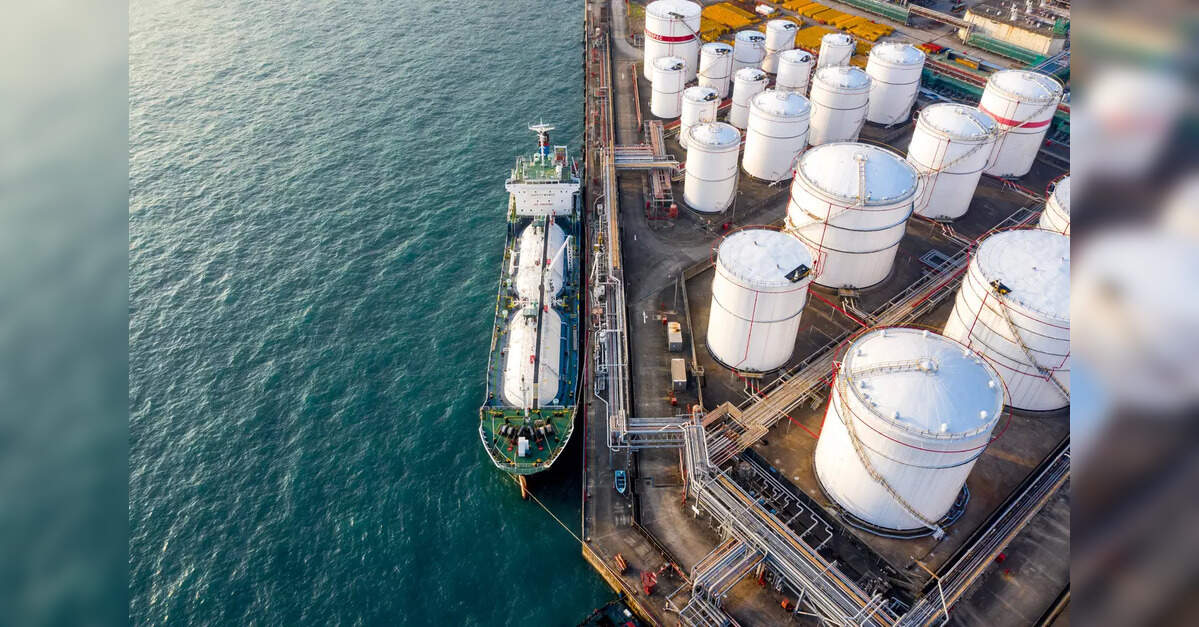
The global energy landscape is a complex mosaic of geopolitical maneuvering, technological innovation, and crucial infrastructure development. Against this backdrop, state-owned Oil and Natural Gas Corporation (ONGC) has recently cemented a five-year contract with APM Terminals Pipavav (GPPL) to establish a dedicated offshore oil and gas logistics base at the multi-cargo Pipavav Port. This strategic alliance, announced on September 25, 2025, extends far beyond a typical operational agreement; it represents a foundational commitment to enhancing India’s energy security, streamlining offshore operations, and establishing a resilient supply chain in a region critical to the nation’s economic growth. For investors monitoring the sector, this long-term deal signals stability and strategic foresight in an otherwise fluctuating market, offering a compelling case study on how infrastructure underpins national energy ambitions and creates value for partners.
Anchoring India’s Energy Security Through Strategic Logistics
The five-year mandate for APM Terminals Pipavav to serve as ONGC’s strategic supply base partner is a significant development for India’s upstream sector. This long-term commitment ensures that ONGC, a cornerstone of India’s energy production, will have a dedicated, world-class port infrastructure to support its extensive offshore assets. The Pipavav Port’s strategic location, particularly its proximity to ONGC’s key oil fields in the Tapti and Kutch regions, is a game-changer. This geographical advantage promises to dramatically improve operational efficiency and response times for offshore activities, translating directly into reduced downtime and optimized production schedules. For investors, this translates into greater reliability for ONGC’s production targets and, by extension, a more predictable contribution to India’s domestic energy supply. The collaboration underscores a commitment to providing a safe, reliable, and well-equipped infrastructure, which is paramount for high-stakes offshore operations and supports national development goals.
Navigating Current Market Volatility Amidst Long-Term Plays
While ONGC’s long-term logistics strategy focuses on stability, the broader crude oil market continues to exhibit significant volatility, a constant source of inquiry for our readers. As of today, Brent Crude trades at $90.38 per barrel, marking a sharp 9.07% decline within the day’s range of $86.08 to $98.97. Similarly, WTI Crude has fallen to $82.59, down 9.41%, trading between $78.97 and $90.34. This daily downturn extends a broader trend, with Brent having plummeted from $112.78 just two weeks ago to $91.87 yesterday, representing an 18.5% drop in less than a fortnight. Such aggressive price movements naturally lead investors to question the future trajectory of oil prices, with many asking about the outlook for crude by the end of 2026. While short-term fluctuations are influenced by a myriad of factors from geopolitical tensions to demand signals, the ONGC-Pipavav deal highlights that strategic, long-term infrastructure investments are made with a much broader horizon, insulated to a degree from daily price swings. These deals are about ensuring operational continuity and national energy resilience, regardless of whether Brent is at $80 or $110.
Operational Synergies and Investor Value for GPPL
For APM Terminals Pipavav (GPPL), this five-year contract with ONGC is more than just a new client; it opens a significant new business area and fundamentally redefines its role in India’s energy sector. Girish Aggarwal, Managing Director at APM Terminals Pipavav, emphasized the port’s capabilities, reliability, and collaborative approach in delivering impactful solutions for critical offshore logistics. The port’s advanced multi-modal infrastructure, coupled with integrated warehousing solutions, offers ONGC a comprehensive support system that enhances supply chain resilience and operational efficiency. This partnership showcases GPPL’s capability to deliver complex, high-impact solutions, positioning the port as a vital player in shaping India’s offshore logistics landscape. From an investor perspective, this diversification into a high-value, long-term energy logistics segment for GPPL offers revenue stability and demonstrates the port’s strategic importance beyond traditional cargo handling, potentially boosting its long-term valuation and market appeal.
Anticipating Near-Term Catalysts and Market Direction
While the ONGC deal provides a long-term anchor, the immediate future of crude prices will be shaped by a series of upcoming events that investors must closely monitor. This weekend, the OPEC+ Joint Ministerial Monitoring Committee (JMMC) meets on April 18th, followed by the full Ministerial Meeting on April 19th. These meetings are crucial, especially given the recent significant price declines, as they will determine future production quotas. Many readers are specifically asking about OPEC+’s current production levels and their potential adjustments. Any decision to cut or maintain current output will have an immediate and profound impact on market sentiment and prices. Following this, the market will turn its attention to the API Weekly Crude Inventory report on April 21st and the EIA Weekly Petroleum Status Report on April 22nd, providing vital insights into U.S. supply-demand dynamics. The weekly Baker Hughes Rig Count on April 24th will further inform on drilling activity and future production trends. These recurring data points, continuing with similar reports on April 28th, April 29th, and May 1st, will paint a clearer picture of market fundamentals. In this environment, strategic infrastructure investments like the ONGC-Pipavav contract underscore the foundational stability that underpins national energy strategies, even as global commodity markets react to every data point and policy announcement.


