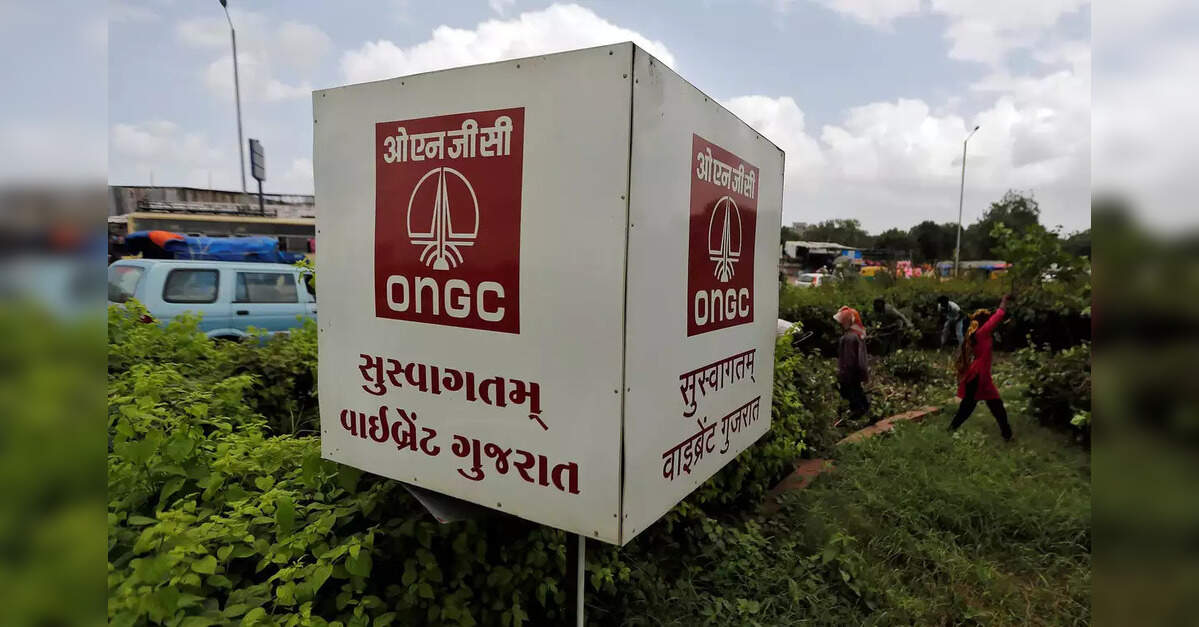
The global energy landscape is a complex tapestry of geopolitical shifts, macroeconomic pressures, and, crucially, operational realities. Investors often focus on the grand narratives of supply and demand, but beneath these headlines lie the granular challenges faced by energy producers daily. The incident involving state-owned Oil and Natural Gas Corporation (ONGC) in Assam in June 2025 serves as a potent reminder of these inherent operational risks and their broader implications for investor sentiment, particularly as we navigate today’s dynamic market conditions.
Recalling the Assam Incident: A Case Study in Operational Risk
In mid-June 2025, ONGC confronted a significant operational challenge when an uncontrollable natural gas leak erupted from Well No RDS-147 in Assam. The incident, which began on June 13 during routine servicing operations, saw gushes of gas flowing continuously for over a week. While ONGC swiftly confirmed there were no injuries and initial environmental assessments by the Pollution Control Board, Assam, indicated air quality parameters were within permissible limits beyond 500 meters, the event underscored the inherent hazards of upstream exploration and production.
ONGC’s immediate response involved deploying its in-house well control experts and initiating consultations with an international well control agency, whose team was subsequently mobilized to the site. Crucially, the firm successfully connected the well to a nearby production facility, allowing a portion of the gas to be diverted in a controlled manner, alongside maintaining continuous water blanketing as an additional safety measure. The gas was confirmed non-toxic and, being lighter than air, dispersed upwards, minimizing local risk. Despite the effective containment strategy and lack of direct physical harm, such incidents invariably incur significant operational expenditure, impact production schedules, and draw intense scrutiny, factors that can weigh on a company’s financial performance and investor perception.
Current Market Headwinds: Brent’s Recent Retreat and Investor Caution
As of today, April 15, 2026, the broader energy market exhibits a palpable sense of caution, particularly in crude benchmarks. Our proprietary data pipelines indicate Brent crude has experienced a notable retreat, trading at $93.22. This marks an 8.8% decline from its $102.22 level observed just three weeks prior, on March 25, 2026. This downward pressure reflects a confluence of factors, including lingering demand uncertainties and a general risk-off sentiment that has pervaded global markets.
Against this backdrop of softening prices, the lessons from past operational challenges, such as ONGC’s Assam incident, gain renewed significance. While a localized gas leak might not directly impact global crude supply, it contributes to the narrative of operational stability and risk management within major producing regions. For investors, a market under pressure amplifies the need for robust operational integrity from energy companies. Any perceived weakness in execution or incident response can exacerbate negative sentiment and raise questions about future production consistency, even for state-backed giants like ONGC, which play a critical role in national energy security.
Investor Scrutiny: Operational Efficiency and Price Outlooks
Our proprietary reader intent data reveals investors are keenly focused on fundamental questions this week, notably seeking a ‘base-case Brent price forecast for next quarter’ and the ‘consensus 2026 Brent forecast.’ These inquiries highlight a deep desire for clarity amidst market volatility, and operational incidents, even historical ones like the Assam gas leak, subtly feed into these forward-looking assessments.
While the direct impact of ONGC’s incident on global crude or even LNG prices was limited, it underscored the inherent capital intensity and operational risks of upstream projects. Investors are not just evaluating macro supply-demand balances; they are also scrutinizing the operational efficiency and risk mitigation strategies of individual companies. A major firm like ONGC incurring significant costs and mobilizing international expertise to control a well highlights the potential for unexpected expenditures and disruptions. Such events influence how investors perceive the reliability of production targets and the overall risk premium associated with energy investments, thereby indirectly shaping their long-term price outlooks. Furthermore, broader investor interest in topics like ‘Chinese tea-pot refineries running this quarter’ or ‘Asian LNG spot prices’ illustrates the comprehensive mosaic of factors that collectively impact energy markets, where any operational hiccup, however localized, can contribute to the overall sentiment.
Navigating the Near-Term: Upcoming Catalysts for Energy Markets
The coming weeks will undoubtedly shape market sentiment, offering critical data points that investors are closely watching, even as the industry continues to absorb lessons from past operational events like the ONGC incident. The calendar is packed with events that could provide fresh impetus or further headwinds for energy prices.
Key among these are the upcoming OPEC+ meetings, with the Joint Ministerial Monitoring Committee (JMMC) scheduled for April 18, followed by the Full Ministerial Meeting on April 20. These gatherings will be crucial in signaling the cartel’s collective stance on production policy amidst the current market dynamics. Closer to home for North American production, the Baker Hughes Rig Count reports on April 17 and April 24 will offer fresh insights into drilling activity and potential supply trajectories. Furthermore, the weekly API and EIA Crude Inventory reports, slated for April 21/22 and April 28/29 respectively, will provide essential gauges of demand health and inventory levels, serving as immediate barometers for market participants.
For companies like ONGC, while the immediate crisis of the Assam well has passed, the strategic lessons remain. Strong operational performance and swift, transparent incident management are paramount. In a market constantly reacting to macro events and micro disruptions, the ability of energy producers to maintain operational integrity, as demonstrated by ONGC’s rapid response in 2025, is a key factor in sustaining investor confidence and navigating the inevitable volatility that these upcoming market catalysts will bring.


