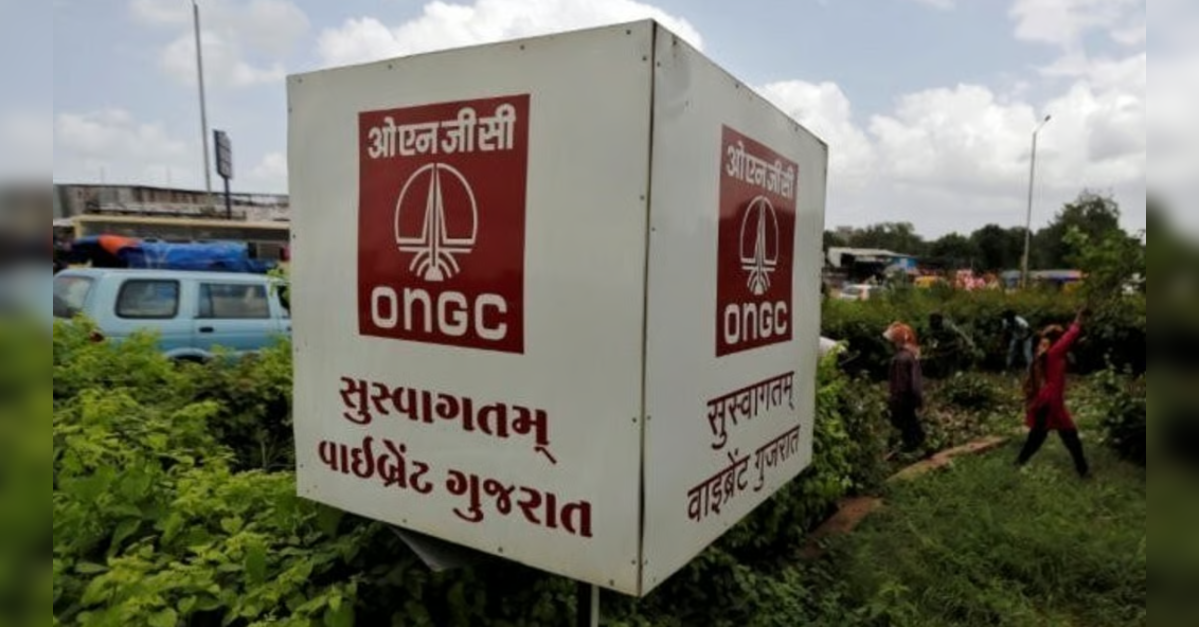
The commencement of natural gas sales from Oil and Natural Gas Corporation Limited’s (ONGC) Chinnewala Tibba field marks a significant, albeit incremental, step in India’s ongoing pursuit of energy independence. Located within the Rajasthan Kutch Onland Exploratory Asset (RKOEA), this Discovered Small Field (DSF-II) block is now contributing 1.0 lakh standard cubic meters of gas per day (LSCMD) to the regional power grid. While individual DSF projects might seem modest in isolation, their collective impact, particularly from a state-owned enterprise like ONGC, warrants closer scrutiny from investors keen on understanding India’s evolving energy landscape and the strategic plays within it. This development underscores ONGC’s commitment to monetizing its resource base and aligns with national objectives, offering a lens through which to evaluate the broader implications for domestic production, energy security, and the company’s future value proposition amidst volatile global energy markets.
Strategic Imperatives and Domestic Resource Monetization
ONGC’s initiative at Chinnewala Tibba is a direct reflection of India’s strategic push to enhance domestic energy production, a critical component of its broader energy security agenda. The DSF policy framework is designed to unlock smaller, previously uneconomical fields, ensuring that even marginal discoveries contribute to the national energy pool. The Chinnewala Tibba block, covering 73 sq. km in Western Rajasthan, close to the Indo-Pak international border, exemplifies this strategy. The gas, evacuated via ONGC’s Gamnewala Gas Collection Station (GCS) to Rajasthan Rajya Vidyut Utpadan Nigam Limited (RRVUNL) in Ramgarh since August 25, 2025, represents a direct feed into regional power generation. For investors, this signifies ONGC’s consistent execution within government-mandated frameworks, reducing import dependency and strengthening local grids. While the 1.0 LSCMD volume is not transformative on a national scale, it demonstrates efficient resource monetization and operational capabilities, reinforcing ONGC’s role as a trusted partner in achieving national energy objectives and creating incremental value from its extensive asset base.
Current Market Dynamics and Investor Sentiment
The backdrop against which ONGC’s domestic gas monetization unfolds is one of dynamic global energy markets. As of today, Brent crude trades at $98.1 per barrel, marking a +3.34% gain for the day, with WTI crude showing similar strength at $89.89, up 2%. Gasoline prices also reflect this upward movement, reaching $3.08, a 2.33% increase. This bullish intraday sentiment provides a generally favorable environment for energy investments. However, it is crucial for investors to contextualize this against the broader trend: Brent crude has experienced a significant decline of over 12% in the past 14 days, falling from $108.01 on March 26, 2026, to $94.58 on April 15, 2026. This volatility underscores the importance of diversified energy portfolios, where stable, domestic gas production like that from Chinnewala Tibba can offer a degree of insulation from the more pronounced swings in international crude markets. Investors are increasingly evaluating the balance between exposure to global commodity prices and the stability offered by projects tied to domestic demand and regulated pricing structures, particularly from state-backed entities.
Forward-Looking Catalysts and Macro Influences
Looking ahead, the global energy calendar is packed with events that will undoubtedly shape market sentiment and, by extension, the perceived value of assets like ONGC’s Chinnewala Tibba. Investors should mark their calendars for the upcoming OPEC+ meetings. The Joint Ministerial Monitoring Committee (JMMC) convenes on April 18, 2026, followed by the Full Ministerial meeting on April 20, 2026. These gatherings will provide critical insights into future production quotas and supply strategies, directly impacting global crude prices. Any significant shifts could reverberate across the entire energy value chain. Furthermore, the regular cadence of weekly inventory reports from the American Petroleum Institute (API) on April 21 and April 28, and the U.S. Energy Information Administration (EIA) on April 22 and April 29, will offer fresh data on supply-demand balances in the world’s largest consumer market. While these are primarily U.S.-focused, their influence on global benchmarks like Brent is undeniable. For ONGC, while gas prices are often tied to domestic benchmarks, a strong global crude market can indirectly boost investor confidence in the broader energy sector, making capital allocation for future domestic projects potentially more accessible and attractive. The sustained commitment to domestic gas monetization, therefore, positions ONGC strategically regardless of short-term crude volatility, offering a long-term hedge against import costs.
Addressing Investor Queries and Valuation Implications
Our proprietary reader intent data highlights that investors are deeply engaged with macro-level market dynamics this week, frequently asking about current Brent crude prices, OPEC+ production quotas, and requesting base-case Brent price forecasts for the upcoming quarter. This intense focus on global crude benchmarks and supply-side policies reflects a broader uncertainty in the market. However, it also presents an opportunity to re-evaluate the strategic importance of consistent, albeit smaller-scale, domestic gas monetization projects like Chinnewala Tibba. While not directly impacting global crude prices, these initiatives contribute to a more robust national energy mix, reducing reliance on volatile international markets. For ONGC, the successful commissioning of DSF-II blocks like Chinnewala Tibba reinforces its operational efficiency and commitment to expanding its gas portfolio. This diversified approach, balancing large-scale exploration with focused monetization of smaller assets, contributes positively to its long-term valuation by providing stable revenue streams and mitigating geopolitical risks associated with imported energy. Investors should consider these incremental domestic gas additions as a foundational element of ONGC’s resilience and a component of its valuation that often gets overshadowed by the more dramatic swings of crude oil.


