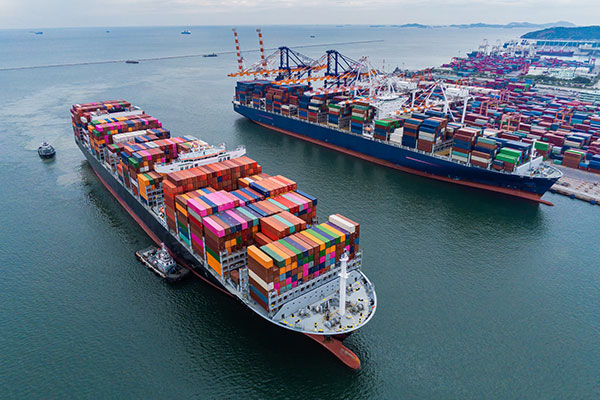
The maritime shipping industry, a colossal consumer of bunker fuels and a significant contributor to global emissions, is undergoing a profound reassessment of its decarbonization pathway. A recent deep dive into global container ship voyages has unearthed a counter-intuitive finding: the most efficient vessels, in terms of emissions, are not the brand-new, cutting-edge fleets, but rather those aged between 11 and 15 years. This revelation, stemming from an analysis of over 73,000 containership trips, challenges the long-held assumption that newer always means cleaner and demands a recalibration of investment strategies across the entire oil and gas value chain that supports global trade.
Operational Excellence Trumps Age in Decarbonization
For years, the narrative around maritime decarbonization has heavily leaned on fleet renewal, with billions allocated worldwide to construct next-generation vessels. However, the data now suggests that operational factors—such as precise route choice, optimized vessel loading, and controlled speed—play a more significant role in emissions reduction than the sheer age or initial design of a ship. This paradigm shift means investors must look beyond simple CapEx cycles. The focus is now firmly on technologies and practices that enhance the efficiency of existing fleets. We’re seeing that larger container ships running full loads on long routes are considerably more efficient than smaller feeder vessels engaged in shorter, stop-and-go trips. Furthermore, design differences, with South Korean-built ships often outperforming Chinese counterparts, indicate that engineering quality and deployment strategy are critical. This pushes investment towards sophisticated voyage optimization software, advanced propulsion monitoring, and crew training programs that maximize fuel efficiency, potentially extending the economic life of older, well-maintained assets rather than solely investing in new builds that may not be operated optimally.
Navigating Volatility: Maritime Fuel Demand Amidst Crude Price Swings
The implications of this operational efficiency trend are amplified by the current volatility in global crude markets. As of today, Brent Crude trades at $90.38 per barrel, a significant decline of 9.07% within the day, with a range of $86.08 to $98.97. Similarly, WTI Crude stands at $82.59, down 9.41%, trading between $78.97 and $90.34. This sharp downturn is part of a broader trend, with Brent having plummeted by $22.4, or 19.9%, from $112.78 on March 30th to its current level. Such dramatic price movements directly impact the cost of marine bunker fuels. While lower fuel costs can incentivize more voyages—the number of trips increased slightly last year even as total emissions held steady—the newfound emphasis on operational efficiency means each voyage consumes less fuel. This creates a complex dynamic for oil and gas investors. On one hand, increased shipping activity boosts overall demand. On the other, per-voyage efficiency reduces the volume required. Investors frequently ask about the future trajectory of oil prices, with many wondering what the price of oil per barrel will be by the end of 2026. This confluence of operational shifts and market volatility makes long-term price predictions challenging, emphasizing the need to monitor both demand-side efficiencies and supply-side responses.
Upcoming Events and Future Fuel Strategies
The maritime industry’s evolving efficiency landscape will undoubtedly factor into the broader energy market, especially given a packed calendar of upcoming events. The OPEC+ JMMC Meeting on April 19th and the subsequent Ministerial Meeting on April 20th will be critical in setting production quotas. Investors are keenly watching these gatherings, with frequent questions about OPEC+’s current production quotas, as these decisions directly influence global crude supply and, consequently, marine fuel prices. Should OPEC+ maintain or tighten output, a rebound in prices could shift the economic calculus back towards even more stringent operational efficiency measures. Furthermore, the weekly API and EIA Crude Inventory reports (April 21st/22nd and April 28th/29th) provide vital insights into supply-demand balances, while the Baker Hughes Rig Count (April 24th and May 1st) signals future production capacity. If older, operationally optimized ships continue to dominate, the transition away from traditional bunker fuels might decelerate for existing fleets, impacting investment timelines for alternative fuel infrastructure like LNG, methanol, or ammonia bunkering. Energy companies with diversified portfolios, like those our readers often inquire about (e.g., “How well do you think Repsol will end in April 2026?”), must strategically position themselves to serve both the optimized conventional fleet and the eventual shift to new fuels, adapting their refining outputs and investment in next-generation energy solutions.
Investor Sentiment and Strategic Positioning in a Decarbonizing World
The revised understanding of maritime emissions calls for a significant re-evaluation of investment criteria in companies tied to the shipping and energy sectors. Investors are no longer simply asking “What data sources does EnerGPT use?” or “What APIs or feeds power your market data?” but rather, how these insights translate into actionable investment decisions. Companies that prioritize investment in digital solutions for operational efficiency, rather than solely focusing on greenfield fleet renewal, may prove more resilient and profitable in the near to medium term. This includes software providers for route optimization, sensor technology for real-time performance monitoring, and advanced analytics platforms. For oil and gas majors and refiners, this means a continued, albeit more efficient, demand for conventional bunker fuels while simultaneously developing scalable solutions for future fuel pathways. The “bigger ships, lower impact” trend also suggests that investments in larger, more efficient port infrastructure and logistics chains will yield better environmental and economic returns. Investors should scrutinize company decarbonization strategies, rewarding those that embrace a holistic approach combining operational enhancements with sustainable newbuilds, rather than clinging to outdated notions of what constitutes “cleaner” in the complex world of global shipping.