One Hundred Days of Conflict: Geopolitical Tensions Keep Oil Investors on Edge
The geopolitical landscape of the Persian Gulf remains a significant source of volatility for global energy markets, marking 100 days since the escalation of the Iran conflict on February 28. Despite initial hopes for de-escalation, Washington and Tehran find themselves at an impasse regarding an interim agreement, casting a long shadow over the stability of critical energy arteries, most notably the Strait of Hormuz, and broader regional security.
This protracted stalemate poses substantial challenges for oil and gas investors navigating a market already sensitive to supply disruptions. The lack of concrete progress in negotiations, particularly concerning the release of billions of dollars in frozen Iranian assets and the specific terms of a broader truce, has become a formidable barrier to any meaningful resolution. This unresolved financial and political deadlock fuels ongoing uncertainty, making it difficult for market participants to accurately forecast future energy supply and pricing dynamics.
Hormuz: The Chokepoint Under Persistent Threat
Maritime security in the Strait of Hormuz continues to be a primary concern for energy market stakeholders. This narrow waterway, a vital conduit for a substantial portion of the world’s crude oil and liquefied natural gas (LNG) exports, remains a flashpoint for regional tensions. Recent reports from U.S. Central Command confirmed the interception of Iranian drones menacing commercial shipping in the Strait over the past weekend, underscoring the persistent and active threats to navigation. Furthermore, numerous other missile and drone incidents have been documented across the wider Gulf region, collectively painting a picture of elevated risk for tankers and maritime operations.
The strategic importance of the Strait cannot be overstated. Its uninterrupted flow is paramount for global energy security. However, since the conflict’s onset, traffic through this crucial chokepoint has consistently remained below pre-conflict levels. This reduction is a direct consequence of heightened security concerns and the imposition of various restrictions on regional shipping. For investors, this translates into an increased risk premium on crude oil and LNG, as potential disruptions could swiftly lead to supply shocks and price spikes.
Escalating Regional Hostilities and Infrastructure Risks
The conflict’s duration has witnessed a concerning pattern of attacks directly targeting energy infrastructure. Iran and its regional proxies have launched strikes against oil facilities, industrial sites, and military installations across several Gulf nations. These actions are not merely symbolic; they represent tangible threats to production capacity and export capabilities within one of the world’s most critical hydrocarbon-producing regions. Each incident carries the potential for significant damage, leading to production outages and a corresponding impact on global supply.
The United States military has responded to these provocations with targeted strikes against Iranian military assets, including surveillance sites strategically positioned near the Strait of Hormuz. These retaliatory measures highlight the ongoing military tit-for-tat, reinforcing the notion that the conflict is far from contained. Investors must factor in this cycle of action and reaction, understanding that any miscalculation could rapidly escalate into a broader regional confrontation with severe implications for the global oil and gas landscape.
Negotiation Impasse: A Political Stand-Off
The path to an interim agreement is currently obstructed by fundamentally opposing positions from the key players. Former President Donald Trump has publicly stated his refusal to unfreeze Iranian assets or ease sanctions as part of any initial deal. This firm stance directly clashes with Tehran’s non-negotiable demand that the release of these frozen funds is a prerequisite for any interim arrangement. Iran has also consistently linked broader discussions about its nuclear program and regional security issues, further complicating the negotiating framework.
This political stalemate ensures that the core issues driving the conflict remain unresolved. The inability to bridge this gap means that the underlying tensions will continue to simmer, preventing any meaningful de-escalation that could restore confidence in the region’s long-term stability and energy export reliability. For the global energy market, this translates to sustained geopolitical risk premiums embedded in commodity prices.
Market Reaction and Investor Outlook
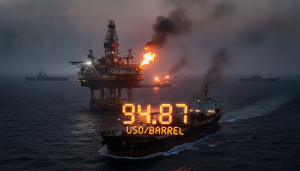
The prolonged disruption has undeniably kept energy markets on edge. While crude oil prices have retreated from the sharp spikes observed immediately after the conflict’s initial escalation, they persist at significantly elevated levels compared to pre-war benchmarks. West Texas Intermediate (WTI) crude futures concluded the past week trading above $90 per barrel, while Brent crude settled near $93 per barrel. These price points reflect not only current supply-demand dynamics but also the tangible geopolitical risk premium investors are currently building into their valuations.
Beyond the immediate pricing, the conflict has intensified concerns regarding global energy security and the specter of inflationary pressures. A continued disruption to Gulf oil exports, or a complete failure of negotiations to yield an agreement that effectively restores confidence in regional shipping routes, would have profound implications. Such a scenario could lead to sustained higher energy costs globally, feeding into broader inflation and potentially impacting economic growth prospects worldwide. For investors, monitoring the diplomatic efforts and regional security developments remains paramount, as any shift could dramatically reprice oil and gas assets. With 100 days having passed and no breakthrough in sight, the outlook for a durable ceasefire and the unimpeded flow of Gulf energy remains profoundly uncertain, necessitating cautious yet informed investment strategies.