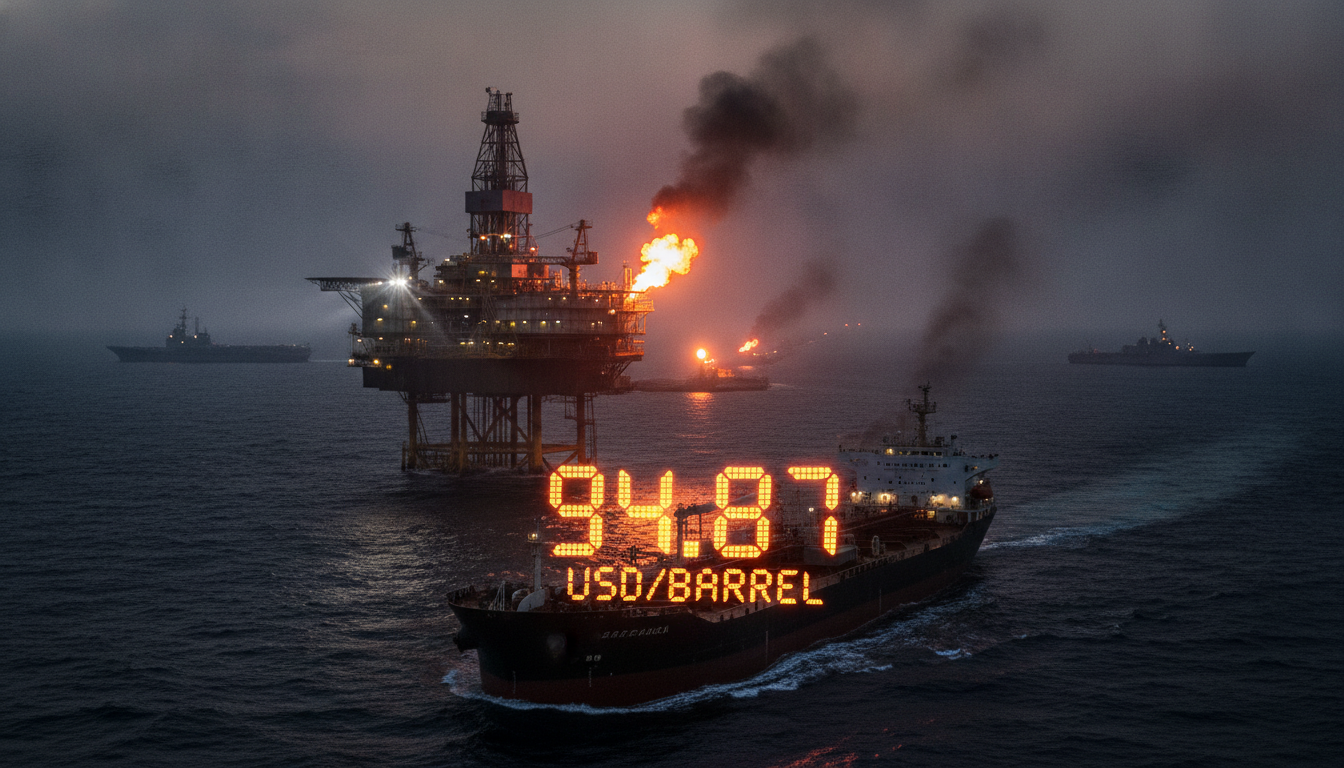
Oil Markets Brace for Impact as Geopolitical Tensions Propel Prices Above $95/bbl
Global crude oil benchmarks have surged, with Brent futures briefly crossing the $95 per barrel threshold on Thursday, marking an impressive 30% rally this month. This significant upward momentum reflects growing investor anxiety over escalating geopolitical tensions and tangible threats to global energy supplies. The confluence of military engagements and critical infrastructure disruptions is reshaping the near-term outlook for oil markets, presenting both challenges and opportunities for those navigating the energy sector.
Middle East Instability Fuels Supply Premium
The current rally is largely fueled by an intensifying standoff between the United States and Iran, coupled with broader hostilities across the Middle East. Reports from the Mehr news agency confirm a lack of ongoing negotiations between Washington and Tehran, amplifying the potential for continued conflict. Crucially, the Strait of Hormuz, a choke point for roughly a fifth of the world’s crude oil supply, has witnessed renewed instability, including three recent tanker attacks near Oman. This directly raises concerns about the secure passage of vital oil shipments, a factor that invariably translates into a geopolitical risk premium on crude prices.
The U.S. military has conducted 11 consecutive days of operations targeting Iranian-backed elements, according to U.S. Central Command, underscoring the sustained nature of the confrontation. While the Strait of Hormuz remains technically open, the prolonged aggression undeniably elevates the risk of substantial supply interruptions, creating an environment ripe for price volatility.
Broader Supply Vulnerabilities and Red Sea Threats
Beyond the Persian Gulf, Houthi forces have reignited threats against commercial shipping in the Red Sea, a critical maritime route linking Asia and Europe. U.S. President Donald Trump has explicitly warned of retaliation against any disruption of traffic through this vital waterway, signaling a firm stance against attempts to impede global trade flows. These regional flashpoints are compounding existing supply concerns. For instance, disruptions have also hit the Caspian Pipeline Consortium (CPC) terminal on Russia’s Black Sea coast, which is a key conduit for the majority of Kazakhstan’s crude exports.
Such diverse points of vulnerability across the global energy infrastructure collectively contribute to the sharp rise in oil prices, as traders factor in the heightened potential for further supply shocks. The market is keenly sensitive to any development that could impede crude flow from these strategically vital regions.
Analysts Forecast Triple-Digit Oil as Inventories Decline
Leading market strategists are increasingly vocal about the upward trajectory of oil prices under these circumstances. Ryan McKay, a senior commodity strategist, noted that the current escalation and Iranian actions have “again opened the door to fatter right-tail scenarios the longer it goes on,” suggesting that extreme positive price movements are becoming more probable. Indeed, several prominent financial institutions have begun to contemplate triple-digit oil prices.
Bernstein analysts, for example, project Brent crude could exceed $100 per barrel before year-end if OECD inventories continue their decline. Similarly, Goldman Sachs has identified a return to $100 oil as a plausible scenario, even if it doesn’t currently represent their base-case forecast. The growing consensus among experts underscores the severity of the current market dynamic.
A Fundamentally Different Market Landscape
The current geopolitical premium is fundamentally different from past episodes of market volatility, according to industry leaders. Equinor CFO Torgrim Reitan highlighted this distinction in a recent interview, stating, “This time around it is very different, because storage is down, there is no oversupply situation and the physical situation can easily be visible in the market.” This means that the global oil market is operating with leaner inventories and less spare capacity, making it significantly more sensitive to any disruption.
The absence of a substantial supply cushion amplifies the impact of any perceived or actual threat to production or transportation, driving prices higher more rapidly. Investors should recognize that the market’s underlying resilience to shocks has diminished, making it more prone to exaggerated price movements in response to geopolitical headlines.
Market Indicators Affirm Tight Supply Conditions
Further underscoring the tightening supply dynamics, key market indicators are flashing strong signals. Both Brent and West Texas Intermediate (WTI) prompt timespreads are firmly entrenched in a steep backwardation structure, exceeding $3 per barrel. Backwardation signifies that immediate crude oil deliveries command a premium over future deliveries, reflecting robust demand for prompt barrels and a perception of current or imminent supply tightness.
This market structure incentivizes drawing down existing inventories, further reducing global stockpiles and intensifying the pressure on spot prices. For investors, this signals a market actively seeking immediate supply, indicating a lack of readily available excess crude.
U.S. Inventory Dynamics and Export Reliance
While the U.S. Energy Information Administration (EIA) recently reported a 2 million barrel increase in commercial crude inventories last week, alongside rises in gasoline and distillate stockpiles, the broader market narrative is shifting. Investors are increasingly focusing on the growing role of U.S. crude exports. As Middle Eastern supply chains face potential disruptions, global buyers are actively seeking alternative, reliable sources of crude. This demand shift positions the U.S. as a critical swing supplier, with its export volumes likely to play an outsized role in balancing global oil markets and potentially mitigating, or exacerbating, regional supply shortfalls.
Investment Outlook: Heightened Risk, Potential Rewards
For investors in the oil and gas sector, the current environment presents a complex risk-reward profile. The upward pressure on crude prices driven by geopolitical instability and tightening supply fundamentals offers significant potential for capital appreciation in energy-related assets. However, the inherent volatility associated with conflict in critical production regions also introduces considerable risk. Careful monitoring of geopolitical developments, global inventory levels, and the ongoing interplay between demand and constrained supply will be paramount for informed decision-making in this rapidly evolving energy landscape.
The market remains poised for further significant moves, with the potential for both substantial gains and sudden corrections depending on the pace and resolution of current global challenges. Energy investors must remain agile, as the forces driving today’s oil prices are both powerful and unpredictable.