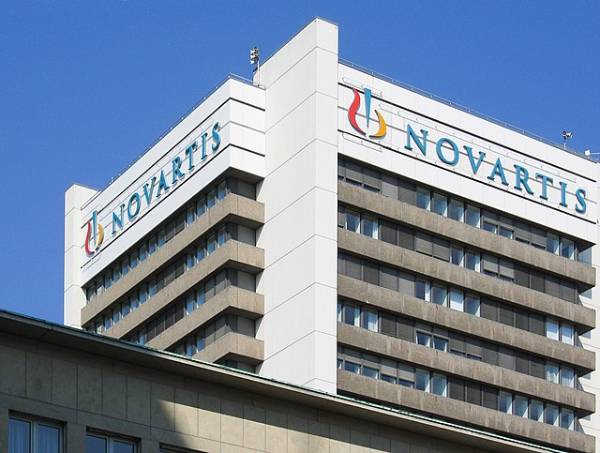
In the dynamic landscape of energy markets, headline-grabbing geopolitical events and macroeconomic shifts often dominate the narrative, overshadowing more subtle yet structurally significant demand drivers. A recent announcement from Novartis, detailing the opening of a new 10,000-square-foot radioligand therapy (RLT) manufacturing facility in Carlsbad, California, offers a prime example. While ostensibly a pharmaceutical development, this expansion, part of a broader $23 billion U.S. infrastructure investment over five years, signals a burgeoning industrial energy footprint that sophisticated oil and gas investors cannot afford to ignore. These specialized manufacturing sites represent a consistent, non-cyclical demand component, quietly building beneath the market’s volatile surface.
The Quiet Rise of Industrial Demand: Biotech’s Energy Footprint
The new Novartis facility in Carlsbad is not just another building; it’s a high-tech operation critical for producing time-sensitive radioligand therapies. The very nature of RLT manufacturing—custom-made doses with rapidly decaying radioactive materials requiring precise environmental controls, advanced refrigeration, and continuous power supply—translates directly into substantial, sustained energy consumption. This isn’t just about powering lights; it’s about maintaining highly controlled environments, running specialized equipment, and ensuring operational continuity, all of which are energy-intensive processes. The Carlsbad site marks Novartis’s third U.S. RLT manufacturing hub, strategically positioned to serve the western U.S., Alaska, and Hawaii, ensuring proximity to patients crucial for these treatments.
What’s particularly compelling for energy investors is the scale of Novartis’s ambition. Beyond Carlsbad, the company has announced plans for two additional RLT manufacturing sites in Florida and Texas, states already significant for energy consumption and production. Furthermore, existing sites in Durham, North Carolina; Indianapolis, Indiana; and Millburn, New Jersey, are slated for expansion. Coupled with a new global R&D hub planned for San Diego, California, these developments paint a clear picture of a pharmaceutical giant making a massive, long-term commitment to U.S. infrastructure. Each new facility and expansion translates into a fixed, growing base of industrial energy demand for electricity, heating, cooling, and potentially backup power, drawing from natural gas and petroleum-derived fuels. This sustained demand from the advanced manufacturing sector offers a compelling counter-narrative to the often-discussed energy transition, demonstrating that industrial growth continues to be a powerful, underlying driver for traditional energy sources.
Navigating Market Headwinds: New Demand Amidst Volatility
The emergence of these new industrial demand drivers occurs against a backdrop of significant energy market volatility. As of today, Brent crude trades at $90.38, reflecting a notable 9.07% dip within the day, with its range fluctuating between $86.08 and $98.97. Similarly, WTI crude stands at $82.59, down 9.41%, having traded between $78.97 and $90.34. Gasoline prices have also seen a decline, currently at $2.93, a 5.18% decrease. This recent downturn is stark when considering the 14-day Brent trend, which saw prices fall from $112.78 on March 30th to today’s $90.38, a considerable $22.4 or 19.9% reduction.
This market snapshot highlights a period of correction, likely influenced by various factors including geopolitical developments, inventory reports, or shifts in demand sentiment. However, it’s precisely in these moments of short-term flux that the long-term, structural demand from industrial expansions like Novartis’s becomes critical. While speculative trading and macroeconomic concerns can drive prices down, facilities requiring continuous power for complex manufacturing processes provide a steady, foundational demand floor. This consistent energy pull from the industrial sector offers a degree of resilience, acting as a stabilizing force against more transient market pressures. For investors, understanding these robust, non-cyclical demand pockets is key to identifying undervalued assets or anticipating future demand growth that might not be immediately reflected in spot prices.
Future Catalysts: OPEC+, Inventories, and the Demand-Side Story
Looking ahead, the interplay between these new industrial demand drivers and upcoming energy market events will be crucial. The OPEC+ JMMC Meeting on April 19th, followed by the full OPEC+ Ministerial Meeting on April 20th, will set the tone for global crude supply in the near term. Any decisions regarding production cuts or increases will directly impact the supply side, but the demand generated by expanding industrial bases like Novartis’s must also factor into the broader equation. Will OPEC+ account for this quieter, yet persistent, demand growth when making their output decisions, or will they primarily react to more visible market signals?
Further insights will come from the API Weekly Crude Inventory reports on April 21st and April 28th, and the EIA Weekly Petroleum Status Reports on April 22nd and April 29th. These reports will provide critical data on U.S. crude, gasoline, and distillate inventories, potentially revealing whether growing industrial consumption is beginning to manifest in inventory draws. Additionally, the Baker Hughes Rig Count on April 24th and May 1st will indicate producers’ willingness to invest in future supply. The question for investors is whether these supply-side indicators will adequately capture the subtle but significant uptick in demand from sectors like biotech, which often operate on multi-year investment cycles, creating a predictable and growing energy requirement that adds a layer of stability to long-term demand projections, irrespective of immediate market sentiment.
Investor Focus: Beyond Short-Term Swings to Structural Demand
Investors are, understandably, keenly focused on immediate price trajectories. Our proprietary data reveals frequent questions like “is WTI going up or down?” and “what do you predict the price of oil per barrel will be by end of 2026?” These inquiries underscore a pervasive desire for clarity in a volatile market. However, a truly informed investment strategy requires looking beyond the daily fluctuations and identifying the fundamental forces that shape long-term value. The Novartis expansion, alongside similar projects in advanced manufacturing, represents precisely such a force.
While geopolitical tensions, central bank policies, and global economic growth remain dominant short-term drivers, the consistent, baseline energy demand from critical industrial sectors like pharmaceuticals provides a robust anchor. These facilities require uninterrupted, reliable power, insulating a portion of energy demand from economic cycles or consumer behavior shifts. For astute oil and gas investors, understanding this evolving industrial footprint is essential. It suggests a foundational demand that can mitigate some downside risk and offer a more predictable growth trajectory than purely cyclical demand segments. Identifying these specific, high-energy-intensity industrial growth pockets across the U.S. offers a differentiated approach to long-term oil and gas investing, moving beyond the immediate headlines to capture the underlying, structural shifts in energy consumption that will define the market for years to come.