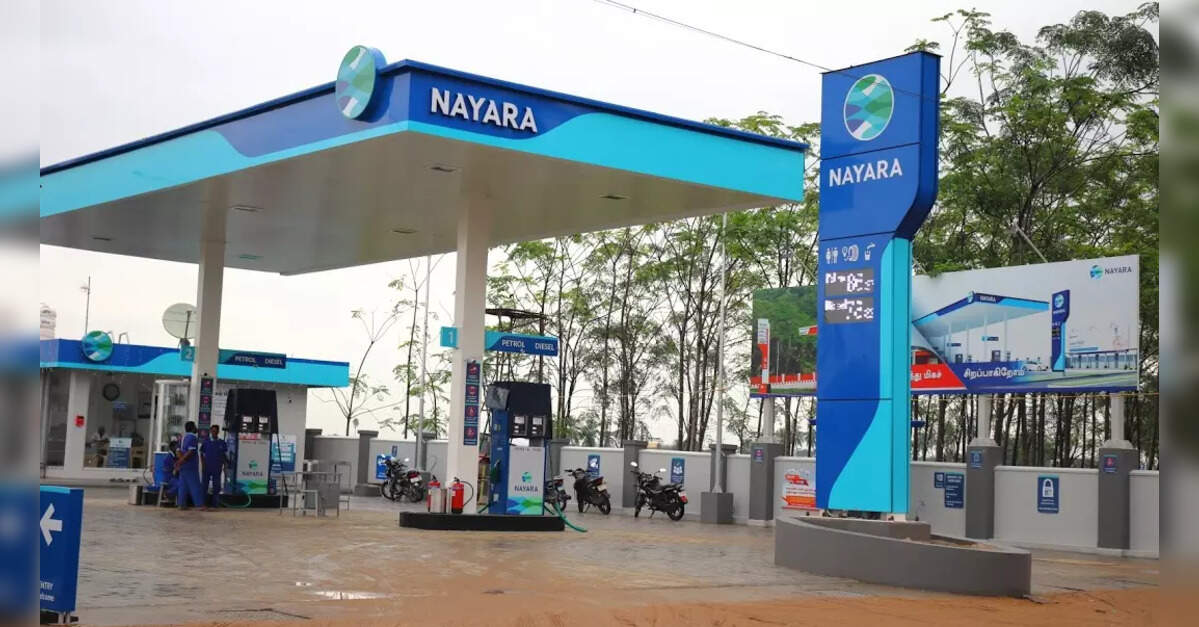
The global energy landscape is a complex tapestry of supply, demand, and geopolitical influence, with sanctions often acting as a sharp needle, re-stitching established trade routes and forcing refiners to innovate. A prime example is Nayara Energy, the Russia-backed Indian refining giant, which has strategically diversified its oil product exports following crippling European Union sanctions imposed on July 18. This pivot, driven by necessity, showcases the remarkable adaptability required to navigate a fragmented global market and carries significant implications for investors tracking energy supply chains and regional demand shifts. Our proprietary data pipelines at OilMarketCap.com reveal a fascinating story of operational resilience and market realignment that warrants close attention from those invested in the dynamic world of oil and gas.
Nayara’s Strategic Re-Routing Amidst Sanctions
The EU sanctions, enacted due to Nayara’s dealings in Russian oil, delivered an immediate blow, compelling the company to halt overseas sales for approximately two weeks. The ripple effect was swift and substantial: clean product exports, encompassing gasoline, gasoil, and jet fuel, plummeted from an average of 138,000 barrels per day (bpd) during January-July to a mere 80,000 bpd in August and September. This significant reduction also forced Nayara to scale back crude runs at its 400,000 bpd Vadinar refinery in western India, operating at 70%-80% capacity as difficulties in chartering ships and selling fuel mounted. Before the embargo, Nayara’s refined products primarily flowed to Western, Middle Eastern, and Asian trading firms, ultimately reaching Asia and northwest Europe. The post-sanction reality, however, has seen a decisive shift, with the majority of Nayara’s cargoes now bound for new destinations including the Middle East, Turkey, Taiwan, and Brazil, underscoring a rapid and deliberate recalibration of its export strategy.
Navigating Volatility: Nayara’s Moves in a Shifting Market
Nayara’s strategic adjustments are unfolding against a backdrop of considerable market volatility. As of today, Brent crude trades at $90.38 per barrel, marking a significant 9.07% decline within the day, while WTI crude stands at $82.59, down 9.41%. Gasoline prices have also seen a notable dip, currently at $2.93, a 5.18% decrease. This downward pressure on prices is part of a broader trend; our 14-day Brent trend analysis shows a sharp decline from $112.78 on March 30 to its current $90.38, representing a nearly 20% drop. For a company like Nayara, already grappling with sanctions-induced logistical hurdles and reduced throughput, this weakening price environment adds another layer of complexity. The challenge is not just finding new buyers, but doing so profitably in a market where margins are contracting. The ability to efficiently pivot and secure sales, even via less conventional routes, becomes paramount when global prices are under pressure, directly impacting the profitability of refined products.
Supply Chain Innovation and Geopolitical Adaptation
Since resuming exports in early August, Nayara has demonstrated remarkable ingenuity in circumventing sanctions. Our data indicates that at least 16 cargoes of diesel, gasoline, and jet fuel have been shipped from Vadinar port using EU-sanctioned tankers. This reliance on a shadow fleet highlights the lengths to which entities will go to maintain market access. Furthermore, the company has employed complex logistical maneuvers, with five tankers loaded with Nayara’s products observed floating off Oman and the United Arab Emirates in August and September. Some of these vessels engaged in ship-to-ship transfers off Oman and Egypt, a tactic often used to obscure cargo origins and facilitate onward journeys. Specific destinations underscore this strategic diversification: two tankers discharged cargoes at Turkis Enerji Storage Tank Farm in Turkey, while others, like the Blue Ember and Anaya, have set course for Brazilian ports such as Santos and Paranagua. Even Taiwan’s Taichung port received a high-sulphur gasoil cargo from Vadinar via the tanker Opal, despite Taiwan’s broader sanctions on Russia. This intricate network of new routes and shipping methods illustrates a sophisticated response to geopolitical constraints, ensuring product flow to eager markets despite significant operational headwinds.
Investor Outlook: Forecasting Future Trajectories and Catalysts
For investors, Nayara’s situation serves as a critical case study in geopolitical risk management and supply chain resilience. The company’s ability to re-establish export flows, albeit at reduced volumes and via complex routes, suggests that “sanction-proofing” strategies are evolving rapidly within the energy sector. A key question circulating among our readers this week, “What are OPEC+ current production quotas?”, directly ties into the broader supply narrative that Nayara is now a part of. Any adjustments to these quotas, especially at the upcoming OPEC+ Ministerial Meeting scheduled for April 19, could significantly impact crude availability and, consequently, refining margins globally, including for Nayara. Furthermore, the frequent query, “What do you predict the price of oil per barrel will be by end of 2026?”, highlights investor anxiety about long-term market stability. Nayara’s success in navigating sanctions, even with reduced throughput, offers a glimpse into how alternative supply channels can emerge, potentially influencing the global supply-demand balance over time. As we monitor upcoming events like the API and EIA Weekly Petroleum Status Reports on April 21 and 22, and the Baker Hughes Rig Count on April 24, investors should consider how such localized disruptions and subsequent adaptations contribute to the overall resilience and evolving structure of the international oil and gas market.


