Nayara Secures Russian Oil via Dark Fleet Amid Sanctions
The global oil and gas landscape continues to be reshaped by geopolitical tensions and the strategic maneuvers of key players. A prime example is India’s Nayara Energy, an important refiner with significant Russian ownership, which finds itself at the epicenter of sanctions enforcement and creative supply chain adaptation. Following recent European Union sanctions, Nayara has increasingly turned to a network of “dark fleet” tankers to maintain its crucial operations, a move that underscores the complex interplay between national energy security, international sanctions, and the relentless demand for crude. For investors, this evolving situation highlights both the resilience of supply chains and the inherent risks in a fragmented global energy market.
India’s Strategic Imperative and the Rise of the Dark Fleet
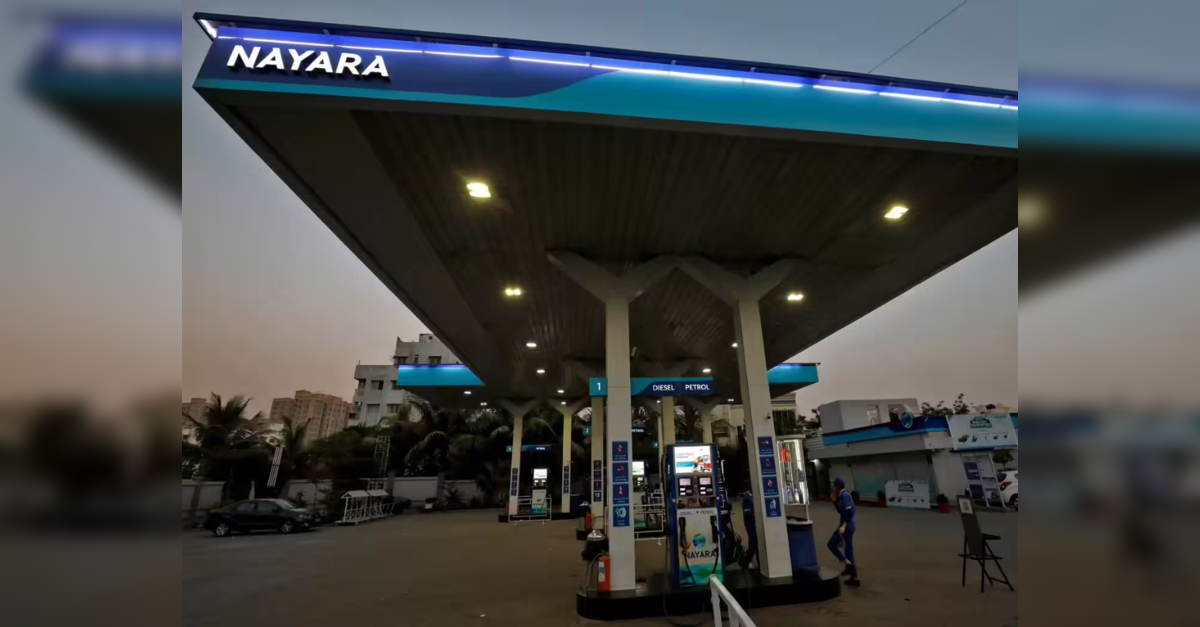
Nayara Energy’s operational continuity has become a matter of national strategic importance for India. As a critical pillar of the Indian market, its 400,000 barrels-a-day processing plant accounts for a substantial 8% of the country’s total refining capacity, and the company operates 7% of India’s fuel stations. The imposition of EU sanctions, targeting Moscow’s oil revenues and by extension Nayara due to its Russian stake, has forced the refiner to drastically alter its logistics. Traditional trade partners and local shipowners, wary of jeopardizing their dealings with European ports and insurers, have distanced themselves, leaving Nayara to seek alternative solutions.
This vacuum has been swiftly filled by a growing contingent of “dark fleet” tankers, often operating under opaque ownership structures and relying on non-Western insurance. India’s government, deeply concerned about potential disruptions to domestic oil flows, has actively facilitated this shift, approving the use of sanctioned vessels for Nayara’s coastal and international logistics. For instance, the medium-range tanker Leruo, blacklisted by the EU in July, has already completed at least three domestic runs for Nayara. Similarly, the long-range tanker Next, also sanctioned by both the EU and UK, is reportedly en route to Vadinar to load diesel. This reliance on a shadow fleet, while ensuring continuity for Nayara, introduces layers of operational and reputational risk that investors must carefully assess when evaluating exposure to companies operating in sanctioned environments.
Navigating a Volatile Market Landscape
The strategic adaptations by Nayara are unfolding against a backdrop of significant volatility in global crude markets. As of today, Brent crude trades at $90.38 per barrel, marking a sharp decline of 9.07% within the day’s trading range of $86.08 to $98.97. WTI crude has followed a similar trajectory, currently at $82.59, down 9.41% for the day. This immediate downturn is part of a broader trend; Brent crude has fallen by $20.91, or 18.5%, from $112.78 on March 30th to $91.87 just yesterday. The price of gasoline has also seen a daily drop of 5.18% to $2.93. This substantial depreciation in crude prices directly impacts refiner margins and the economics of crude acquisition for companies like Nayara.
While lower crude prices might seem to ease the burden of procurement, the underlying challenge for Nayara remains access to compliant shipping and insurance. The reliance on discounted Russian crude, facilitated by the dark fleet, becomes even more critical in a falling price environment where every cost advantage is amplified. For investors, the current market dynamics underscore the potential for both opportunity and risk: lower input costs could boost refining margins if product demand holds, but the continued operational hurdles and the inherent risks of dealing with sanctioned entities present a significant overhang. The long-term sustainability of such a logistics model, particularly if global crude prices rebound sharply, warrants close attention.
Geopolitical Currents and Future Supply Dynamics
The broader energy market is bracing for several key events that could further shape the global supply narrative, directly influencing the environment in which Nayara operates. Investors keenly focused on global oil supply and pricing, as evidenced by recurring questions about OPEC+ production quotas and end-of-year price predictions, will be closely watching the upcoming OPEC+ meetings. The Joint Ministerial Monitoring Committee (JMMC) is scheduled for tomorrow, April 18th, followed by the full Ministerial Meeting on April 19th. These meetings are critical for determining future production quotas and market strategy.
Any decision by OPEC+ to adjust production levels – whether maintaining current cuts or, less likely in the current price environment, increasing supply – will have direct implications for the availability and pricing of Russian crude on the global market. Should OPEC+ decide to tighten supply, the value of Nayara’s access to discounted Russian oil via the dark fleet could increase, providing a competitive edge despite the logistical challenges. Conversely, a decision to increase output could put downward pressure on prices, potentially eroding some of the economic benefits of acquiring discounted crude. Beyond OPEC+, weekly inventory reports from the API and EIA, scheduled for April 21st/22nd and April 28th/29th respectively, along with the Baker Hughes Rig Count on April 24th and May 1st, will provide crucial insights into short-term supply and demand balances, offering further context to Nayara’s operational environment and the broader investment thesis in the energy sector.
Investor Concerns and the Outlook for Sanctions Evasion
Investors are increasingly asking about the long-term trajectory of oil prices and the robustness of the global supply chain, particularly given the ongoing geopolitical realignments. Nayara’s strategy represents a micro-level illustration of a macro-level trend: the re-routing of global energy flows in response to sanctions. While this approach ensures operational continuity for the refiner and energy security for India, it introduces significant risks that investors must weigh. The sustainability of the “dark fleet” model hinges on the evolving effectiveness of sanctions enforcement, the willingness of non-Western nations to facilitate such trade, and the potential for secondary sanctions impacting support infrastructure.
The fact that Nayara has 1.2 million barrels of refined products currently idling on four sanctioned vessels off Vadinar highlights the real-world bottlenecks and risks associated with this strategy. While the Indian government’s support mitigates some immediate concerns, the long-term viability of a supply chain reliant on sanctioned assets remains uncertain. For investors, understanding the exposure to such complex geopolitical dynamics is paramount. Companies navigating these waters may present unique opportunities through access to discounted feedstocks, but they also carry heightened risks related to compliance, market access, and potential escalation of international measures. The resilience shown by Nayara provides a case study in how energy players are adapting, but it also serves as a critical reminder of the increased scrutiny and complexity in global oil and gas investing.


