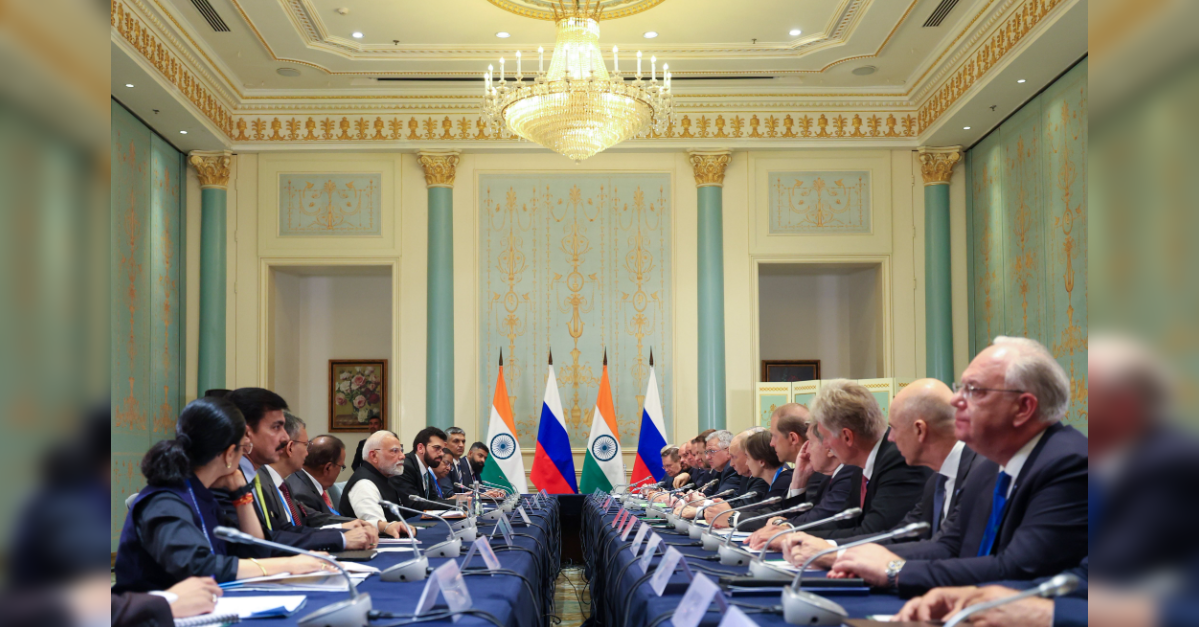
The global oil market is once again navigating a complex web of geopolitical maneuvers and economic pressures, with India’s steadfast energy relationship with Russia taking center stage. Recent high-level discussions between Prime Minister Narendra Modi and President Vladimir Putin have underscored a deepening strategic partnership, even as the United States intensifies its efforts to curtail Moscow’s oil revenues through tariffs. For investors, this dynamic creates a unique blend of supply chain shifts, pricing volatility, and heightened geopolitical risk premiums, demanding a nuanced understanding of global energy flows and policy responses. Our proprietary data pipelines reveal a market grappling with uncertainty, making clarity on these evolving relationships paramount for informed investment decisions.
India’s Unwavering Energy Security Strategy
Despite mounting pressure from the United States, India continues to demonstrate its commitment to a “special and privileged” strategic partnership with Russia, particularly in the energy sector. This resolve was evident in recent bilateral discussions, where both leaders reaffirmed the strength of their relationship. India has solidified its position as Russia’s largest crude oil buyer, now sourcing a significant 36 percent of its crude imports from Moscow, translating to an estimated 1.8 million barrels per day in the current fiscal year. This strategic pivot, initiated following Western sanctions on Russian energy exports, has diversified India’s import portfolio away from traditional Middle Eastern suppliers like Iraq (20 percent) and Saudi Arabia (14 percent), and even reduced its reliance on the United States (4 percent). The implications for global oil trade routes are profound, reshaping tanker movements and logistical frameworks. Washington’s imposition of an additional 25 percent tariff on Indian purchases of Russian oil, coupled with a 50 percent tariff hike on certain Indian goods entering the US, represents a clear escalation designed to penalize this trade. However, New Delhi firmly maintains that its foreign relations are independent, prioritizing its own energy security and economic interests amidst global complexities.
Market Volatility and Investor Sentiment
The ongoing geopolitical friction surrounding India-Russia oil ties is a significant factor contributing to the elevated volatility in crude markets. As of today, Brent Crude trades at $90.38 per barrel, marking a sharp 9.07 percent decline within the day, with prices fluctuating between $86.08 and $98.97. Similarly, WTI Crude has fallen by 9.41 percent to $82.59, traversing a daily range of $78.97 to $90.34. This significant intraday drop follows a broader downward trend for Brent, which has shed $20.91, or 18.5 percent, from $112.78 just two weeks ago. Such dramatic price swings naturally prompt our readers to ask critical questions, such as “what do you predict the price of oil per barrel will be by end of 2026?” and “what are OPEC+ current production quotas?” These questions highlight investor concern over market direction and the potential for further disruption. The recent price action underscores that while fundamental supply-demand balances remain crucial, geopolitical risk premiums are subject to rapid re-evaluation, particularly as major economies like India navigate complex international relations.
The Looming OPEC+ Decision and Global Supply Dynamics
The current market volatility and the persistent geopolitical tensions around Russian oil flows will undoubtedly weigh heavily on the minds of OPEC+ ministers. Critical upcoming events include the Joint Ministerial Monitoring Committee (JMMC) meeting on April 18th, followed by the full OPEC+ Ministerial Meeting on April 19th. These gatherings are pivotal, as member nations will assess global demand forecasts, inventory levels, and the effectiveness of current production quotas. Given the recent steep decline in crude prices, there will be intense debate regarding potential adjustments to output. The continued flow of Russian oil to India, even under US tariff pressure, complicates OPEC+’s strategy by ensuring a substantial volume of non-OPEC+ compliant crude remains in circulation. Investors are keenly watching for any signals regarding deeper cuts or extensions of existing agreements. The decisions made this weekend will have immediate repercussions, potentially stabilizing prices or exacerbating current market anxieties, directly addressing investor queries about the future trajectory of crude prices and the stability of supply.
Investment Implications and Forward Outlook
For oil and gas investors, the India-Russia energy axis, coupled with US sanctions, creates a multifaceted environment requiring careful portfolio management. The continued demand from India provides a floor for Russian crude, supporting production levels that might otherwise decline more sharply under Western pressure. This dynamic ensures a degree of stability in global supply, albeit with redirected trade routes and increased logistical costs. However, the threat of further US sanctions or escalating trade disputes between Washington and New Delhi introduces an element of unpredictability that could disrupt supply chains or impact demand forecasts. Companies involved in energy trading, shipping, and refining that have adapted to these new trade patterns may find opportunities, while those heavily reliant on traditional Western-aligned supply chains could face headwinds. Looking forward, the long-term forecast for crude prices remains tied not just to production decisions from OPEC+ but also to the durability of these new geopolitical alliances and the resilience of global supply networks. Monitoring diplomatic developments, especially any further discussions between major powers regarding energy policy, will be as critical as tracking inventory reports and rig counts in the coming months for anticipating market movements.


