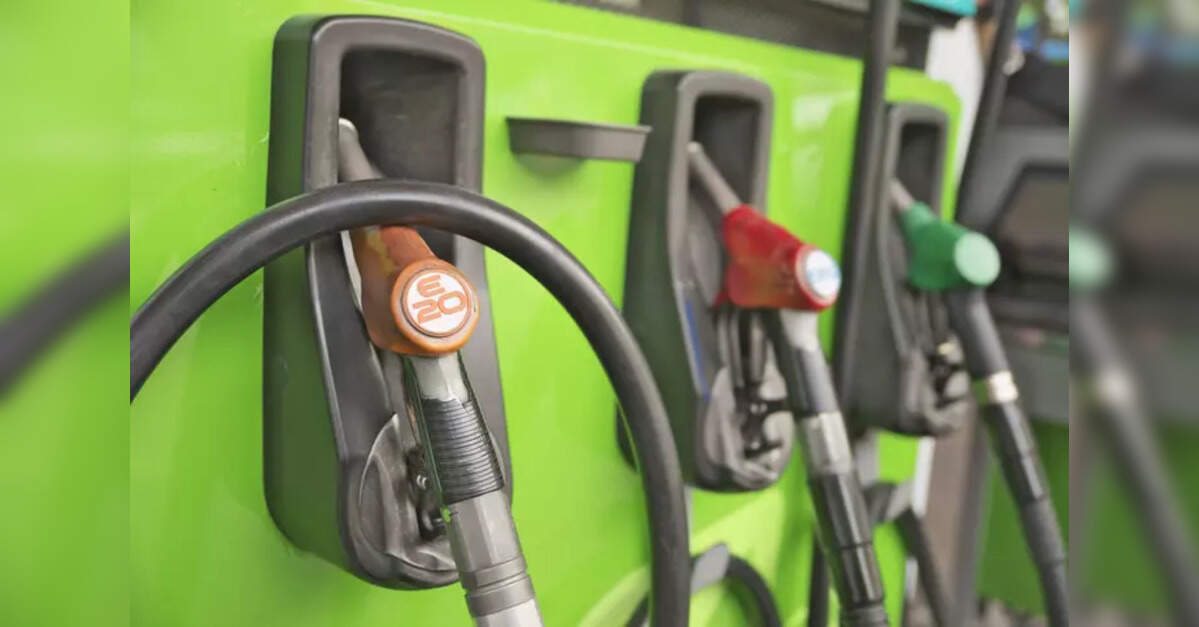
The Unforeseen Friction in India’s Ethanol Drive
India’s ambitious leap towards E20 fuel, a blend containing 20% ethanol, is encountering significant turbulence on the ground, creating unexpected headwinds for global oil demand projections. While the government mandated E20 availability nationwide nearly two and a half years ago, and required all new vehicles to be E20-compliant from April 2023 with stricter enforcement planned for April 2025, the reality for millions of motorists is proving far more complex. The core issue lies in a glaring awareness gap: a staggering nine out of ten cars currently on Indian roads are designed only for E10 fuel, meaning higher ethanol concentrations can wreak havoc on their engines.
Real-world experiences highlight the problem’s severity. Owners of vehicles, even relatively new ones from 2019 or 2021, report drastic mileage drops—from 11-12 kmpl to 7-8 kmpl, or a more than one-fifth reduction in efficiency. Beyond just fuel consumption, drivers describe sluggish acceleration, jerky rides, and a general lack of engine responsiveness. Service centers are increasingly diagnosing issues like rough idling, knocking engines, worn gaskets, and fuel pump failures, all attributed to the corrosive effects of ethanol on non-compatible components. The fix often involves costly part replacements and engine recalibration. This widespread consumer discontent, stemming from unexpected repair bills and diminished vehicle performance, challenges the assumption of a smooth, linear demand destruction from ethanol blending.
Market Volatility and the Demand Conundrum
The global crude market is already navigating a complex landscape of supply anxieties and fluctuating demand signals, and this friction in India adds another layer of uncertainty. As of today, Brent crude trades at $90.38, reflecting a significant 9.07% intraday drop, while WTI sits at $82.59, down 9.41%. This immediate volatility, with Brent ranging from $86.08 to $98.97 within a single day, underscores the market’s sensitivity to even subtle shifts in outlook. Looking at the broader trend, Brent crude has seen a notable decline, dropping from $112.78 on March 30th to $91.87 just yesterday, an 18.5% reduction over two weeks. This downtrend reflects a confluence of factors, but unexpected demand-side challenges in a major consumption hub like India cannot be overlooked.
Investors are keenly watching these price movements, with many asking about the trajectory of oil prices by the end of 2026. The E20 situation introduces a counter-narrative to aggressive demand-destruction forecasts. If millions of Indian drivers experience reduced fuel efficiency and require more fuel per kilometer traveled, or if the transition slows due to consumer backlash and delays in vehicle upgrades, the *actual* gasoline demand reduction may be less pronounced than official blending mandates suggest. This nuanced reality could provide a floor for demand in a market otherwise facing pressures from electrification and efficiency gains, complicating price predictions and investment strategies.
The Sticky Wicket of Compliance and Consumer Behavior
The disconnect between policy and public readiness creates a “sticky wicket” for India’s energy transition goals and, by extension, global oil demand. With the majority of the existing vehicle fleet unprepared for E20, the immediate impact is a rise in maintenance costs and a perceived decline in vehicle performance for consumers. This could lead to several outcomes, none of which are straightforward for demand forecasting. Firstly, it might slow the adoption of E20 fuel, as consumers might actively seek out E10 if available, or simply use less fuel overall due to frustration, though the latter is less likely given daily commuting needs. Secondly, the higher fuel consumption due to reduced efficiency means that for every kilometer driven, an E10-only vehicle running on E20 actually consumes more *total fuel volume* to cover the same distance, slightly offsetting the intended reduction in gasoline consumption.
Furthermore, the long-term reliability concerns could prompt earlier-than-expected vehicle replacements for some, boosting new vehicle sales, but for many, it will mean ongoing repair costs. This friction highlights that energy transitions are not just about policy mandates; they are deeply intertwined with consumer awareness, infrastructure readiness, and economic incentives. The lack of transparency and education from OEMs, as noted by industry veterans, means that the onus falls on individual car owners to navigate a complex technical shift, which inherently slows down the desired market effect and keeps the demand for traditional gasoline components higher than anticipated.
Navigating the Near-Term: OPEC+ and Inventory Signals
The evolving situation in India adds a layer of complexity to the upcoming energy calendar, particularly for major producers and market analysts. The OPEC+ Joint Ministerial Monitoring Committee (JMMC) meeting today, April 18th, followed by the full Ministerial Meeting tomorrow, April 19th, will be critical junctures. As our readers frequently inquire about OPEC+ current production quotas, the group’s decisions will inevitably consider global demand signals. While India’s E20 issues might seem localized, its scale as a major consumer means any deviation from expected demand destruction could influence OPEC+’s calculus on supply management.
Beyond the immediate OPEC+ decisions, the market will closely monitor the weekly inventory reports. The API Weekly Crude Inventory report on April 21st and the EIA Weekly Petroleum Status Report on April 22nd, followed by their subsequent releases on April 28th and 29th, will offer granular insights into crude and product stock levels. If the challenges with E20 compliance in India lead to sustained, or even slightly elevated, gasoline consumption compared to official projections, these demand-side pressures could manifest in tighter product markets globally, influencing refining margins and ultimately crude prices. The Baker Hughes Rig Count reports on April 24th and May 1st will also provide supply-side context, but for now, the demand side, particularly from rapidly growing economies facing energy transition hurdles, remains a key focus.
Investment Implications: Beyond the Blending Mandate
For oil and gas investors, the Indian E20 experience serves as a crucial reminder that energy transitions are rarely smooth and often present unforeseen challenges and opportunities. Relying solely on headline government mandates for demand forecasting can be misleading. The ground-level implementation and consumer acceptance are equally, if not more, important. Companies with significant exposure to the Indian refining sector, for instance, might face different product demand mixes than initially projected, potentially sustaining higher demand for gasoline components and lower demand for pure ethanol or its blends in the short-to-medium term. Conversely, manufacturers of E20-compliant automotive components stand to benefit as the market eventually adapts.
This situation underscores the need for granular, on-the-ground intelligence in emerging markets. While the long-term trajectory towards decarbonization remains, the path is fraught with frictional costs and delays. Investors should consider the nuanced impact on global oil demand, recognizing that unexpected consumer-level hurdles can dampen the pace of demand destruction, thereby influencing crude oil price stability and the profitability of upstream and downstream assets alike. The complexity highlights that the energy sector remains a dynamic landscape where macro trends meet micro realities, demanding sophisticated analysis beyond simple policy pronouncements.


