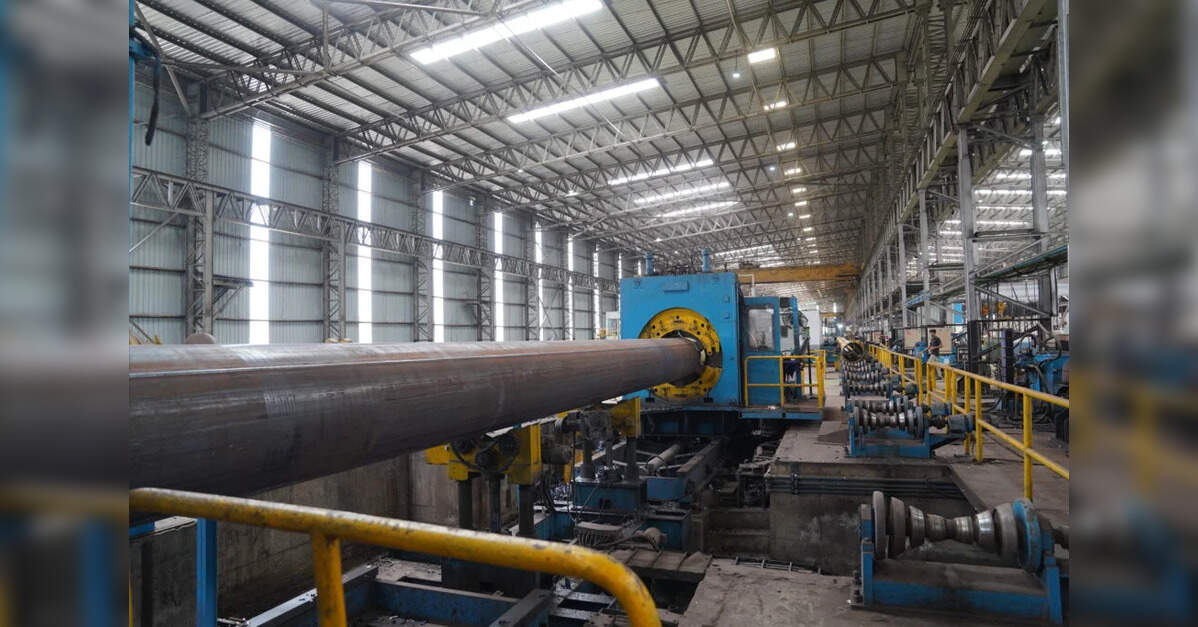
In a global energy landscape characterized by persistent volatility and strategic shifts, the recent announcement from MAN Industries (India) Limited stands out as a significant data point for investors. The company, a prominent manufacturer and exporter of large-diameter carbon steel line pipes, has secured an export order valued at approximately ₹1,700 crore from a leading international client. This new contract elevates their total unexecuted order book to a record ₹4,700 crore, signaling robust demand for critical energy infrastructure components. This development underscores the ongoing need for pipeline projects, even as the broader crude market experiences considerable fluctuations, providing a potential hedge for investors against direct upstream exposure.
MAN Industries’ Strategic Position in a Growing Infrastructure Market
The ₹1,700 crore export order, slated for execution within the next 6 to 12 months, significantly bolsters MAN Industries’ financial outlook and strategic positioning. With exports now contributing over 80% to its substantial ₹4,700 crore order book, the company demonstrates a strong international footprint and resilience. The order specifically involves the supply of various coated pipes, including advanced value-added SAW pipes, highlighting a move towards higher-margin, specialized products critical for modern energy transport. Furthermore, the company is actively bidding on projects worth over ₹15,000 crore across both domestic and international markets, indicating a strong pipeline for future growth. Management’s confidence in achieving a 20% topline growth for the current fiscal year reflects not only the strength of its order book but also the strategic expansions underway in Saudi Arabia and Jammu. These expansions are crucial for strengthening global reach, diversifying the product portfolio, and increasing domestic capacity to meet an anticipated rise in demand for energy infrastructure.
Navigating Crude Market Volatility: A Tale of Two Trends
The strong performance of companies like MAN Industries contrasts sharply with the immediate sentiment in the crude markets. As of today, Brent crude trades at $90.38, marking a notable 9.07% decline within the day, with its range fluctuating between $86.08 and $98.97. Similarly, WTI crude is priced at $82.59, down 9.41%, having traded between $78.97 and $90.34. This intraday volatility is not an isolated event; our proprietary data indicates a significant 18.5% drop in Brent prices over the past two weeks, falling from $112.78 on March 30, 2026, to $91.87 yesterday. Concurrently, gasoline prices have also seen a dip, currently at $2.93, down 5.18%. While these price movements reflect immediate supply-demand dynamics and geopolitical factors, the robust order book for pipeline manufacturers suggests that long-term strategic investments in energy infrastructure continue regardless of short-term crude swings. Investors should recognize that pipeline projects, especially those for export, are often multi-year endeavors driven by sovereign energy security and long-term demand forecasts, rather than daily spot price fluctuations. This disconnect highlights the nuanced investment opportunities within the broader energy sector.
Upcoming Catalysts and Forward-Looking Investor Strategy
The coming weeks are packed with critical events that will shape global energy markets, offering both potential headwinds and tailwinds for companies in the energy infrastructure space. Investors are closely monitoring the OPEC+ Joint Ministerial Monitoring Committee (JMMC) meeting scheduled for April 18th, followed by the full Ministerial Meeting on April 19th. These gatherings are pivotal, as any adjustments to production quotas will directly impact global supply levels and, consequently, influence long-term investment decisions in upstream exploration and midstream infrastructure. A decision for deeper cuts could stabilize prices, potentially encouraging new project approvals, while an increase in quotas might pressure prices further. Beyond OPEC+, the weekly API Crude Inventory reports on April 21st and April 28th, alongside the EIA Weekly Petroleum Status Reports on April 22nd and April 29th, will provide crucial insights into immediate U.S. supply and demand balances. Furthermore, the Baker Hughes Rig Count on April 24th and May 1st will serve as a bellwether for drilling activity, which ultimately drives demand for line pipes and related services. For investors in companies like MAN Industries, sustained or increased drilling activity, even amidst price volatility, signals ongoing requirements for new pipelines and maintenance, underpinning their long-term growth prospects.
Addressing Investor Questions: Long-Term Outlook Amidst Short-Term Noise
Our proprietary reader intent data reveals a consistent theme this week: many of our investors are keenly asking, “What do you predict the price of oil per barrel will be by the end of 2026?” While precise predictions are inherently challenging given the dynamic nature of global energy markets, the current volatility underscored by Brent’s significant 18.5% drop in two weeks from over $112 to just above $90, illustrates the complexity. However, the securing of a record order book by a pipe manufacturer like MAN Industries suggests that despite these price swings, the fundamental demand for reliable energy transport infrastructure remains strong. Regardless of whether crude finishes 2026 at $80 or $100, the energy transition and geopolitical realignments necessitate new pipelines for both traditional fuels and future energy carriers. Another common question revolves around “OPEC+ current production quotas” and their implications. While OPEC+ decisions directly impact supply, companies focused on critical infrastructure like MAN Industries are often insulated by the long-term nature of their projects. These pipeline ventures, requiring years from conception to completion, are typically underwritten by long-term supply agreements and strategic national interests, making them less susceptible to quarterly quota adjustments. Therefore, investors should focus on the underlying trend of global energy demand and the strategic importance of robust infrastructure, rather than getting caught in the day-to-day market noise when evaluating such companies.


