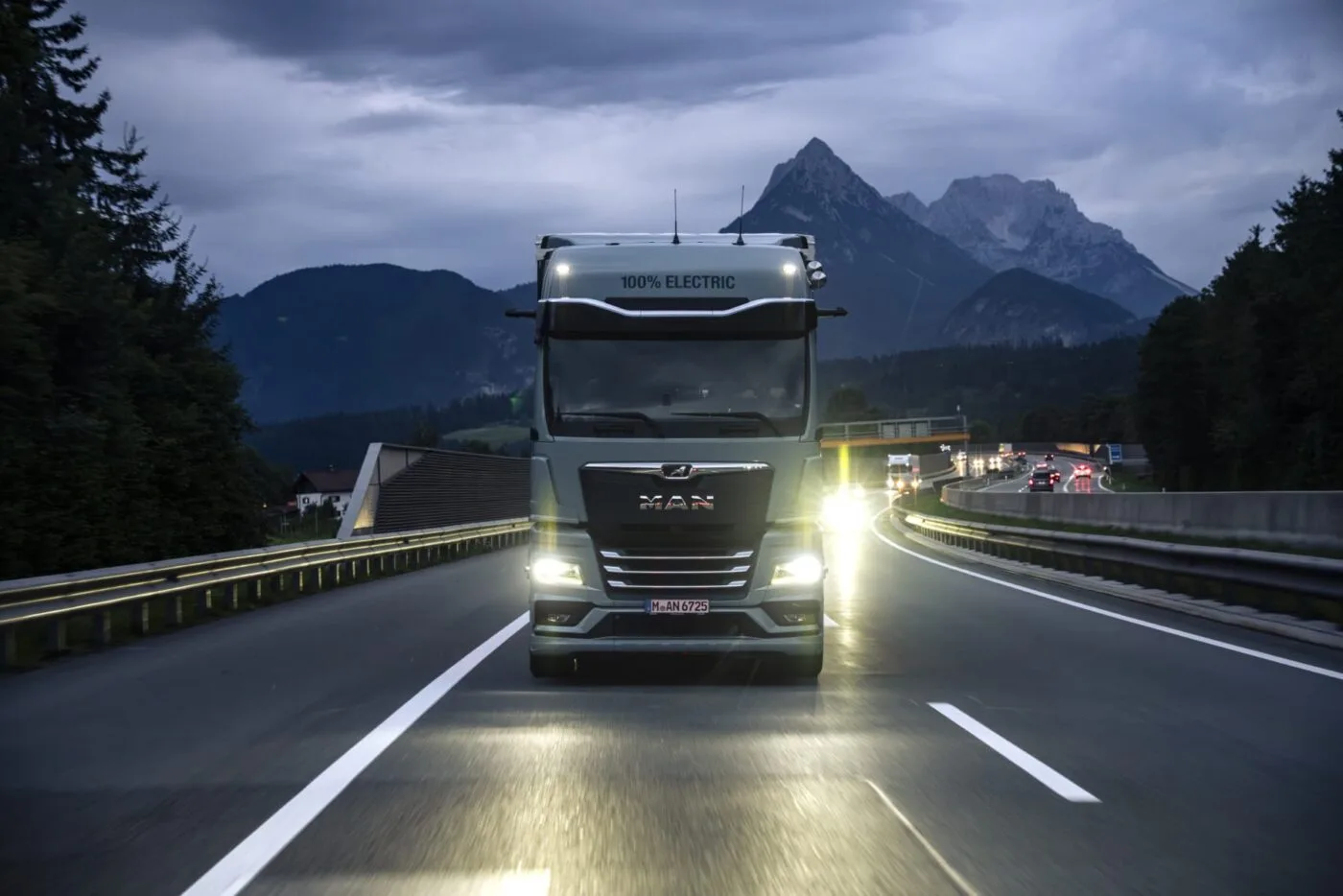
The global energy landscape is undergoing a profound transformation, and nowhere is this more evident than in the road freight sector. While much of the investment discourse centers on passenger EVs, the heavy-duty segment is rapidly emerging as a critical battleground for future fuel demand. A recent four-week field test on the demanding Brenner Pass route, involving a new electric truck, offers a compelling glimpse into the escalating pressure on diesel’s long-term dominance. For oil and gas investors, this isn’t just a technological curiosity; it’s a direct signal of structural demand erosion in a key refined products market. Understanding the economics, policy drivers, and market implications of this shift is paramount for navigating an increasingly complex energy portfolio.
The Compelling Economics of Electric Heavy-Duty Transport
The field test on the Brenner Pass vividly demonstrates the immediate economic and environmental advantages of electric heavy-duty vehicles. Taking a full-electric truck, specifically designed for mass production, through challenging Alpine terrain highlights its operational readiness. This particular eTruck, now in mass production since June, boasts a daily range of up to 800 kilometers, allowing a Munich-Verona route to be comfortably covered overnight, even in summer temperatures with a single charging stop. The environmental benefits are substantial: assuming an annual mileage of 110,000 kilometers, a single battery-electric tractor unit slashes approximately 95 tonnes of CO2 per year. Scaling this up, 300 such trucks could cumulatively save around 28,000 tonnes annually. From an economic standpoint, the savings are equally striking. Electric trucks can save up to 60,000 euros in tolls per year on German motorways, benefiting from exemptions until the end of this year, with reduced rates thereafter. In Austria, they enjoy up to 75 percent lower night-time toll fees. Furthermore, the electric drivetrain demonstrates exceptional efficiency on mountainous routes, thanks to a high recuperation rate of up to 40 percent, recovering significant energy during descents. Coupled with a ten-year exemption from road tax and lower maintenance costs, these factors contribute to a calculated cost advantage of around 15 percent over conventional diesel trucks on this specific route, based on a standard three-year service life in logistics. These tangible benefits are not future projections; they are current operational realities that significantly challenge the established economics of diesel freight.
Market Volatility Meets Structural Demand Erosion
The backdrop for these technological advancements is a commodity market characterized by persistent volatility. As of today, Brent crude trades at $90.38, reflecting a significant daily decline of 9.07%, with prices ranging from $86.08 to $98.97. Similarly, WTI crude stands at $82.59, down 9.41% within a daily range of $78.97 to $90.34. Gasoline prices have also seen a drop, currently at $2.93, down 5.18% for the day. This immediate market snapshot follows a broader trend; over the past 14 days, Brent crude has fallen from $112.78 on March 30th to $91.87 on April 17th, representing an 18.5% decline. Such sharp swings in crude prices inevitably influence the operational costs for diesel fleets, potentially making the immediate switch to electric less urgent for some operators during periods of lower oil prices. However, this short-term market noise should not overshadow the structural, long-term headwinds facing diesel demand. The economic advantages of electric trucks – particularly the policy-driven toll savings, tax exemptions, and superior energy efficiency through recuperation – provide a stable and growing incentive that transcends daily crude price fluctuations. Investors must recognize that while immediate price movements create trading opportunities, the gradual but consistent erosion of demand from electrification represents a more fundamental threat to the long-term outlook for refined product consumption.
Policy Tailwinds and Forward-Looking Analysis
Beyond the immediate economic benefits, the long-term viability and growth of electric heavy-duty transport are strongly supported by evolving policy frameworks. The EU Transport Commissioner recently recommended extending toll reductions for electric trucks until 2031, a crucial move designed to ensure investment security for logistics companies and accelerate the electrification of the commercial vehicle sector. This proactive policy support directly translates into predictable cost savings for operators, significantly de-risking the transition from diesel to electric. For investors, this signals a clear and sustained commitment from regulators to decarbonize freight, ensuring that the economic advantages seen on the Brenner Pass are not fleeting but enduring. Looking ahead, while the market remains keenly focused on upcoming events like the OPEC+ JMMC and Full Ministerial Meetings on April 18th and 19th, which will shape short-term supply dynamics, and the EIA/API weekly inventory reports on April 21st, 22nd, 28th, and 29th, which provide a pulse on current demand, these policy decisions regarding EV freight represent a different kind of market signal. They point to a sustained, demand-side shift that will gradually but inexorably chip away at the addressable market for diesel. The Baker Hughes Rig Count reports on April 24th and May 1st will show drilling activity, but even increased supply will face a demand curve under structural pressure from electrification. Savvy investors will integrate both short-term supply-side catalysts and long-term demand-side erosion into their forward-looking models.
Investor Sentiment and Portfolio Evolution
The prevailing questions from investors reflect this complex interplay of short-term volatility and long-term structural change. Our proprietary intent data shows significant interest in predicting “the price of oil per barrel by end of 2026,” highlighting the ongoing challenge of forecasting in a dynamic market. The electrification of heavy-duty transport, as exemplified by the Brenner Pass test, adds another layer of complexity to these predictions, introducing a persistent downward pressure on demand that needs to be factored in. Questions about “OPEC+ current production quotas” underscore the market’s focus on supply management, but the rise of electric trucks means that even perfectly managed supply will contend with an evolving demand profile. Furthermore, inquiries about specific companies, such as “How well do you think Repsol will end in April 2026,” indicate that investors are actively seeking to understand how integrated energy companies are positioned to navigate this transition. Companies with diversified portfolios, those investing in low-carbon solutions, or those with strong downstream refining assets that can adapt to changing product demand will likely be viewed more favorably. The field test is not just about trucks; it’s a tangible demonstration of the energy transition playing out in real-world economics. Investors are right to ask tough questions about future oil prices and company performance, as the landscape for traditional fossil fuel demand is clearly in flux, demanding strategic adjustments to investment theses.