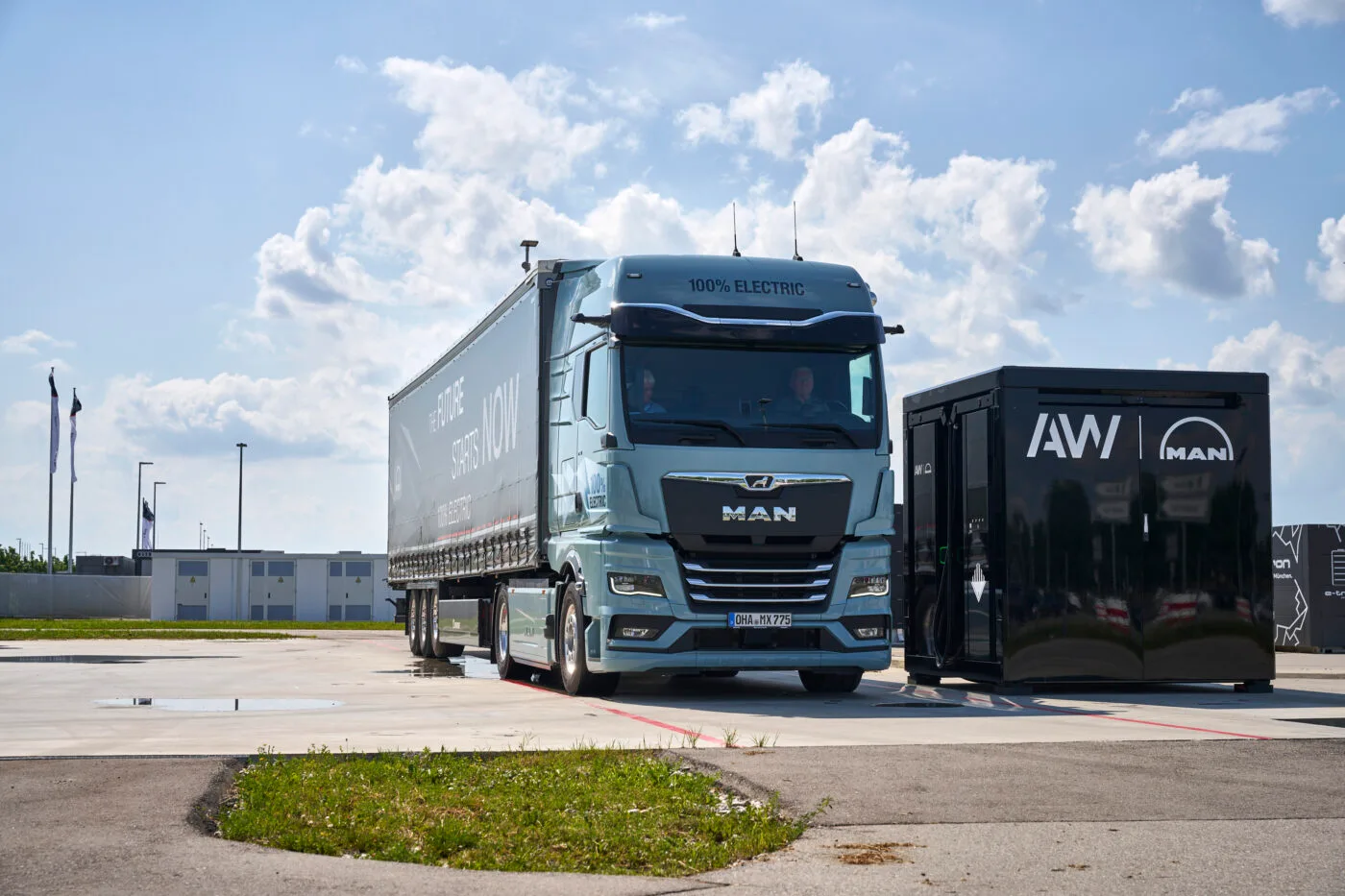
The global energy landscape continues its multifaceted evolution, presenting both compelling opportunities and structural headwinds for oil and gas investors. While daily price fluctuations often dominate headlines, a deeper current of energy transition is reshaping demand fundamentals. A recent development from MAN Truck & Bus, the introduction of their Smart Charging Cube, highlights a significant step forward in commercial fleet electrification. This portable battery storage and charging solution directly addresses critical infrastructure bottlenecks, underscoring how innovation in the EV sector is accelerating the shift away from fossil fuels in heavy-duty transport – a trend that demands close attention from those invested in traditional energy markets.
Revolutionizing Commercial EV Infrastructure with Scalable Solutions
One of the most formidable challenges facing the widespread electrification of commercial fleets has been the monumental task of building out robust, high-capacity charging infrastructure. Traditional grid connections often require extensive earthworks, substantial capital investment, and prolonged deployment times. MAN’s Smart Charging Cube directly tackles these pain points, offering a highly adaptable and rapid deployment solution. This innovative system, developed in collaboration with AW Automotive, provides a portable battery storage and charging unit capable of delivering up to 400 kW of charging capacity across one to four charging points. With internal battery storage ranging from 500 kWh to an impressive 1,100 kWh, it can power multiple vehicles simultaneously, effectively transforming any location into a powerful charging hub.
The Cube’s flexibility is a game-changer for fleet operators. It can be connected to the mains with a wide current range of 32 A to 630 A, minimizing the need for extensive grid upgrades. This makes it suitable for diverse applications, from high-demand depot charging to remote construction sites or service areas where conventional infrastructure is scarce. Furthermore, its ability to integrate locally generated electricity, such as from photovoltaic systems, and support peak shaving, dynamic power consumption, and bidirectional charging functions means fleet operators can optimize energy management and significantly reduce operational costs. Available for purchase, lease, or rental, this solution dramatically lowers the barrier to entry for commercial fleet electrification, accelerating the displacement of diesel consumption.
Navigating Crude Volatility Amidst Structural Shifts
While the long-term energy transition gathers pace, the immediate oil market remains highly reactive to geopolitical developments, economic indicators, and supply-side dynamics. As of today, Brent Crude trades at $94.72, reflecting a slight daily dip of 0.22% within a range of $94.42 to $94.91. Similarly, WTI Crude stands at $90.97, down 0.35%, fluctuating between $90.52 and $91.50. Gasoline prices are also feeling a slight downward pressure, currently at $2.99, down 0.33%. These daily movements, however, belie a more significant trend observed over the past fortnight. Our proprietary data indicates that Brent Crude has experienced a notable decline, dropping from $108.01 on March 26th to $94.58 on April 15th, representing a substantial $13.43 or 12.4% reduction over 14 days.
This recent price softening, while driven by immediate supply-demand recalibrations, exists against a backdrop of increasing EV penetration. While commercial EV adoption is still nascent compared to passenger vehicles, solutions like the Smart Charging Cube are crucial accelerants. By making electrification more accessible and cost-effective for heavy transport, these innovations introduce a structural headwind to long-term oil demand growth. Oil and gas investors must increasingly consider these technological advancements not as fringe developments, but as integral components shaping future demand curves, even as they navigate the immediate volatility driven by traditional market forces.
Investor Sentiment: Forecasting Brent and Commercial EV Impact
Our first-party intent data reveals that a top priority for OilMarketCap.com readers this week is to “Build a base-case Brent price forecast for next quarter” and understand the “consensus 2026 Brent forecast.” These questions highlight a keen focus on future price trajectories, and crucially, the pace of commercial fleet electrification will play an increasingly vital role in shaping these projections. Commercial transport, encompassing trucks, buses, and logistics vehicles, represents a significant segment of global oil demand. Any acceleration in the transition of these fleets to electric power, enabled by flexible infrastructure solutions like MAN’s Smart Charging Cube, directly translates into reduced diesel consumption.
For investors formulating their base-case Brent forecasts for the upcoming quarter and beyond into 2026, it’s imperative to factor in the growing efficacy and deployability of commercial EV infrastructure. The ability of the Smart Charging Cube to integrate local renewable energy sources and perform peak shaving not only makes commercial EV operations more sustainable but also more economically attractive. As more fleet operators realize these operational savings and overcome infrastructure hurdles, the rate of EV adoption in this sector could surprise to the upside, potentially introducing a bearish bias to long-term oil demand projections that may not yet be fully priced into consensus forecasts. Investors should ask whether their current portfolio strategies adequately account for this accelerating shift.
The Road Ahead: Upcoming Events and Strategic Re-evaluation
The next two weeks present a flurry of critical events that will provide further clarity on the short-to-medium term trajectory of oil markets, offering important context for investors. We anticipate the Baker Hughes Rig Count on April 17th and April 24th, offering insights into North American production activity. More significantly, the OPEC+ Joint Ministerial Monitoring Committee (JMMC) meets on April 18th, followed by the Full Ministerial OPEC+ Meeting on April 20th. These gatherings will dictate crude supply policy and significantly influence near-term price direction. Additionally, the API Weekly Crude Inventory reports on April 21st and 28th, alongside the EIA Weekly Petroleum Status Reports on April 22nd and 29th, will provide crucial updates on U.S. supply and demand dynamics.
While these events are indispensable for tactical trading and short-term portfolio adjustments, shrewd investors will interpret their outcomes through the wider lens of energy transition. A decision by OPEC+ to tighten supply, for instance, might temporarily bolster crude prices. However, such a move could inadvertently accelerate the economic viability of electric alternatives in sectors like commercial transport, thereby strengthening the long-term structural demand shift away from oil. The deployment of advanced, flexible charging solutions like the Smart Charging Cube suggests that the electrification of commercial fleets is not a distant aspiration but a rapidly materializing reality. Monitoring both traditional supply-side signals and the pace of this infrastructure build-out is paramount for making informed, forward-looking investment decisions in the evolving energy sector.