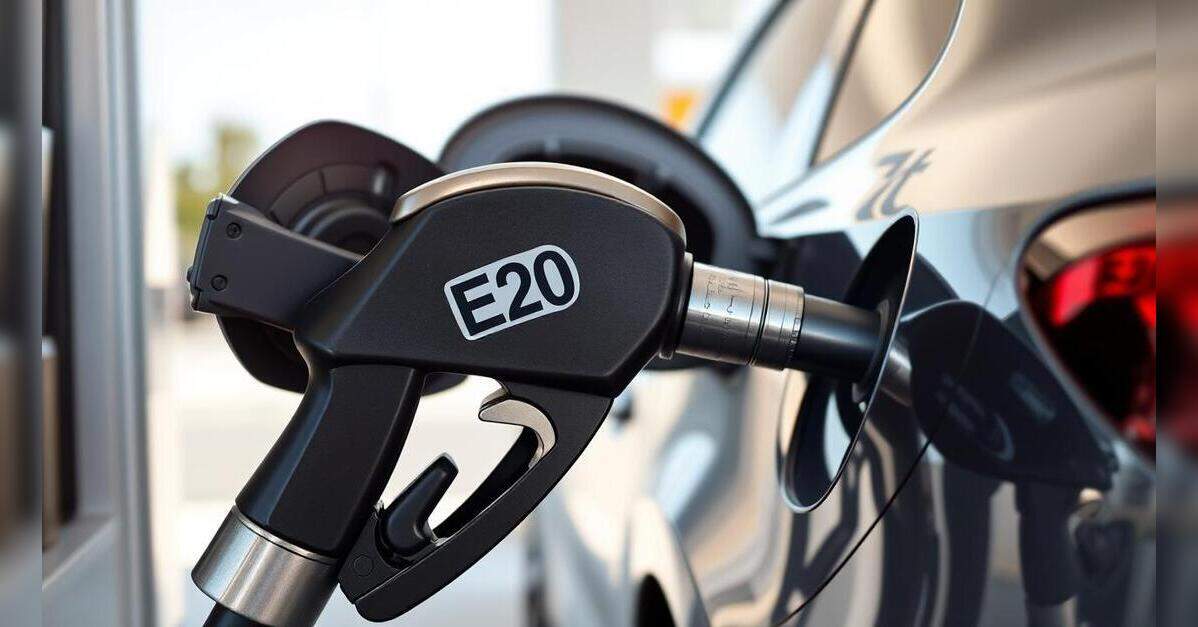
India’s ambitious E20 fuel mandate, making a 20% ethanol-blended gasoline the standard across nearly 90,000 fuel stations, represents a pivotal shift in the nation’s energy landscape. While championed for its environmental benefits and potential to bolster energy independence, the real-world implications for consumers and, more importantly, for the broader oil and gas investment thesis, are complex. Initial concerns from motorists regarding vehicle performance and longevity have been partially addressed by automotive giants like Mahindra & Mahindra, who, following their advisory last September, confirmed E20’s safety but acknowledged potential trade-offs in mileage and acceleration. This analysis delves beyond the headlines to examine the mandate’s impact on demand dynamics, global market pricing, and critical forward-looking investment signals.
India’s E20 Mandate: A Shift in Demand Dynamics
The widespread adoption of E20 fuel in India marks a significant stride toward reducing the country’s reliance on imported crude. The government’s firm stance, dismissing concerns as unfounded and politically motivated, underscores its commitment to this green energy initiative. However, the operational realities for the automotive sector, particularly for older vehicles, introduce nuances that demand investor attention. Mahindra & Mahindra’s executive, Nalinikanth Gollagunta, confirmed last September that while E20 is safe, it could lead to reduced mileage and acceleration. This insight is crucial: if vehicles consume more liters of blended fuel to cover the same distance due to lower efficiency, the expected reduction in overall gasoline demand might be partially offset. For investors modeling future crude demand from a major consumer like India, understanding this elasticity between blend percentage and actual fuel consumption is paramount. It suggests that the transition, while reducing pure gasoline content, might not proportionally diminish the volume of liquid fuel required, thus tempering the immediate bearish impact on crude demand projections for the region.
Global Oil Markets React: Navigating Price Volatility Amidst Demand Shifts
The impact of regional fuel policy shifts like India’s E20 mandate must be viewed within the context of the dynamic global oil market. As of today, April 17, 2026, Brent Crude trades at $98.51 per barrel, reflecting a daily decline of 0.89% within a range of $97.92 to $98.67. Similarly, WTI Crude stands at $90.06, down 1.22% for the day, oscillating between $89.57 and $90.26. This recent market caution follows a more significant trend: Brent has seen a notable correction over the past two weeks, dropping from $112.57 on March 27, 2026, to its current level, a substantial $14 or 12.4% decrease. While global macroeconomic factors and geopolitical tensions are primary drivers of this volatility, shifts in demand from major economies like India, even if subtle due to E20’s performance characteristics, contribute to the complex supply-demand calculus. Currently, gasoline prices remain stable at $3.09, indicating that the market is still processing these demand-side adjustments alongside broader crude movements. Investors must consider how E20’s implementation in India, a market with hundreds of millions of vehicles, could influence long-term demand growth curves for refined products, even if the short-term impact on crude prices is overshadowed by larger global narratives.
Investor Focus: Anticipating Supply-Side Shocks and Policy Signals
Our proprietary reader intent data reveals a keen investor interest in understanding the underlying forces shaping crude prices, particularly around OPEC+ production strategies and current market valuations. Questions regarding “OPEC+ current production quotas” and the “current Brent crude price” consistently rank high, underscoring the market’s sensitivity to supply-side decisions. This week presents critical forward-looking catalysts: the OPEC+ Joint Ministerial Monitoring Committee (JMMC) convenes on April 18th, followed by the full Ministerial Meeting on April 20th. These gatherings are pivotal, as any adjustments to production quotas will directly influence global supply balances and, consequently, crude pricing. Investors will be scrutinizing statements for hints of deeper cuts or potential output increases, especially given the recent volatility and significant Brent price correction. Beyond OPEC+, weekly data releases like the Baker Hughes Rig Count (April 17th, April 24th) and the API and EIA’s weekly crude inventory reports (April 21st/22nd, April 28th/29th) will provide fresh insights into North American production activity and domestic supply levels. For investors, these events are not just data points; they are direct inputs into market models and trading strategies, particularly as global demand patterns, now including the nuances of E20 adoption in India, continue to evolve.
The Long-Term Play: Ethanol’s Role in India’s Energy Security
Despite the immediate operational concerns and consumer adjustments, India’s E20 mandate represents a strategic long-term play for energy security and environmental sustainability. By integrating a significant proportion of domestically produced ethanol, India aims to reduce its substantial oil import bill and lower carbon emissions. This policy signals a robust commitment to a diversified energy mix, creating substantial investment opportunities in the biofuels sector. Companies involved in ethanol production, sugar cane processing, and the development of advanced blending technologies stand to benefit. Furthermore, the government’s assertion that older vehicles may only require “simple process” replacements of rubber parts and gaskets suggests a manageable transition for the existing fleet, minimizing widespread disruption while pushing towards a greener future. For discerning investors, this translates into a long-term shift in capital allocation, favoring upstream and midstream players in the biofuel value chain, and potentially challenging traditional refining models that are slow to adapt. The Indian experience with E20 could also serve as a blueprint or cautionary tale for other emerging economies contemplating similar moves, making it a critical case study for global energy transition investment strategies.


