The refining sector is currently navigating a complex landscape marked by fluctuating crude prices and strategic product price adjustments. Recent revisions to commercial LPG and aviation turbine fuel (ATF) prices, effective October 1, 2025, signal a potential boost to refiner margins, even as the broader crude market experiences significant volatility. These targeted price hikes in key refined products provide a buffer against the downturn in crude, offering a compelling narrative for investors closely watching the downstream segment. This analysis delves into the implications of these price movements, assesses the current crude market dynamics, and anticipates future catalysts impacting refiner profitability.
Strategic Product Price Hikes Bolster Refiner Profitability
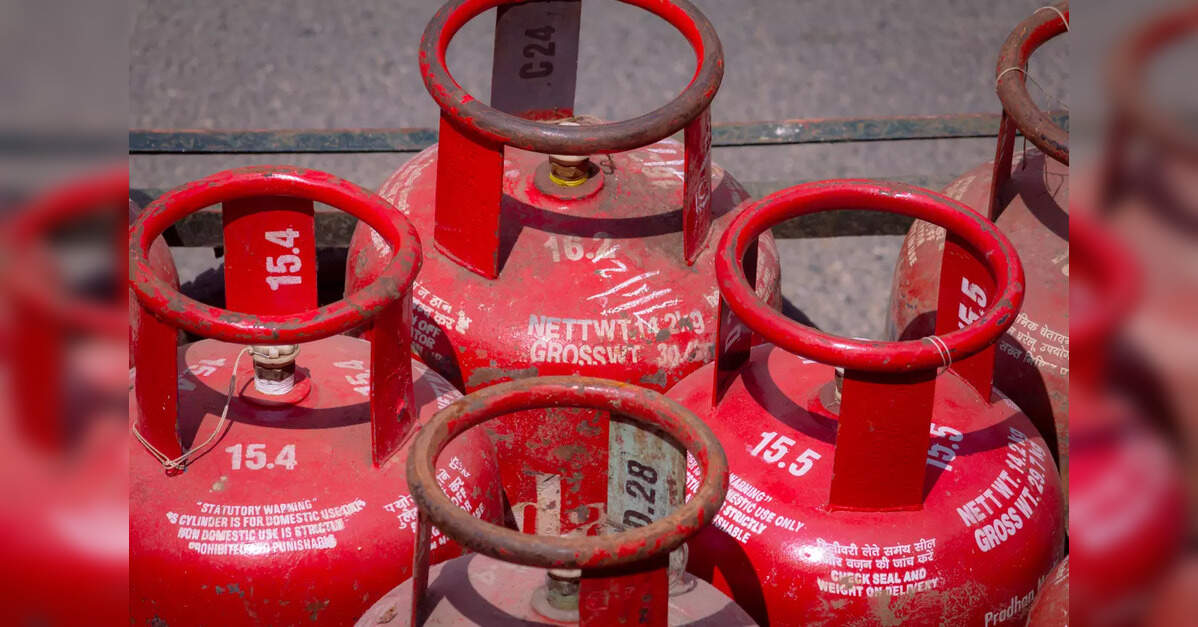
Effective October 1, 2025, oil marketing companies implemented noteworthy price increases for specific refined products. The price of a 19-kg commercial LPG cylinder in Delhi saw an increment of ₹15.50, bringing its cost to ₹1,595.50. This adjustment is mirrored across other major cities, with Kolkata’s price now at ₹1,700.50, Mumbai at ₹1,547.00, and Chennai at ₹1,754.50. Simultaneously, aviation turbine fuel experienced a substantial hike of ₹3,052.50 per kilolitre. In Delhi, ATF now trades at ₹93,766.02 per kilolitre, up from ₹90,713.52 previously. Similar revisions were observed in Kolkata (₹96,816.58), Mumbai (₹87,714.39), and Chennai (₹97,302.14). These decisive increases in high-volume commercial products are a direct positive for refiner profitability. As input costs are dynamic, maintaining strong product pricing power is critical for expanding crack spreads and ensuring robust earnings in the downstream sector. Such strategic pricing actions underscore a proactive approach by refiners to optimize their revenue streams amidst broader market pressures.
Navigating Crude Volatility: A Boon for Refining Margins
The current crude market presents a fascinating dichotomy for refiners. As of today, Brent crude trades at $90.38, reflecting a significant 9.07% drop from its prior close, moving within a day range of $86.08 to $98.97. Similarly, WTI crude stands at $82.59, down 9.41% today, trading between $78.97 and $90.34. This recent downturn follows a steeper trajectory, with Brent having shed nearly 20% from $112.78 just two weeks ago. While such volatility might concern upstream producers, it often translates into a favorable environment for refiners. A sharp decline in crude feedstock costs, coupled with the aforementioned stable or rising prices for refined products like LPG and ATF, directly widens the crack spread. This scenario allows refiners to purchase crude at lower prices and sell higher-value products, thereby boosting their per-barrel margins. The gasoline market also reflects this trend, with prices at $2.93, a 5.18% decrease today, within a range of $2.82-$3.1. Savvy investors will recognize this as a prime opportunity for companies with strong refining assets to capitalize on advantageous market conditions.
Upcoming Catalysts: Shaping the Forward Outlook for Refiners
Looking ahead, several key events on the energy calendar will dictate the trajectory of crude prices and, by extension, refiner profitability. Investors should closely monitor the OPEC+ Ministerial Meeting scheduled for April 19, 2026. The outcome of this gathering could significantly influence global crude supply decisions, with potential implications for input costs. Any decision to adjust production quotas, whether to maintain current levels or implement cuts in response to recent price drops, will have an immediate impact on crude benchmarks. Beyond OPEC+, the market will be keenly watching weekly inventory data. The API Weekly Crude Inventory reports on April 21 and April 28, followed by the EIA Weekly Petroleum Status Reports on April 22 and April 29, will provide critical insights into demand health and storage levels. These reports are vital indicators for assessing the short-term supply-demand balance, directly influencing crude price movements and the operational throughput of refining facilities. Furthermore, the Baker Hughes Rig Count on April 24 and May 1 will offer a glimpse into future production capacity, particularly in the U.S. shale sector. Each of these events presents a potential inflection point for the market, requiring investors to remain agile in their assessment of refining sector prospects.
Addressing Investor Concerns: Crude Price Trajectories and OPEC+ Strategy
A recurring question from investors concerns the future trajectory of oil prices, specifically, “What do you predict the price of oil per barrel will be by end of 2026?” While precise predictions are challenging, several factors will shape the outlook. Demand growth, particularly from emerging economies, geopolitical stability, and the strategic actions of major producers are paramount. The current market volatility, exemplified by Brent’s nearly 20% drop in two weeks, underscores the sensitivity of prices to these variables. Another frequent inquiry revolves around, “What are OPEC+ current production quotas?” The alliance’s current quotas are central to market stability. With crude prices experiencing a notable downturn, the upcoming OPEC+ meeting on April 19, 2026, will be crucial. Investors will be seeking clarity on whether the group will maintain its current production strategy or consider further cuts to support prices. Any decision to tighten supply could alleviate pressure on crude benchmarks, potentially narrowing the crack spread if product prices do not keep pace. However, the current scenario, where product prices are firm amidst falling crude, paints a favorable picture for refiners, suggesting a resilient margin environment even as the broader market seeks price stability.


