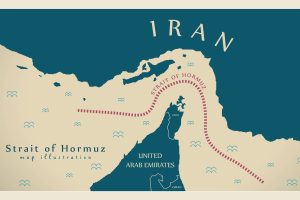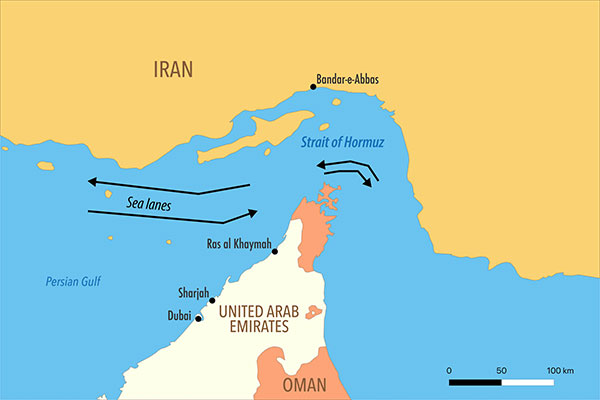
The geopolitical landscape in the Middle East remains a critical determinant for global energy markets, and current tensions involving Iran are once again forcing investors to reassess risk premiums across the entire supply chain. At the heart of this concern lies the Strait of Hormuz, a narrow maritime chokepoint through which approximately 20 million barrels of crude oil and petroleum products transit daily. This volume represents roughly 20% of global petroleum liquids consumption, making even a minor disruption capable of sending shockwaves across markets. While immediate market reactions can sometimes appear counter-intuitive, the underlying structural risks to energy supply, freight logistics, and broader economic stability are profound and demand a granular understanding from sophisticated investors.
The Enduring Chokepoint Premium: Hormuz and Supply Chain Resilience
The strategic importance of the Strait of Hormuz cannot be overstated. Any significant escalation in the region that threatens this vital shipping lane immediately introduces a “chokepoint premium” into energy prices. This isn’t just about the physical flow of oil; it’s about the perceived reliability of that flow. When geopolitical instability rises, supply chain variability becomes the enemy of efficiency. Companies, particularly those in energy-intensive sectors, are forced to shift their focus from cost optimization to continuity. This translates into concrete actions: carriers slow steaming or rerouting vessels, leading to less reliable schedules, and the need for greater buffer stocks to hedge against disruption. From an investor perspective, this means a re-evaluation of companies reliant on lean, just-in-time systems, favoring those with robust multi-sourcing strategies and higher safety stocks, especially for critical energy- and chemical-dependent inputs.
Market Dynamics: A Disconnect Between Geopolitics and Spot Prices?
Despite the persistent geopolitical headwinds, the immediate market snapshot presents a nuanced picture. As of today, Brent Crude trades at $92.64 per barrel, reflecting a slight dip of 0.64% within a daily range of $92.57 to $94.21. Similarly, WTI Crude stands at $89.03 per barrel, down 0.71% from its open, trading between $88.76 and $90.71. Gasoline prices also mirrored this trend, currently at $3.1 per gallon, down 0.96%. Looking at the broader trend, Brent Crude has actually seen a notable decline over the past two weeks, falling from $101.16 on April 1st to $94.09 on April 21st – a decrease of over 7%. This apparent cooling in prices, even amidst heightened tensions, suggests a market potentially underpricing the full extent of the geopolitical risk. Investors must consider whether this reflects an underlying confidence in supply continuity, a focus on demand-side concerns, or simply a delayed reaction to mounting pressures. The critical takeaway is that while spot prices might not always immediately surge with every headline, the foundational risk remains, and the market could rapidly reprice should a physical disruption occur or if the perceived probability of such an event shifts.
Beyond Crude: The Widening Ripple Effect on Global Commerce
The impact of Middle East instability extends far beyond the immediate price of crude oil. The two primary channels for cost increases are the energy price shock and the logistics cost shock, both of which ripple through virtually every industry. Freight carriers are quick to implement emergency or conflict surcharges, directly inflating shipping invoices. Rerouting vessels around contested zones adds significant distance and time, effectively reducing global shipping capacity and driving up rates. For investors, this means scrutinizing companies with high exposure to global supply chains and freight costs. Industries heavily reliant on petrochemical feedstocks—such as plastics, packaging, and consumer goods—face direct input cost increases. The agricultural sector sees impacts from rising fertilizer costs and higher diesel prices for farming, processing, and distribution. Even heavy manufacturing, from cement to glass and metals, where energy constitutes a large share of unit costs, faces significant margin compression. The aviation sector, in particular, is directly affected, with major Gulf airspace closures leading to thousands of flight cancellations and rerouted services, impacting airline profitability and global travel logistics.
Navigating Future Volatility: Investor Questions and Upcoming Catalysts
Our proprietary reader intent data reveals a clear focus among investors on the near-term trajectory of crude prices, with common questions surfacing like “is WTI going up or down?” and “what do you predict the price of oil per barrel will be by end of 2026?”. These questions underscore the prevailing uncertainty and the urgent need for clarity. To address this, investors must closely monitor a series of upcoming market catalysts. The EIA Weekly Petroleum Status Reports, scheduled for April 22nd, April 29th, and May 6th, will provide crucial insights into U.S. crude oil, gasoline, and distillate inventories, offering real-time indicators of supply-demand balances. The Baker Hughes Rig Count, due on April 24th and May 1st, will give us a read on North American drilling activity, signaling future production trends. Perhaps most significant for longer-term outlooks will be the EIA Short-Term Energy Outlook on May 2nd, which will offer updated forecasts for supply, demand, and prices, directly informing investor expectations for the remainder of 2026. These scheduled events serve as vital checkpoints, capable of either confirming existing trends or introducing new volatility, thereby influencing the market’s perception of risk and guiding investment decisions.
Investment Implications and Strategic Positioning
For savvy investors, the current geopolitical environment, coupled with the complex market dynamics, presents both challenges and opportunities. The shift from a cost-optimized to a continuity-focused supply chain paradigm is a structural change, not a temporary blip. Companies with robust logistics networks, diversified sourcing, and strong balance sheets capable of absorbing higher freight and input costs are likely to outperform. Consider sectors that benefit from increased defense spending or those involved in energy security solutions. Furthermore, while the immediate oil price reaction might suggest complacency, the underlying risk premium for crude and refined products remains significant. Investors should evaluate strategies that provide exposure to this potential upside, while also hedging against broader economic slowdowns driven by persistent inflation from supply chain disruptions. Diversifying across different energy sub-sectors, from upstream producers to midstream infrastructure and even select refiners, can offer a balanced approach to navigating this volatile period. Ultimately, staying informed on both geopolitical developments and key market data releases will be paramount for making timely and profitable investment decisions in the complex oil and gas landscape.