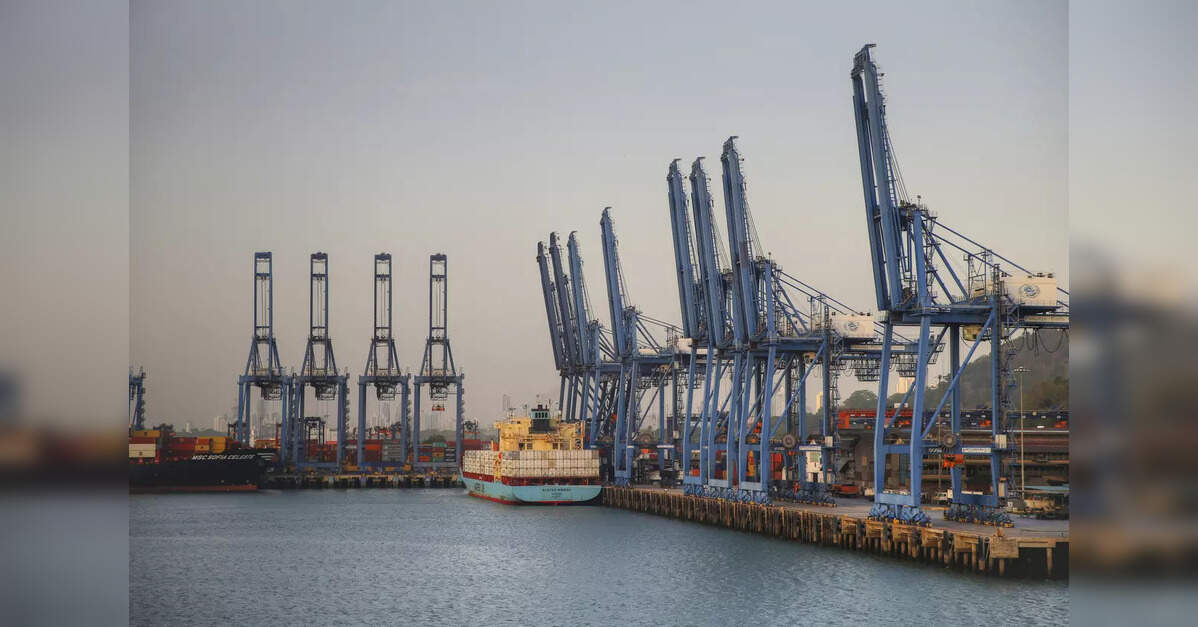
India’s recent success in securing an extension for the Chabahar Port sanctions waiver marks a pivotal moment for regional connectivity and energy trade. This strategic development, extending the critical US sanctions exemption until early next year, underscores the port’s indispensable role as a gateway to Afghanistan, Central Asia, and Eastern Russia. For investors monitoring the intricate dance of geopolitics and global energy flows, Chabahar represents more than just a logistical hub; it is a long-term play on diversified supply chains, enhanced regional stability, and the potential unlocking of new economic corridors. In a landscape frequently reshaped by geopolitical tensions and market volatility, understanding the implications of this waiver is crucial for positioning portfolios for future growth in the Eurasian heartland.
Chabahar: A Strategic Anchor in Shifting Geopolitical Sands
The Chabahar Port project, located on Iran’s southeastern coast, serves as a cornerstone of India’s vision for seamless trade and connectivity with landlocked Central Asian nations, offering a vital alternative to traditional routes. This recent waiver extension, secured after intense negotiations, ensures the continued operability of a facility that India committed to for a decade through a contract signed on May 13, 2024, with Iran’s Port & Maritime Organisation. The port is not merely an Indian endeavor; the Taliban regime in Afghanistan has expressed strong interest in its utilization for global outreach, while Uzbekistan, the world’s second doubly landlocked country, views it as a crucial pathway to avoid over-reliance on a single connectivity corridor, notably China’s Belt and Road Initiative. Furthermore, Russia is actively exploring using Chabahar, via Kazakhstan and Uzbekistan, to facilitate trade with India and other Asian markets. This confluence of regional interests elevates Chabahar from a mere port to a critical piece of the emerging multipolar global trade architecture, promising enhanced security for energy and goods transit, a factor increasingly valued by astute investors.
Navigating Market Headwinds: Chabahar’s Resilience Amidst Price Volatility
The significance of Chabahar’s continued operation gains added weight when viewed against the backdrop of current energy market dynamics. As of today, Brent Crude trades at $90.38 per barrel, a notable -9.07% decline within the day’s range of $86.08-$98.97. Similarly, WTI Crude has seen a sharp drop to $82.59, down -9.41% from its daily high, fluctuating between $78.97 and $90.34. This recent market weakness extends a broader trend, with Brent having plummeted by $22.4, or 19.9%, from $112.78 just two weeks ago on March 30. Such significant price swings highlight the inherent volatility in global oil markets, driven by a complex interplay of supply, demand, and geopolitical factors. For investors, this volatility underscores the value of infrastructure projects like Chabahar that promise long-term stability and diversification of trade routes. While immediate crude prices may fluctuate, the strategic advantage of a reliable, sanction-exempt corridor for goods and potentially energy resources into and out of Central Asia remains a compelling long-term investment thesis, insulating regional trade to some extent from the whims of international market sentiment.
Future-Proofing Trade: Integrating with the International North-South Transport Corridor
Looking forward, the strategic vision for Chabahar extends far beyond its immediate operational capacity. There are concrete plans to seamlessly integrate the port with the broader International North-South Transport Corridor (INSTC), creating a multimodal network that will dramatically shorten transit times and reduce costs for trade between India, Russia, Iran, Europe, and Central Asia. This integration is not just a theoretical ambition; it represents a tangible pathway for unlocking vast economic potential. The 10-year operating contract signed in May 2024 provides the necessary stability and long-term commitment required to realize such ambitious infrastructure linkages. As we approach critical dates on the energy calendar, such as the upcoming OPEC+ JMMC Meeting on April 19 and the full Ministerial Meeting on April 20, decisions regarding production quotas could further influence global oil prices. However, the development of robust, diversified trade routes like the INSTC, anchored by Chabahar, offers a structural hedge against such short-term market fluctuations by fostering resilient regional economies less dependent on singular supply arteries or volatile transit points.
Addressing Investor Concerns: Energy Prices and Strategic Infrastructure Plays
Our proprietary reader intent data reveals a consistent theme among investors this week: a keen focus on the future trajectory of oil prices and the factors influencing them. Many are asking about the predicted price of oil per barrel by the end of 2026 and OPEC+’s current production quotas. This forward-looking anxiety is understandable given the recent market volatility. In this context, the Chabahar Port’s development offers a compelling perspective. While short-term prices will undoubtedly be shaped by events like the upcoming API and EIA Weekly Crude Inventory reports on April 21/22 and April 28/29, or the Baker Hughes Rig Counts on April 24 and May 1, strategic infrastructure investments provide a different kind of value. They represent a long-term bet on economic growth, geopolitical stability, and the efficient movement of goods and energy. For investors considering the sustainability of energy investments, projects like Chabahar, which enhance regional trade security and reduce logistical bottlenecks, contribute to the broader stability of global supply chains. This stability, in turn, can help underpin long-term energy demand and provide a counterweight to purely speculative price movements, offering a tangible asset in a volatile commodity market.


