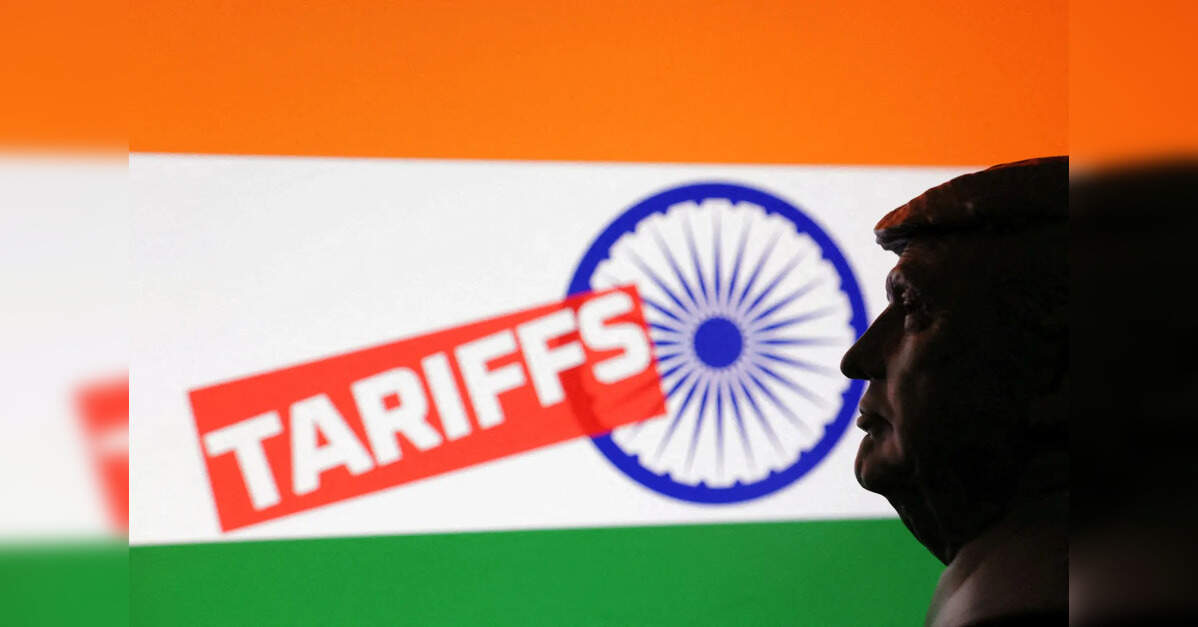
The global energy landscape is once again shifting, presenting both challenges and opportunities for astute investors. India, a critical player in the crude oil market, finds itself at a significant crossroads following the imposition of steep 50% tariffs by the Trump administration on its exports. This aggressive move, targeting India’s continued purchases of Russian crude, forces a re-evaluation of energy supply chains and geopolitical alliances, with profound implications for global oil prices and investment strategies.
The Geopolitical Quagmire: Tariffs, Trade, and Energy Security
The recent decision by the Trump administration to levy a 50% tariff on Indian exports, effective this Wednesday, marks a severe escalation in trade tensions. This measure, among the most punitive against an Asian economy, directly targets India’s policy of sourcing discounted Russian crude. Former Reserve Bank of India Governor Raghuram Rajan has publicly urged New Delhi to reassess its strategy, highlighting a critical imbalance: while Indian refiners have enjoyed “excess profits” from cheaper Russian oil, thousands of small exporters and their associated jobs are now bearing the brunt of these crippling tariffs. Rajan described the tariffs as “deeply distressing” and a “wake-up call” for India to mitigate its dependence on any single trading partner, advocating for diversification towards Europe, Africa, and East Asia, alongside continued engagement with the US.
This stance starkly contrasts with External Affairs Minister S Jaishankar’s position, who has vehemently defended India’s sovereign right to purchase Russian oil, labeling Washington’s demands “unjustified and unreasonable.” Jaishankar pointed to perceived hypocrisy, noting that Europe and even the US have historically engaged in significant energy trade with Russia, particularly during periods of market instability. He recalled the global concern over surging oil prices in 2022, when India’s Russian oil purchases were seen by some as a stabilizing factor. The practical challenge for India is substantial: avoiding the new US tariffs would necessitate replacing approximately 42% of its current oil imports, a monumental task that underscores the deep entanglement of energy economics and international diplomacy.
Market Volatility and Investor Focus Amidst Geopolitical Jitters
The global oil market is acutely sensitive to geopolitical developments, and the recent trade tensions involving India are no exception. As of today, Brent crude trades at $90.38 per barrel, reflecting a notable 9.07% decline from its opening, with an intraday range spanning $86.08 to $98.97. Similarly, WTI crude is priced at $82.59, down 9.41%, having traded between $78.97 and $90.34. This significant daily retreat follows a broader trend; over the past 14 days, Brent crude has seen a substantial drop of $20.91, from $112.78 on March 30th to $91.87 yesterday, illustrating the heightened volatility and uncertainty gripping the sector. Gasoline prices have also felt the impact, currently at $2.93, down 5.18% today.
Investors are keenly watching this space, frequently asking about the future trajectory of oil prices, with many inquiring about what the price of oil per barrel will be by the end of 2026. This reflects a fundamental concern about how supply disruptions, demand shifts, and geopolitical risks like the India-US tariff situation will play out. The current market dynamics underscore the premium on accurate forecasting and agile portfolio management. While India’s refiners have enjoyed a competitive edge from discounted Russian crude, the new tariffs complicate the profitability equation across the entire energy supply chain, potentially increasing input costs for some and forcing a strategic realignment of sourcing.
India’s Strategic Imperative: Diversification and Economic Resilience
Raghuram Rajan’s warning serves as a stark reminder that trade, investment, and finance are increasingly weaponized in the current global order. For India, a nation striving for 8-8.5% growth to employ its burgeoning youth, the balancing act is complex. The economic argument for continuing Russian oil purchases, driven by the immediate cost advantage for refiners, must now be weighed against the broader impact on India’s export economy, which faces significant tariffs. This situation necessitates a strategic pivot towards greater economic diversification and resilience.
The challenge of replacing 42% of its oil imports highlights India’s vulnerability to supply shocks and geopolitical pressure. It underscores the urgent need for long-term energy security strategies that minimize over-reliance on any single source or trade partner. This could involve accelerating domestic exploration and production, investing in renewable energy infrastructure, and forging new long-term supply contracts with a wider array of producers from the Middle East, Africa, and the Americas. For investors, this signals potential opportunities in companies poised to benefit from India’s energy transition and diversification efforts, including those in renewable energy, infrastructure, and alternative crude sourcing and logistics.
Navigating the Future: Key Events and Forward-Looking Analysis
The coming weeks will be crucial in understanding how these geopolitical tensions will ripple through the energy markets. With the critical OPEC+ meetings scheduled for April 18th (JMMC) and April 19th (Full Ministerial), market participants are on high alert. Investors are particularly interested in OPEC+’s current production quotas and how any adjustments could impact global supply in light of the new complexities introduced by the India-US trade dispute. Any decision to maintain, increase, or decrease output will be scrutinized for its potential to either stabilize prices or exacerbate volatility.
Beyond OPEC+, key weekly data releases will provide further insights into market fundamentals. The API Weekly Crude Inventory reports on April 21st and 28th, followed by the EIA Weekly Petroleum Status Reports on April 22nd and 29th, will offer critical snapshots of US supply and demand. These reports will be vital for assessing global inventory levels and refining activity in the context of shifting trade flows. Furthermore, the Baker Hughes Rig Count on April 24th and May 1st will indicate North American upstream activity, providing signals on future supply trajectories. As India navigates this challenging geopolitical landscape, the interplay of these market fundamentals with strategic policy decisions will dictate the future direction of crude prices and present both risks and distinct opportunities for well-positioned investors.


