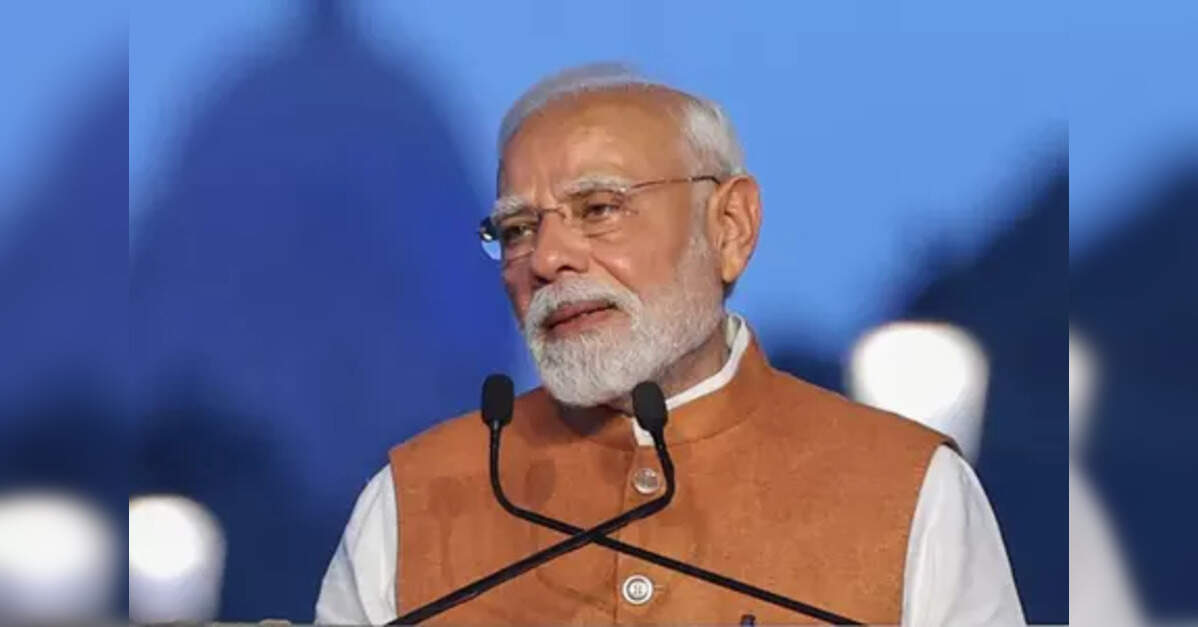
India, a nation rapidly ascending as a global economic powerhouse, finds itself at a critical juncture in its energy journey. Prime Minister Narendra Modi’s recent announcements, including the launch of the National Deepwater Exploration Mission and significant investments in energy infrastructure, signal a profound strategic pivot towards domestic resource utilization and energy self-reliance. This move is not merely about national pride; it represents a calculated response to burgeoning energy demand, volatile global markets, and the imperative to secure long-term economic growth. For discerning oil and gas investors, these developments in India’s energy sector present a compelling narrative of opportunity, driven by both conventional hydrocarbon exploration and an expanding green energy footprint.
Unlocking Deepwater Potential: India’s Strategic Shift
At the heart of India’s evolving energy strategy is a renewed focus on unlocking its own hydrocarbon wealth. Prime Minister Modi highlighted expert assessments suggesting substantial, untapped oil and gas reserves within India’s seas, a revelation that could dramatically reshape the nation’s energy future. The newly launched National Deepwater Exploration Mission, part of the broader ‘Samudra Manthan’ initiative, is a clear mandate to accelerate the discovery and development of these crucial offshore resources. This proactive stance aims to fundamentally alter India’s energy import dependency, which currently sees the nation spending significant capital annually on foreign crude oil and gas, effectively boosting employment and income abroad rather than domestically.
Investors frequently query our platforms about the stability of global supply, often asking about current OPEC+ production quotas and the trajectory of Brent crude prices. This persistent focus underscores a fundamental concern: how will global supply meet ever-increasing demand, particularly from rapidly industrializing economies? India’s deepwater initiative directly addresses this vulnerability. By developing its domestic reserves, India seeks to insulate its economy from geopolitical supply shocks and price volatility, transforming its position from a price-taker to a more self-sufficient player in the global energy landscape. The government’s allocation of approximately Rs 18,000 crore for energy-related projects in Assam, including a new polypropylene plant, further demonstrates a tangible commitment to strengthening domestic energy infrastructure and production capabilities.
Market Dynamics and the Imperative for Domestic Supply
The urgency behind India’s drive for energy self-reliance is underscored by current market dynamics. As of today, Brent Crude trades at $98.17, down 1.23% within a day range of $97.92-$98.67, while WTI Crude stands at $89.74, a 1.57% decline within its $89.57-$90.26 range. This snapshot reflects the inherent volatility that has characterized crude markets. Looking back, our proprietary data shows Brent Crude has experienced a significant downturn, falling from $112.57 on March 27th to $98.57 just yesterday, a substantial $14 or 12.4% drop over two weeks. While a decline might temporarily ease import bills, this kind of price swing highlights the unpredictable nature of global supply chains and the constant financial exposure for major importers like India.
This market volatility, coupled with India’s status as the world’s fastest-growing major economy, means energy demand is rising inexorably. Gasoline prices, currently at $3.08 per gallon, down 0.32% today, are also a key indicator of consumer-level energy costs. For India, a nation where energy access is directly linked to economic development and poverty alleviation, relying heavily on imports means continuously funneling wealth abroad and subjecting its growth trajectory to external market forces. The push for domestic deepwater production, therefore, is not just an exploration venture; it’s a strategic economic imperative designed to retain capital within the country, create local employment, and provide a more stable, secure energy foundation for sustained growth.
Green Energy & Diversification: Beyond Hydrocarbons
While deepwater exploration addresses immediate and medium-term hydrocarbon needs, India’s energy strategy is concurrently embracing a robust green energy transition. Prime Minister Modi emphasized the country’s rapid strides in renewable power generation, noting that India has ascended to the top five globally in solar energy capacity after lagging significantly a decade ago. This dual-pronged approach recognizes the long-term global shift towards decarbonization while acknowledging the enduring reality of hydrocarbon demand in a developing economy.
A tangible example of this diversification is the inauguration of a new bioethanol plant in Assam, which will produce ethanol from bamboo. This initiative not only offers an alternative fuel source to reduce oil and gas dependence but also creates economic opportunities for local farmers and tribal communities by ensuring a steady supply chain for bamboo cultivation and procurement. For investors, this signals a broader government commitment to a diversified energy mix, where conventional oil and gas ventures can coexist with and complement renewable energy projects. This holistic approach mitigates risk and opens up investment avenues across the entire energy spectrum, from traditional upstream exploration to sustainable biofuels and renewable infrastructure.
Forward View: What Investors Should Watch
The coming weeks will offer crucial insights into the global energy landscape, directly influencing the context for India’s domestic energy ambitions. Investors should closely monitor key upcoming events that will shape supply and pricing dynamics. Specifically, the OPEC+ Joint Ministerial Monitoring Committee (JMMC) meeting on April 18th, followed by the full OPEC+ Ministerial Meeting on April 20th, are pivotal. Decisions from these gatherings regarding production quotas will directly impact global crude supply and, consequently, international oil prices. Any tightening of supply could further escalate prices, making India’s push for deepwater self-reliance even more critical.
Beyond OPEC+, the regular API Weekly Crude Inventory reports on April 21st and 28th, and the EIA Weekly Petroleum Status Reports on April 22nd and 29th, will provide immediate snapshots of U.S. inventory levels and demand trends. These data points offer crucial short-term market signals that can affect sentiment. The Baker Hughes Rig Count, scheduled for April 17th and 24th, will also provide an indicator of upstream activity in the U.S. For investors eyeing India, these global events serve as a backdrop, emphasizing the strategic value of domestic resource development as a hedge against external market volatility. India’s commitment to unlocking its deepwater potential and diversifying its energy sources positions it as a resilient and attractive market for long-term energy investment, regardless of the immediate swings in global crude prices or OPEC+ decisions.


