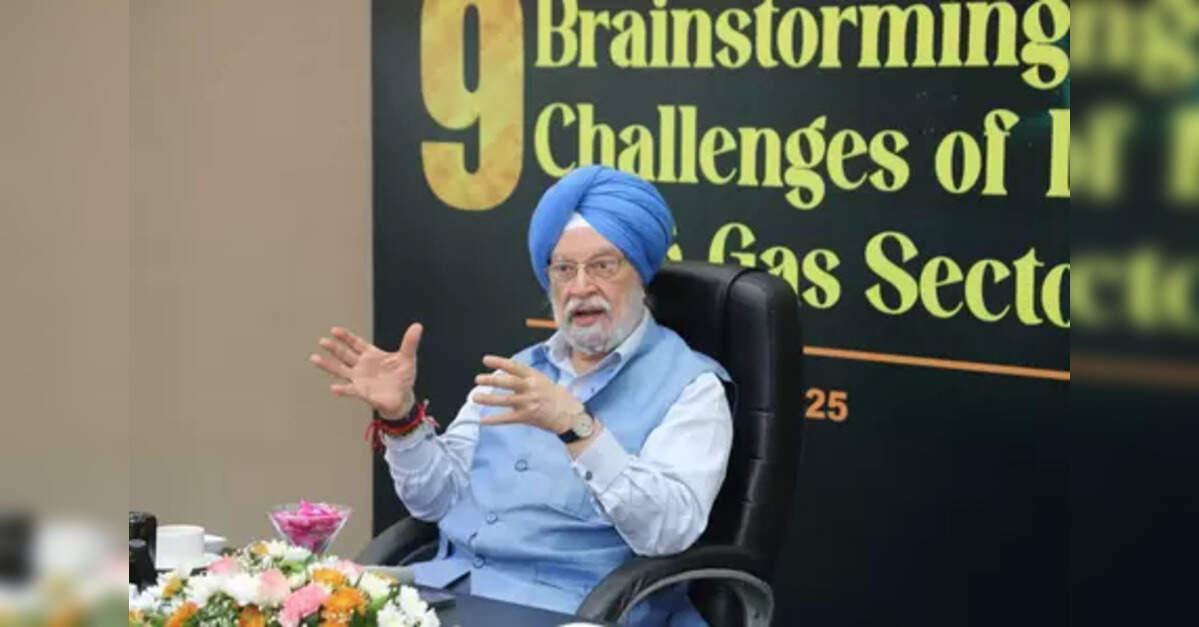
India is embarking on an ambitious energy transition, positioning natural gas as a cornerstone for a greener, more secure future. With a stated goal of increasing gas’s share in its energy mix from approximately six percent currently to a significant 15 percent by 2030, the nation is signaling a clear and substantial demand surge for liquefied natural gas (LNG) and associated infrastructure. This strategic pivot, driven by decarbonization efforts and energy security imperatives, presents compelling long-term investment opportunities within the global energy landscape, particularly for players positioned to capitalize on India’s burgeoning demand and domestic manufacturing push.
India’s LNG Expansion: A Clear Investment Horizon
The Indian government’s commitment to natural gas is not merely rhetorical; it is backed by concrete plans for infrastructure expansion. Currently, India operates eight LNG terminals with a combined capacity of 52.7 million tonnes per annum (MMTPA). The roadmap to 2030 forecasts an increase to 10 terminals, boosting total capacity to an impressive 66.7 MMTPA. This terminal growth is complemented by a rapid expansion of downstream distribution, with 49 new LNG dispensing stations slated to come online by December, adding to the 13 currently operational. This aggressive build-out signifies a robust domestic market demand that investors should track closely. Furthermore, the push for “Make in India” within the energy sector extends to exploration and production (E&P) machinery and components, alongside a strategic focus on developing Indian shipyards for LNG, LPG, and crude carriers, including VLCCs. This localized manufacturing drive offers unique entry points for investors looking beyond direct energy commodity exposure, into the supporting industrial ecosystem.
Navigating Volatile Crude Markets Amidst India’s Gas Push
While India’s long-term gas strategy offers a clear directional signal, the broader energy market remains highly dynamic. As of today, Brent Crude trades at $90.38, marking a significant 9.07% decline within the day, with its range fluctuating between $86.08 and $98.97. Similarly, WTI Crude has seen a sharp 9.41% drop, settling at $82.59, after trading between $78.97 and $90.34. This daily volatility follows a pronounced trend over the past two weeks, where Brent has fallen from $112.78 on March 30th to $91.87 on April 17th, representing an 18.5% decrease. Such fluctuations in crude prices, alongside gasoline trading at $2.93 today, down 5.18%, inevitably influence investor sentiment across the entire energy complex. While natural gas markets often operate with their own supply-demand dynamics, a sustained downturn in crude can dampen enthusiasm for capital-intensive infrastructure projects, even those with strong underlying demand drivers like India’s gas expansion. Integrated energy companies with exposure to both crude and gas assets will need to demonstrate resilience in this environment.
Upcoming Catalysts and Investor Outlook
The immediate future holds several key events that could further shape the energy market and, by extension, impact capital flows into promising growth areas like India’s gas sector. Investors are keenly awaiting the OPEC+ Joint Ministerial Monitoring Committee (JMMC) meeting on April 18th, followed by the full Ministerial meeting on April 19th. The outcomes of these discussions on production quotas will be critical in determining crude supply levels and, consequently, global price stability. Closer to home for North American markets, the API Weekly Crude Inventory reports on April 21st and 28th, along with the EIA Weekly Petroleum Status Reports on April 22nd and 29th, will provide crucial insights into inventory levels and demand trends. Furthermore, the Baker Hughes Rig Count on April 24th and May 1st will offer a snapshot of drilling activity, indicating future supply potential. These data points, while primarily crude-focused, contribute to the overarching investor confidence in the energy sector. A stable or upward trending market environment following these events would undoubtedly foster greater appetite for investment in India’s long-term gas growth story, potentially accelerating project financing and development.
Addressing Investor Concerns: Supply Security and Future Pricing
Our proprietary reader data indicates a strong investor focus on the long-term trajectory of oil prices, with many asking for predictions for the price of oil per barrel by the end of 2026, and how individual integrated energy companies might perform in the current climate. India’s strategy to secure its energy future directly addresses some of these concerns. By diversifying its energy mix and significantly increasing its reliance on natural gas, India aims to mitigate the impact of crude price volatility on its economy. The recent 10-year supply agreement between Hindustan Petroleum Corporation Limited (HPCL) and ADNOC Gas from the UAE underscores India’s proactive approach to securing stable, long-term LNG supplies. As the world’s fourth-largest gas importer, India’s strategic partnerships and robust domestic demand growth act as a significant stabilizing force in the global LNG market. For investors, this translates into a less speculative, more fundamentals-driven growth story within the gas sector, offering a degree of insulation from the more unpredictable swings seen in the crude market. The focus on domestic manufacturing also aligns with broader economic resilience, appealing to investors looking for self-sustaining growth narratives.


