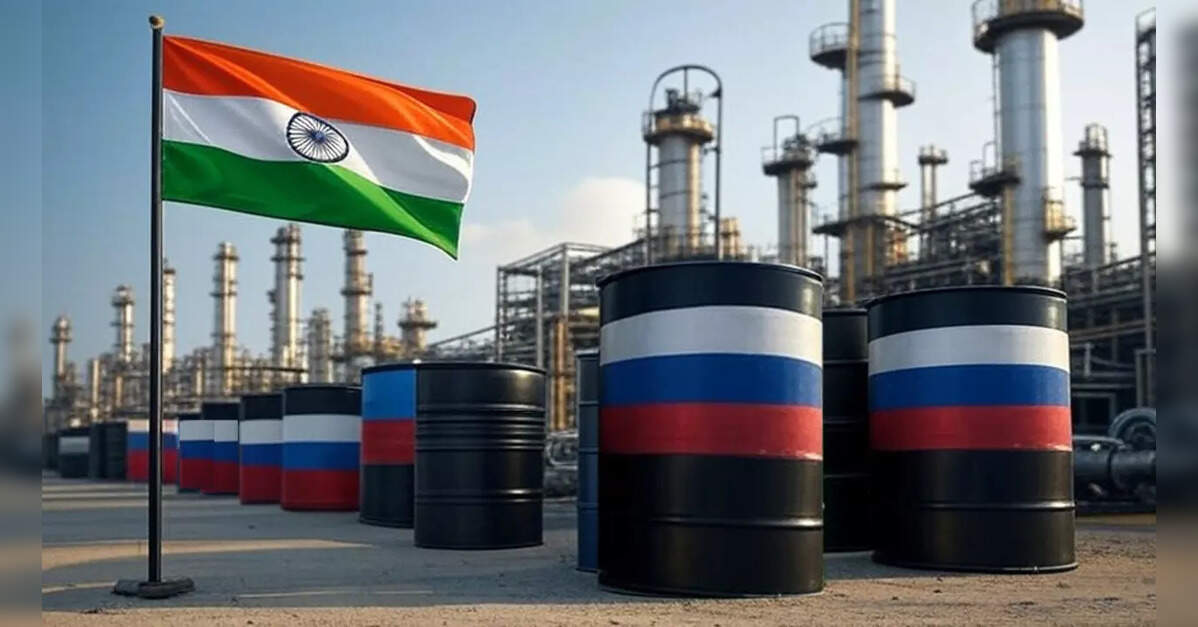
India’s unwavering commitment to securing affordable energy, even amidst geopolitical pressure, continues to be a defining factor in global oil markets. New Delhi’s strategic decision to prioritize discounted Russian crude, a policy established following the 2022 conflict, underscores a pragmatic approach to national economic security. This stance, articulated by government spokespersons as essential for ensuring predictable and affordable energy costs for Indian consumers, highlights a complex balancing act between geopolitical allegiances and fundamental economic imperatives. For investors, understanding the drivers and implications of India’s energy policy is crucial, as it directly influences demand dynamics, global trade flows, and the efficacy of international sanctions.
Market Volatility Reinforces India’s Discounted Crude Strategy
The current state of the global oil market provides a stark backdrop to India’s energy strategy. As of today, Brent crude trades at $90.38, experiencing a significant single-day drop of over 9%, while WTI crude mirrors this decline, settling at $82.59, down more than 9.4%. This dramatic volatility, with Brent’s daily range spanning from $86.08 to $98.97, underscores the immediate value of discounted crude for major importers like India. Over the past fortnight, the broader market trend has seen Brent retreat from $112.78 on March 30 to $91.87 just yesterday, representing an 18.5% decline in less than three weeks. In such a fluctuating environment, securing crude at a preferential rate offers a vital hedge against price spikes and allows India to stabilize its import bill, directly benefiting its massive consumer base. This financial rationale is a powerful counterweight to external pressures, including past proposals for additional tariffs, which India has consistently deemed unjustified, especially given other major economies like China continue to import Russian oil without similar punitive measures.
Geopolitical Crosscurrents and Investor Sentiment
India’s steadfast procurement of Russian oil navigates a complex web of geopolitical interests, directly impacting global energy trade and investor perceptions. The accusation of funding Russia’s war and the imposition of tariffs, while challenged by India as inconsistent, reflect the ongoing tension between energy security and international political alignments. This situation inevitably leads to investor uncertainty. Our proprietary data indicates that many of our readers are keenly focused on understanding the long-term trajectory of oil prices, with a recurring question being, “What do you predict the price of oil per barrel will be by the end of 2026?” This reflects a desire for stability in a market increasingly shaped by non-economic factors. Furthermore, questions regarding “OPEC+ current production quotas” highlight how geopolitical actions by major demand centers, such as India’s sustained appetite for Russian crude, can influence the broader supply-side strategies of key producers. India’s consistent demand for a significant volume of Russian oil can implicitly stabilize a segment of global supply, potentially impacting the calculus for OPEC+ as they assess market balances and future production targets. Investors must therefore consider how these macro-level decisions by nations like India introduce an additional layer of complexity to traditional supply-demand analysis, creating distinct market segments for discounted versus benchmark crude.
Forward Outlook: Key Events Shaping the Energy Landscape
Looking ahead, the coming weeks present several pivotal events that will further shape the global energy landscape and provide crucial data points for investors monitoring India’s strategic positioning. The upcoming OPEC+ Joint Ministerial Monitoring Committee (JMMC) and full Ministerial meetings, scheduled for April 18th and 19th, respectively, will be critical. India’s consistent procurement of Russian oil, a significant non-OPEC supply source, could influence production quota discussions, particularly if the group perceives continued robust supply from outside its immediate control. Following these, the API Weekly Crude Inventory reports on April 21st and 28th, alongside the EIA Weekly Petroleum Status Reports on April 22nd and 29th, will offer fresh insights into U.S. and broader global inventory levels. Should these reports indicate rising stockpiles, it might suggest weaker overall demand or persistent oversupply, potentially reinforcing the attractiveness of discounted barrels for importing nations. Concurrently, the Baker Hughes Rig Count on April 24th and May 1st will provide an indication of future supply trends from North America. Investors should closely monitor these events, as their outcomes will collectively inform market sentiment, refine price expectations, and highlight the ongoing interplay between geopolitical energy policies and fundamental market dynamics.
Investment Implications and Strategic Positioning
For discerning investors, India’s robust and unapologetic approach to energy procurement presents a clear signal regarding the enduring fragmentation of global oil markets. The persistence of discounted crude flows from Russia, driven by India’s national interests, suggests that market participants should not expect a swift return to a fully unified global pricing structure. Companies with exposure to refining capabilities that can process diverse crude grades, or those involved in the logistics and shipping of non-sanctioned barrels, may find unique opportunities. Furthermore, energy companies with diversified geographic revenue streams or those focused on enhancing energy efficiency and security within their home markets could prove resilient in this environment. As India continues to prioritize its economic security, its actions underscore a broader global trend where national interests increasingly override international consensus, creating a more complex and nuanced investment landscape in oil and gas. Strategic positioning will require a keen eye on geopolitical developments, an understanding of diversified supply chains, and an appreciation for the evolving dynamics of global energy demand.


