HPCL Faces Significant Q1 Loss Amidst Soaring Debt and Strategic Capex Adjustments
Investors in the Indian oil and gas sector are closely scrutinizing Hindustan Petroleum Corporation Ltd (HPCL) following the state-run refiner’s challenging first-quarter performance for fiscal year 2027. The company reported a substantial consolidated net loss, coupled with a dramatic increase in its debt burden, even as it refined its capital expenditure plans for a critical modernization project at its Mumbai Refinery. These developments signal a period of financial re-evaluation for the downstream major, highlighting the volatile landscape of petroleum marketing margins and the heavy capital demands of refinery upgrades.
Mumbai Refinery Project Undergoes Notable Capex Revision
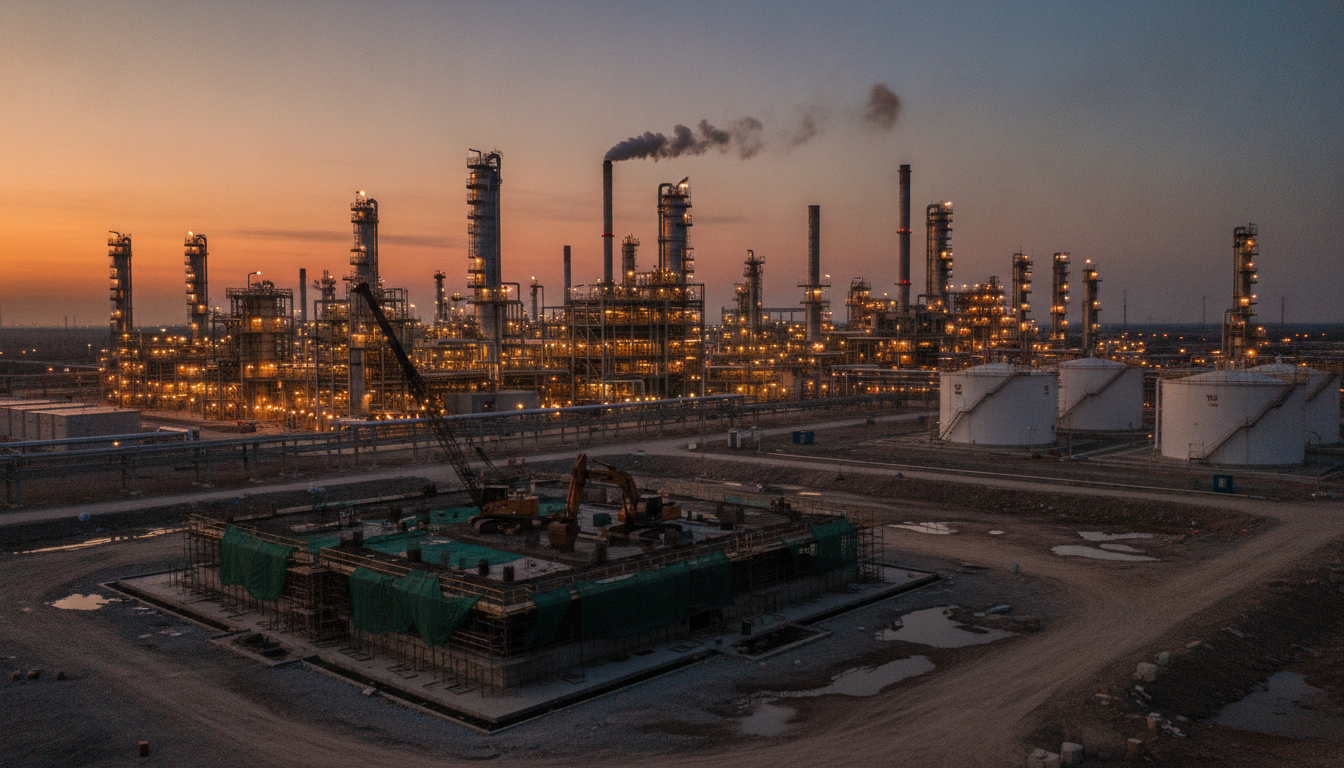
HPCL has recalibrated its estimated capital outlay for the Lube Modernisation & Bottom Upgradation Project at its Mumbai Refinery, bringing the figure down to ₹4,679 crore. This represents a significant downward adjustment of ₹1,070 crore from the estimate provided in the previous quarter. The revised budget, detailed in the company’s Q1 FY27 investor presentation released on July 22, marks an over 18 percent trim in project spending. Notably, this adjustment realigns the project’s financial scope with earlier baseline projections, following a temporary cost escalation observed at the close of the last fiscal year.
Delving into the specifics, HPCL’s investor presentation from January 21, 2026, for Q3 FY2025-26, initially set the total project cost at ₹4,679 crore. However, by the fourth quarter of FY2026, this projected cost saw an upward revision to ₹5,749 crore. The latest Q1 FY27 presentation, however, saw the company revert the estimate back to the original Q3 figure of ₹4,679 crore. Such fluctuations in project budgeting can raise questions among market participants regarding cost control and project planning transparency, even as the company moves to stabilize its financial commitments.
Despite these notable shifts in the financial estimates, on-the-ground progress for the Mumbai Refinery upgrade has maintained a steady trajectory. Physical completion rates advanced from 6.9 percent in December 2025 to 9.9 percent by March 2026, ultimately reaching 12.3 percent as of June 30, 2026. This consistent operational advancement suggests that the project itself continues to move forward, irrespective of the financial recalculations. Investors will be keen to understand the underlying rationale for these budgeting adjustments and their potential impact on future project timelines or profitability.
Sharp Reversal: HPCL Posts Significant Q1 Loss
The financial headlines for HPCL during Q1 FY27 are stark. The refiner recorded a consolidated net loss of ₹12,264.67 crore for the quarter ending June 2026. This represents a dramatic downturn from the consolidated net profit of ₹4,110.93 crore reported in the comparable quarter of the previous financial year (Q1 FY26). The sequential performance also demonstrates a sharp decline, contrasting with the robust consolidated net profit of ₹6,065.26 crore delivered in Q4 FY2026. This considerable swing into the red highlights the severe pressures faced by the company in the recent period.
HPCL explicitly attributed this significant margin squeeze to prevailing retail pricing conditions within the petroleum products market. The company noted that “due to the suppressed marketing margins on certain petroleum products, the profitability is impacted.” For investors in the energy sector, this points to challenges in passing on higher crude oil costs or absorbing inventory losses when government-mandated or competitive retail prices remain fixed or are slow to adjust. Such suppressed margins can severely erode the bottom line for downstream players like HPCL, impacting overall shareholder value and future investment capacity.
Consolidated Debt Skyrockets, Impacting Leverage Ratios
Compounding the financial pressures, HPCL experienced a substantial expansion in its outstanding consolidated debt during the first quarter. The company’s consolidated debt reached ₹75,913.53 crore as of June 30, 2026, marking a significant surge from ₹50,898.87 crore reported just three months prior, on March 31, 2026. This represents an increase of approximately ₹25,014.66 crore within a single quarter, a development that will undoubtedly draw keen attention from debt holders and equity investors alike.
This rapid accumulation of debt directly impacted the company’s leverage profile. The consolidated debt-to-equity ratio escalated sharply, moving to 1.43 times as of June 30, 2026, up from 0.78 times at the end of March 2026. A rising debt-to-equity ratio indicates that a company is relying more heavily on debt financing relative to equity, which can increase financial risk and the cost of capital. For an oil and gas firm engaged in extensive capital-intensive projects, managing debt levels effectively is crucial for maintaining financial stability and investor confidence.
Broader Capital Programs Continue Across Refining Infrastructure
Beyond the immediate financial challenges and the revised Mumbai Refinery project, HPCL’s investor presentations underscore a broader, multi-billion-crore program focused on refining and infrastructure expansion. The company has already successfully brought online its ₹5,381 crore Mumbai Refinery Expansion, boosting its capacity to 9.5 Million Metric Tonnes Per Annum (MMTPA). Additionally, the ambitious ₹30,609 crore Visakh Refinery Modernisation project has been commissioned, expanding that facility’s capacity to 15.0 MMTPA. These significant investments demonstrate HPCL’s long-term strategic commitment to strengthening its refining capabilities and securing its position in the competitive Indian energy market, even as it navigates short-term profitability headwinds.
The Q1 FY27 results present a mixed picture for HPCL. While strategic refinery modernization and expansion projects continue to advance, the company’s profitability has taken a substantial hit due to marketing margin compression, leading to a significant net loss and a sharp increase in its debt burden. Investors will be closely watching HPCL’s future reports for signs of margin recovery and a more stable financial trajectory, particularly given the ongoing capital commitments necessary for its long-term growth objectives in the dynamic oil and gas sector.


